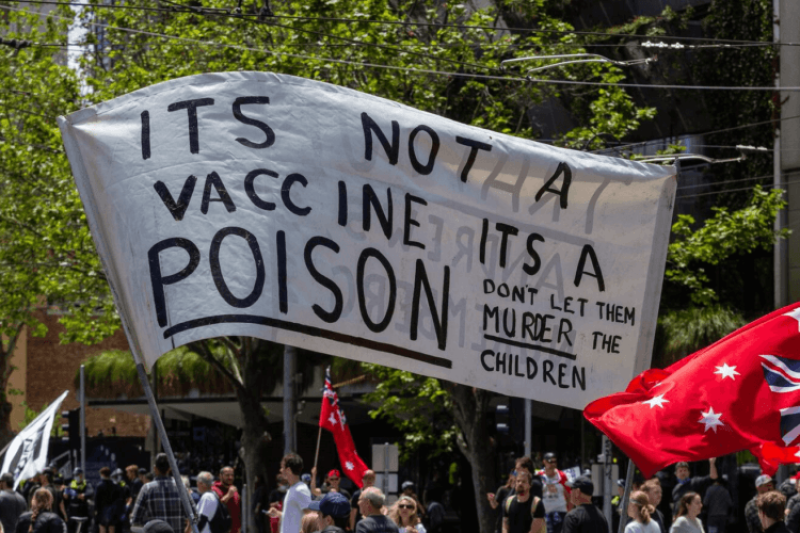
Two science-based sides to the ‘vaccine debate’? Let’s review the evidence

Two science-based sides to the ‘vaccine debate’? Let’s review the evidence
Credit: Unsplash/ Dj Paine

Let me engage in what is sometimes called “both-sides-ism” (a disparaging term, of course) and consider, briefly, the pluses and minuses of vaccines. While I’m at it, I’ll include some points specific to the Covid-19 vaccines.

Let’s start with the pluses, shall we?

  1. Vaccines are the single greatest public health innovation in the history of medicine. They’ve saved millions of lives.
  2. Vaccines completely eliminated smallpox from the planet. They have nearly (but not quite, due to anti-vax resistance) eliminated polio.
  3. The new mRNA vaccines for Covid-19 are remarkably effective, have very few side effects, and are easy to modify as the virus itself mutates over time.
Follow the latest news and policy debates on sustainable agriculture, biomedicine, and other ‘disruptive’ innovations. Subscribe to our newsletter.

But there are a few very small minuses, so let’s consider the downsides of vaccines:

  1. The shot (or “jab”) hurts a little bit, and your arm might be sore for a day.
  2. In very rare cases with some vaccines, some people might have allergic reactions. One example is that some flu vaccines are manufactured in chicken eggs, and people with egg allergies might react to those.
  3. In a few rare cases, the live polio virus vaccine has caused some people to get polio. This vaccine was discontinued in the U.S. decades ago.
  4. In rare cases, some people might have an immune response to a vaccine that causes ongoing inflammation. This includes the Covid-19 vaccine. However, the risk is much smaller than the risks associated with an actual infection.


This is an excerpt. Read the full article here

{{ reviewsTotal }}{{ options.labels.singularReviewCountLabel }}
{{ reviewsTotal }}{{ options.labels.pluralReviewCountLabel }}
{{ options.labels.newReviewButton }}
{{ userData.canReview.message }}

Related Articles

Infographic: Global regulatory and health research agencies on whether glyphosate causes cancer

Infographic: Global regulatory and health research agencies on whether glyphosate causes cancer

Does glyphosate—the world's most heavily-used herbicide—pose serious harm to humans? Is it carcinogenic? Those issues are of both legal and ...

Most Popular

ChatGPT-Image-Apr-20-2026-11_17_18-AM-2
10,000 scientists gone: Trump’s cuts create an unprecedented brain drain
Screenshot-2026-04-22-at-4.10.32-PM
Viewpoint — ‘Completely unethical’: RFK, Jr.’s medical ignorance deprives melanoma cancer-sufferers of a life-saving therapy
ChatGPT-Image-Apr-22-2026-04_31_20-PM
‘Irresponsible decision’? On mandatory military flu shots, Hegseth chooses ‘freedom’ over health
ChatGPT-Image-Apr-20-2026-12_28_36-PM
Vaccine skepticism is a growing global problem
Screenshot-2026-04-15-at-1.22.58-PM
Anti-biotechnology activists smear hybrid wheat breakthrough that could surge yields in poorer countries
ChatGPT-Image-Apr-17-2026-03_30_52-PM
Food labels, decoded: What they really mean
images
The never-ending GMO debate: Pros and cons
ChatGPT-Image-Mar-2-2026-03_22_54-PM
Why ‘support supplements’ for GLP-1 users are mostly a waste of money
ChatGPT-Image-Mar-11-2026-11_58_46-AM
The Trump administration has run out more than 4,000 National Institutes of Health employees. Here are the consequences
Screenshot-2026-04-22-at-1.14.34-PM
Latest fevered, right-wing conspiracy: Fox, New York Post, and kooky GOP legislators push ‘Dead Scientists’ scare
Screenshot-2026-04-12-135256
Bixonimania: The fake disease scam that AI swallowed whole
glp menu logo outlined

Get news on human & agricultural genetics and biotechnology delivered to your inbox.