
In following the fundamentals articulated by Boyle over 300 years ago, evidence-based science is grounded in three basic tenants: first, the process is transparent; second, results and methods are publicly shared, allowing for repeated production and validation; and third, data collection methods are well-defined and rigorous, with the conclusions being supported by the data.
Economic, environmental, and human health benefits of GM crops
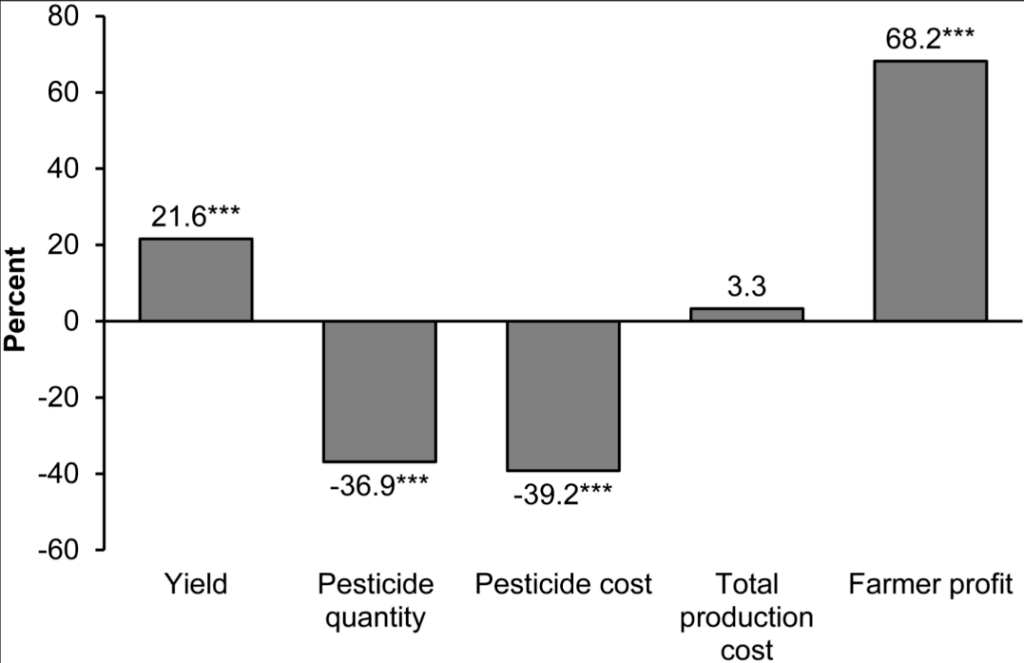
Academics have been assessing and analyzing the impacts from the commercialization of genetically modified (GM) crops for 25 years. These initial assessments began with cotton in China, soybeans in Argentina, corn in the USA and canola in Canada. Academics quantified evidence of increased yields, reduced input use and higher profits for farmers. Over time, analysis expanded to examine the environmental and human health benefits. GM crops were first produced in the USA in 1994 and since then no harmful environmental or human health impacts have been quantified. If fact, the opposite is true, GM crops provide substantial environmental benefits and reduce the risk to humans from consuming food products.
Not only has academia undertaken studies, but reviews on the impacts of GM crops have been conducted by science and regulatory organizations as well. With over 1,000 peer reviewed scientific publications confirming the safety of GM crops and quantifying a wide variety of the benefits that occur following their adoption, there scientific evidence supporting both the safety and benefits from GM crops is robust.
Expected benefits from gene-edited crops
The benefits of GM crops are well documented and as plant breeding technologies improve, the insertion of foreign genes is presently less common, instead being replaced by precise gene mutations, known as gene editing. Gene editing increases, decreases or deletes specific genes, speeding up the process of natural evolution. The use of precision breeding technologies like gene editing are expected to continue the benefits provided by GM crops, but also provide new benefits, such as gene-edited non-browning bananas that have been approved for production in the Philippines. Additional research underway in numerous countries involving numerous crop types are focused on improving the nutrient availability from crops.
Activist attitudes towards evidence
Recently, a document was shared with me that was developed by a collection of German activist and environmental organizations, outlining how they have been losing the public discussion about the safety and benefits of GM crops and as the use of gene editing technologies increases, these organizations are being increasingly marginalized and ignored. The document fully admits that those opposed to GM crops have failed to convince the public that GM crops are unsafe or dangerous. It states, “[i]ndividual associations and actions critical of genetic engineering cannot develop the authority and clout that would be necessary to break the unfortunately very successful narratives of the proponents. We have been trying this for years without much success and, on the contrary, we are increasingly put on the defensive.” The proposed solution by these organizations is to create “… a new narrative that cannot be dragged onto the slippery slope of scientific (risk) argumentation…”.





These German environmental non-governmental organizations (ENGOs) confirm that the hard work and diligent research by academics and scientists is informing and reassuring the public about the safety and benefits of GM crops. However, rather than accept the volumes of scientific evidence and improve social trust in GM crop safety and benefits, these ENGOs are working to launch yet another campaign of lies and disinformation. The document goes on to state, “[w]ith primarily scientific argumentation, we can only lose because we have nothing adequate to counter the “follow the science”…”. Their solution? “What we need, instead of many individual actions, is a bold, confident and well-coordinated liberation strike.”
Their so-called liberation strike consists of a massive social media campaign of false and misleading information is designed to make science look like a bogeyman and attacks the leading current scientific evidence. This liberation strike proposes to involve a “Twitterstorm”, the use of petitions and an online bulletin board for sharing messages, all targeted at refuting the overwhelming volume of evidence on the safety and benefits of GM crops and the potential for gene editing.

Rely on trusted science
This ‘secret ENGO report’ confirms that food prices are more important to people than food propaganda. Activist organizations are only capable of communicating false information if they are able to scare the public into donating to support their causes. Clearly, ENGO budgets are diminishing, given their radical strike terminology. Without funding, these voices of false information will disappear.
Scientific evidence and knowledge is accumulated over time. In the 30 years since GM crops were first produced, vast amounts of knowledge has been created, all confirming safety and benefits. ENGOs are privately admitting their false information has been constantly refuted by this evidence. If you support science, innovation and factual knowledge, I encourage you to support science-based organizations. If you have donated to an ENGO in the past and are frustrated by their continuing disregard of evidence, then please consider donating to organizations that do respect science and evidence. The public deserve access to factual knowledge and constant ENGO rejection of facts and evidence reveals their lack of ethical standards that are not deserving of your generous donations.