
It’s been considered a medical puzzle. Mothers, and frankly all of us, are understandably concerned. Considering the numbers, it’s reasonable to ask: What’s causing the rise in cases?
Now researchers believe they know what’s responsible for the bulk of the rise: Nothing. Much of the rise in autism is likely a statistical mirage.
That’s probably not reassuring to parents with children who suffer from the disorder and it’s certainly not the answer you’d find if the Internet is your medical guide. There are literally thousands of articles and hundreds of organizations blaming one thing or another, from vaccines, GMOs and pesticides to even electromagnetic fields, Wi-Fi signals, chemtrails and residential proximity to freeways. Scare headlines are everywhere. Posts like “How I Gave My Son Autism” tell stories of perfectly capable mothers blaming themselves for their child being diagnosed autistic after “exposing” him or her to a vaccine or serving non-organic food.
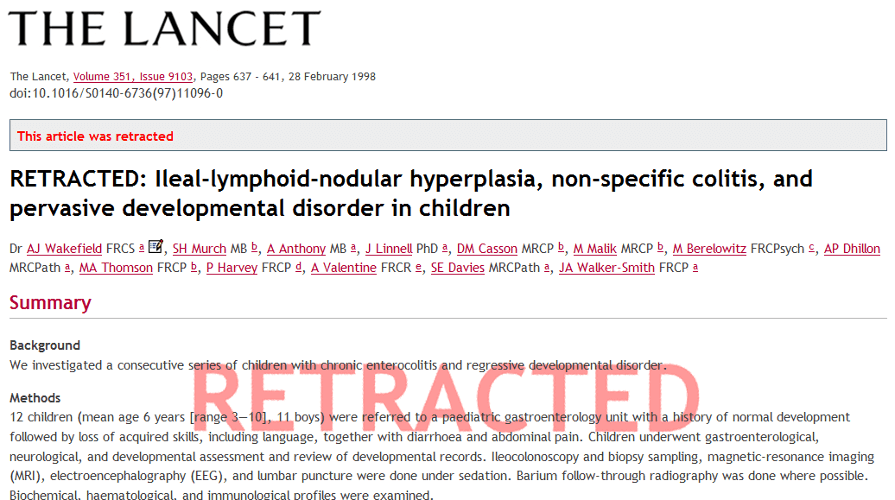
Much of the misinformation originated with a bogus 1998 British study by Dr. Andrew Wakefield that linked autism to childhood vaccines. An investigation published by the British medical journal BMJ in 2011 concluded that Wakefield misrepresented or altered the medical histories of all 12 of the patients whose cases formed the basis of the original study, which became the bedrock document of the vaccine denial movement. The study was retracted and Britain stripped Wakefield of his medical license. But “the damage to public health continues, fueled by unbalanced media reporting and an ineffective response from government, researchers, journals and the medical profession,” BMJ stated in an editorial accompanying its investigation. Nonetheless, Wakefield spawned a generation of vaccine rejectionists, including Robert F. Kenedy, Jr., who still swears gy its legitimacy.
Autism’s links to glyphosate?
The Genetic Literacy Project has exposed another fraudulent claim that continues to swirl through cyberspace: blaming autism’s rise on the herbicide glyphosate, which is frequently paired with GMO crops. Stephanie Seneff, an MIT computer scientist with no background in agriculture, genetics or epidemiology, predicted a decade ago that half of the country’s children would be born with autism by the mid 2020s because of the increased use of genetically modified crops. Articles carrying Seneff’s videos and comments registered tens of millions of hits. That of course did not hapen, but it has not diminished Seneff’s near mythical status among in the ant-science movement. RFK, Jr. ally Zen Honycutt, founder of Moms Across America, funded Seneff’s quack research and remains a staunch supporter of the autism hysteria movment. [The GLP dissects that bogus ‘study’ here]
On the surface, the autism-glyphosate link seems plausible. After all, the rise in the incidence of autism does track, for example, the rise in glyphosphate use—if you ignore its heavy usage for 20 years (since 1974) before GMOs were introduced (in 1994), and autism rates were steadier.
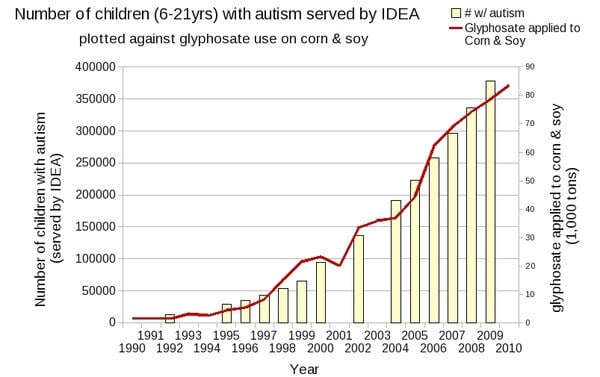
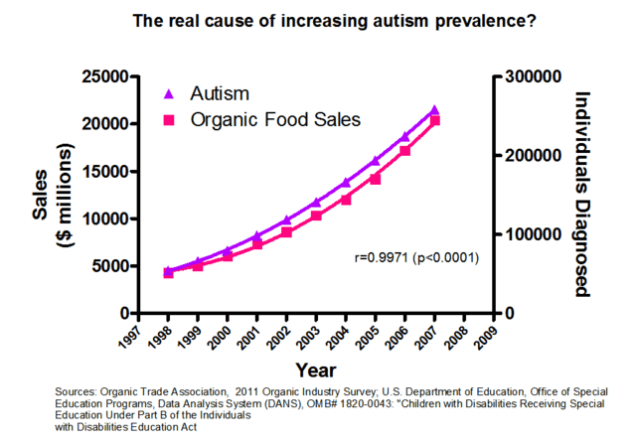
But correlation is not causation. By cherry-picking the data, one could show that almost all of the alleged causes of autism that rose over the past 10-15 years correlate with the rise in autism cases. As, in fact, does the rise in chemtrail sightings, terrorist attacks on U.S. soil, the New England Patriot’s cumulative win total—and organic food sales:
Autism is also “linked” to the use of cell phones:
And the rise in B-list actress Jenny McCarthy’s notoriety, which has skyrocketed as she has become a poster girl for promoting scare theories about autism causes.
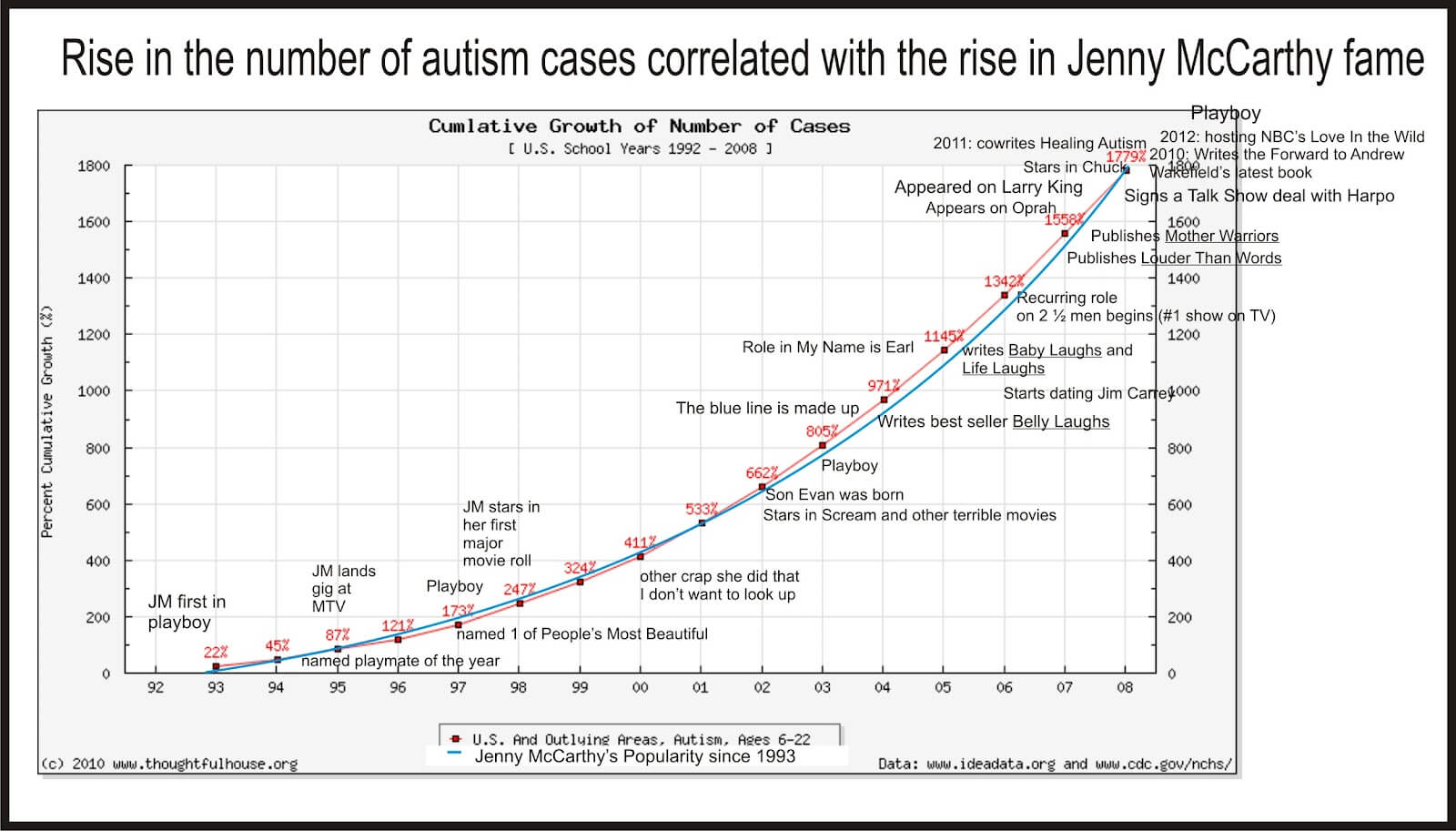
Autism has become the defacto target for individuals and groups that have little else to point at. As much as the radical fringes of the organic food and everything-natural industries blame Big Ag and Big Pharma for the dramatic rise in autism, they are deftly making the most out of the situation monetarily as well.





Explanation emerges for why the incidences of autism rates apear to be rapidly increasing
So what does the latest evidence show about what’s driving the increased inicdences in diagnosed autism cases? There is a growing belief among scientists thatin fact has been no dramatic rise in autism after all. Scientists at the Aarhus University, in Aarhus, Denmark, assessed more than 670,000 children born between 1980 and 1991 in Denmark, following them from their birth until they were diagnosed with Autism Spectrum Disorder, died, emigrated or reached the end of thestudy period which was in December 2011. Among other things, Denmark is renowned for its excellent national medical records system, which allowed them to conduct a study of this magnitude and over the extended time span. Among the population studied, 4,000 children were diagnosed as being along the autism spectrum and many of these diagnoses were made after 1995.
Look at what happened just before that detected increase. Tara Haelle reported in Forbes:
In Denmark in particular, the diagnostic criteria for autism expanded in 1994 to include a spectrum of disorders with a broader list of symptoms, thereby widening the definition of autism. Then in 1995, national data tracking began to include diagnoses made from outpatient patient visits rather than just diagnoses of those admitted to a healthcare facility.
The exact thing has happened in every country that has seen soaring autism rates—the definition of what constitutes as autism was dramatically expanded in the early 1990s to embrace the catch-all term Autism Spectrum Disorder—correlating with when GMO usage, chemtrail rates, pesticide exposure and organic food sales began a sharp increase.
The researchers discovered that the change in diagnostic criteria taken together along with the diagnoses made outside of a healthcare facility accounted for as much as 60 percent of the increase in prevalence of autism spectrum disorders. The authors of the study concluded:
Changes in reporting practices can account for most (60 percent) of the increase in the observed prevalence of ASDs in children born from 1980 through 1991 in Denmark. Hence, the study supports the argument that the apparent increase in ASDs in recent years is in large part attributable to changes in reporting practices.
Though this in itself did not mean evidence of a lack of increase in the prevalence of autism, it did say very emphatically that the huge uptick in numbers of autistic children diagnosed have at least something to do with how we diagnose the condition.
The idea that increased diagnosis contributes to higher prevalence of a disease is not new at all. In fact it is quite common especially as new diagnostic techniques come into play and early screening programs are put in place by governments. This often leads to debates in the medical literature about whether increases in prevalence of disease are real or due to an increase in diagnosis. Prostate cancer is a common example –incidence for prostate cancer jumped more than 100 percent from 1986 to 1992, which coincided with an aggressive expansion of the prostate cancer screening program based on the Prostate Specific Antigen (PSA) test which was approved by the FDA in 1986.
The result of the autism study, even if somewhat expected is still very important. The quality of Denmark’s health records and the size of the study made it unique–it makes the data extremely robust and reliable. So how do these results translate to the United States? We do have similarities in how the diagnosis has changed wrote Tara Haelle in Forbes
The way autism is defined in the U.S. has changed dramatically since 1980, when it first appeared in the DSM-III as “Infantile Autism” and could only be diagnosed in children whose symptoms began before they were three years old. Autism spectrum disorders have expanded to include diagnosis without a specific age requirement beyond the “early developmental period” and without requiring significant language impairment in the recently revised DSM-5.
The vast majority of people diagnosed with autism spectrum disorders today would never have qualified under the 1980 classification, and no formal classification separate from schizophrenia existed before then. So it’s not surprising that numbers have increased in the U.S.
What is today’s consensus explaining why autism rates appear to have risen when they actually have not
The rising rates of autism diagnoses over recent decades are largely attributed to changes in diagnostic criteria, increased awareness, and improved screening rather than a true increase in prevalence. The definition of autism spectrum disorder (ASD) has expanded over time, particularly with the adoption of the DSM-5 in 2013, which merged previously distinct conditions such as Asperger’s syndrome and pervasive developmental disorder-not otherwise specified (PDD-NOS) into a single category. This broader classification has led to more individuals being diagnosed today than in the past.
Additionally, greater public awareness and routine screenings by healthcare professionals have resulted in earlier and more frequent diagnoses. Diagnostic substitution has also played a role, as many individuals who might have been previously labeled with intellectual disabilities or other developmental disorders are now classified under ASD. Studies show that as autism diagnoses have increased, intellectual disability diagnoses have declined, suggesting a shift in classification rather than an actual rise in cases.
Beyond changes in diagnostic practices, societal factors have also contributed to the increased identification of autism. Greater access to healthcare and special education services incentivizes formal diagnoses, and advocacy efforts have reduced stigma, making parents and individuals more likely to seek evaluation. Historically, milder cases, especially among girls and adults, were often overlooked, but today, these individuals are more likely to receive an autism diagnosis. Research further supports the idea that the rise in diagnoses is linked to the availability of diagnostic services rather than a true increase in prevalence. While some researchers investigate potential environmental contributors, such as parental age and prenatal factors, no definitive evidence suggests that these factors have led to a genuine increase in autism. Instead, the growing number of diagnoses reflects our improved ability to recognize and classify autism, rather than an actual surge in its occurrence.
Arvind Suresh is a science communicator and a former laboratory biologist. Follow him @suresh_arvind
Jon Entine is the executive director of the Genetic Literacy Project.