How Casgevy came to be: How researchers found gene editing targets for newly-approved sickle cell drug

How Casgevy came to be: How researchers found gene editing targets for newly-approved sickle cell drug
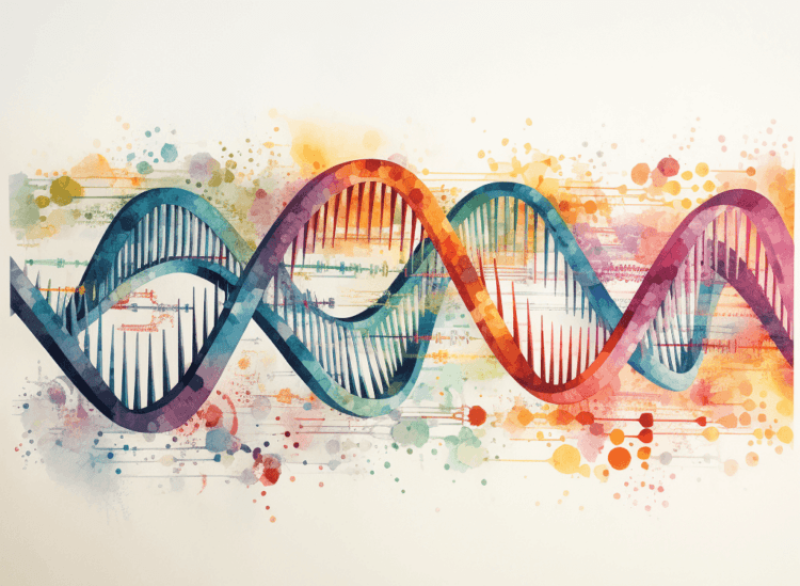
Credit: Midjourney/ Heenan

The world’s first commercial gene-editing treatment is set to start changing the lives of people with sickle-cell disease. It’s called Casgevy, and it was approved last month in the UK.

Follow the latest news and policy debates on sustainable agriculture, biomedicine, and other ‘disruptive’ innovations. Subscribe to our newsletter.

CRISPR is revolutionary because scientists can so easily program it to cut DNA at precise locations they choose.

But where do you aim CRISPR? That’s the lesser-known story of the sickle-cell breakthrough. The disease is caused by faulty hemoglobin, the molecule that carries oxygen in the blood. To cure it, though, Vertex and its partner company, CRISPR Therapeutics, aren’t fixing the genes responsible for the mutation that leaves those molecules misshapen. Instead, the new treatment involves a kind of molecular bank shot—an edit that turns on fetal hemoglobin, a second form of the molecule that we have in the womb but lose as adults.

You can think of how the edit works as a kind of double negative. It adds a misspelling to the turbo-booster of another gene, BCL11A, that is itself what inhibits the production of fetal hemoglobin in adult bodies. Without that booster, there’s less inhibition, and more fetal hemoglobin. Got it?

Given the media accolades for CRISPR editing, many people don’t realize it’s really best at ripping scars into genes, not making stylish rewrites (although that is coming).

This is an excerpt. Read the full article here

Related Articles

Infographic: Global regulatory and health research agencies on whether glyphosate causes cancer

Infographic: Global regulatory and health research agencies on whether glyphosate causes cancer

Does glyphosate—the world's most heavily-used herbicide—pose serious harm to humans? Is it carcinogenic? Those issues are of both legal and ...

Most Popular

ChatGPT-Image-Sep-14-2026-11_36_25-AM
How the reckless AI race among Anthropic, OpenAI and China spawned today’s safety crisis
ChatGPT-Image-Aug-28-2026-03_33_46-PM
Viewpoint: Bad science—Five bogus Trump administration claims about vaccines and autism
ChatGPT-Image-Mar-10-2026-01_39_01-PM
Viewpoint—“Miracle molecule” debunked: Why acemannan supplements don’t work
ChatGPT-Image-Sep-2-2026-10_30_14-PM
Zero: That is the official American measles death toll for 2026. Here is what RFK Jr.’s CDC leaves out.
Screenshot-2026-09-10-at-12.20.19-PM
'Jet fuel didn't melt the steel': 9/11 conspiracy theories debunked
Screenshot-2026-09-14-at-10.52.30-AM
AI is being used in dangerous bioscience experiments
Screenshot-2026-09-14-at-3.07.56-PM
Trump EPA rolls back power-plant climate rules—and moves to block future carbon limits
screenshot at  am
‘Glyphosate is not carcinogenic’: Independent EU chemical oversight agency reaffirms—for the 3rd time in 9 years—that the herbicide is safe-as-used
ChatGPT-Image-Sep-14-2026-02_57_24-PM
Viewpoint: 6 Atlantic Council expert opinions on the U.S., China and the AI safety crisis
ChatGPT-Image-Sep-13-2026-10_24_17-AM
Bayer urges court to approve $7.25 billion Monsanto Roundup settlement that could limit its future liabilities
Screenshot-2026-08-04-at-11.36.16-AM
Viewpoint: Emotion-driven stories of doctors allegedly ignoring patient concerns are driving vaccine hesitancy
ChatGPT-Image-Sep-13-2026-10_46_11-AM
“Hit the brakes”: Anthropic warns the race to superintelligence could spawn internet-seizing AI swarms—and empower authoritarians. Here’s how to stop it.
ChatGPT-Image-Sep-14-2026-01_57_57-PM
Anthropic claims to thwart AI-based cyberattacks, surveillance, and biological weapons research
glp menu logo outlined

Get news on human & agricultural genetics and biotechnology delivered to your inbox.