The investment bubble surrounding indoor farming has burst. One plodding but high-tech startup is bucking the trend, and here’s how

Credit: Beatrice Rescazzi via CC0-1.0

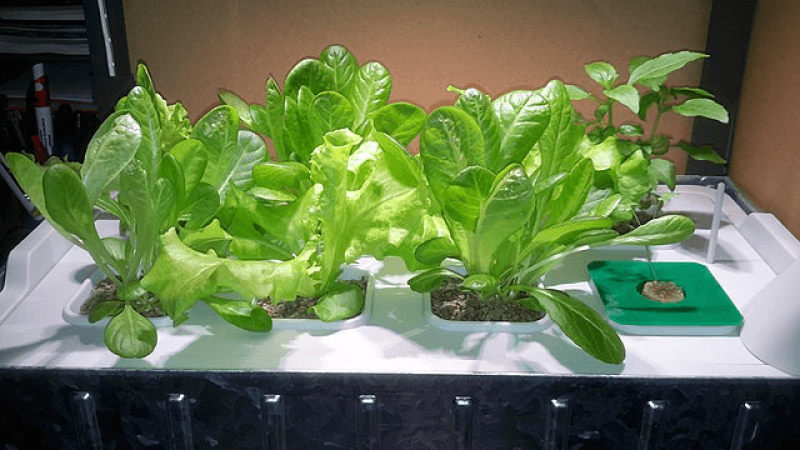
Indoor farming startups seeking to revolutionize the nation’s food supply have endured a rocky year. Investors have significantly pulled back funding, forcing several companies once worth billions of dollars into insolvency.

Paul Sellew has been watching the situation with a mix of pride and hard-earned realism. Little Leaf Farms in Devens, which he cofounded and serves as chief executive, has been flourishing even as the bubble surrounding such startups appears to have burst.

“There was a little bit too much hype, and it was not grounded in the kinds of approaches that we’re doing here,” he said.

As of the end of 2022, investors had placed more than $2 billion in such companies across 158 deals, according to data by Pitchbook. But Little Leaf executives decided to forgo venture capital, worried that the rapid expansion often expected in the startup scene may not be sustainable for their vision.

Follow the latest news and policy debates on sustainable agriculture, biomedicine, and other ‘disruptive’ innovations. Subscribe to our newsletter.

Unlike other indoor farming startups that relied on costly electric-powered artificial lights to grow crops, Little Leaf opted to build a greenhouse that could harvest the power of the sun.

The former method is “quite expensive, in terms of both the capital and operating costs to buy and operate the lights,” Sellew said. “And then you have to have the heating, the ventilation, and the air conditioning.”

By contrast, “the sun is free,” he said.

This is an excerpt. Read the original post here

{{ reviewsTotal }}{{ options.labels.singularReviewCountLabel }}
{{ reviewsTotal }}{{ options.labels.pluralReviewCountLabel }}
{{ options.labels.newReviewButton }}
{{ userData.canReview.message }}

Related Articles

Infographic: Global regulatory and health research agencies on whether glyphosate causes cancer

Infographic: Global regulatory and health research agencies on whether glyphosate causes cancer

Does glyphosate—the world's most heavily-used herbicide—pose serious harm to humans? Is it carcinogenic? Those issues are of both legal and ...

Most Popular

ChatGPT-Image-May-7-2026-12_32_36-PM
Viewpoint: The state of U.S. vaccine policy? Dismal nationally, but some states are stepping up.
Screenshot-2026-04-13-at-1.39.26-PM
Viewpoint: ‘Safer for children?’ Stonyfield yogurt under fire for deceptive organic marketing
Screenshot-2026-04-22-at-10.46.29-AM
Viewpoint: How to counter science disinformation? Science journalist offers 12 practical tips
the magic of mRNA
Viewpoint: Anti-vax fake ‘turbo cancer’ claims threaten cancer treatment breakthroughs
ChatGPT-Image-May-7-2026-12_16_37-PM-2
Viewpoint: Are cancer rates ‘skyrocketing’ as RFK, Jr. and MAHA claim? The evidence says mostly the opposite
Defense_Secretary_Ash_Carter_tours_the_Microsoft_Cybercrime_Center_in_Seattle_March_3_2016
How criminals are using AI to target social media users and steal their money and confidential data
artificial intelligence brain think illustration md
Viewpoint — Digital gods and human extinction: Will we be the first species ever to design our own descendants?
Picture1-1
Cooling the planet with balloons: Could a geoengineering gamble slow global warming?
ChatGPT-Image-May-7-2026-01_23_27-PM-2
Viewpoint: Will AI democratize personalized cancer treatment or fuel medical misinformation?
Screenshot-2026-04-23-at-11.00.36-AM
Regulators' dilemma: Thalidomide, Metformin, and the cost of getting drug approvals wrong
ChatGPT Image May 12, 2026, 01_21_30 PM
How big health brands are funding online medical misinformation 
glp menu logo outlined

Get news on human & agricultural genetics and biotechnology delivered to your inbox.