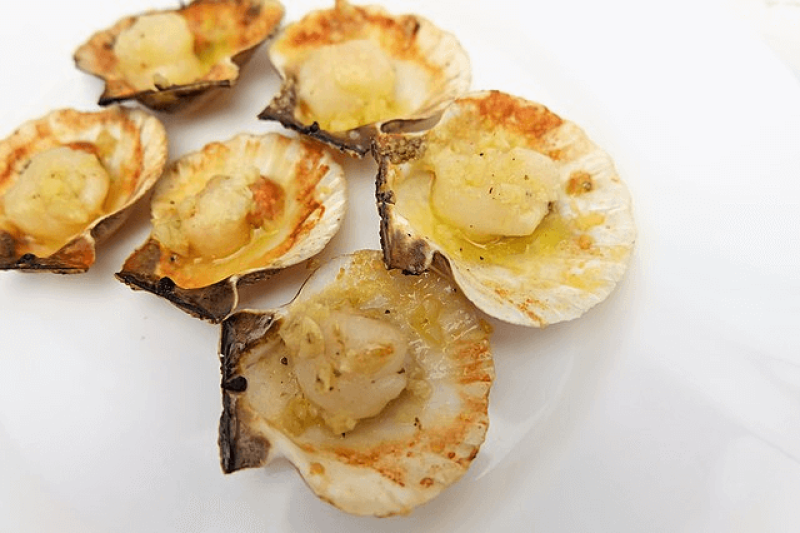
90% of wild fisheries are dangerously depleted. Plant-based and cultivated seafood products may offer an alternative without the need for destructive practices

Credit: Eximiousincorp via CC-BY-SA-4.0

Up to 2.7 trillion wild-caught fish are believed to be slaughtered globally each year, resulting in approximately 90 per cent of wild fisheries being overfished or fully exploited.

Although aquaculture is often hailed as a solution, this comes with its own set of problems, including disease management, antibiotic use, organic pollution, and significant welfare concerns.

Follow the latest news and policy debates on sustainable agriculture, biomedicine, and other ‘disruptive’ innovations. Subscribe to our newsletter.

This is where alternative proteins are tabled as a promising solution to divert a portion of seafood production away from the ocean. As alternatives to conventional animal proteins; plant-based and cultivated seafood products offer consumers the same taste and texture they know and love, without the destructive fishing practices, stressors to fisheries and ethical controversies.

Made from plants such as legumes, mushrooms and algae, plant-based seafood products have long been available on the market. In contrast to the seitan fish fillets commonly found in Chinese restaurants and hawker centres, next-generation plant-based foods are quickly gaining sophistication with the introduction of new technologies that seamlessly integrate ingredients, and replicate complex structures.

For consumers who prefer ‘the real thing’, scientists and entrepreneurs are actively developing cultivated seafood options, producing genuine seafood from animal cells grown in bioreactors. By moving seafood production to a controlled environment, cultivated seafood is often considered to be a healthier alternative that is free from mercury, microplastics, and other contaminants commonly found in wild-caught and farmed seafood.


This is an excerpt. Read the original post here

{{ reviewsTotal }}{{ options.labels.singularReviewCountLabel }}
{{ reviewsTotal }}{{ options.labels.pluralReviewCountLabel }}
{{ options.labels.noReviewsLabel }}
{{ options.labels.newReviewButton }}
{{ userData.canReview.message }}

Related Articles

Infographic: Global regulatory and health research agencies on whether glyphosate causes cancer

Infographic: Global regulatory and health research agencies on whether glyphosate causes cancer

Does glyphosate—the world's most heavily-used herbicide—pose serious harm to humans? Is it carcinogenic? Those issues are of both legal and ...

Most Popular

Picture1
Hiroshima at 81: America’s new nuclear bomb, a buried Iranian target, and a question no one wants to ask
ChatGPT Image Jul 29, 2026, 10_14_27 PM
After muzzling RFK, Jr. over autism-vaccine conspiracy theories, Trump defies aides to push scares again
ChatGPT Image Jul 29, 2026, 05_50_04 PM
Fear, science, and the law: If talc powder is unlikely to cause cancer and J&J was winning in court, why did it pay more than $5.5 billion to settle?
Screenshot 2026-07-29 at 1.03
Two food fads that have some merit: Chia seeds in almost everything and protein added to water
ChatGPT-Image-Mar-10-2026-01_39_01-PM
Viewpoint—“Miracle molecule” debunked: Why acemannan supplements don’t work
ChatGPT Image Jul 29, 2026, 06_26_01 PM 2
Facts & Fallacies podcast: Organic food myths make a comeback on Instagram, with Dr. Kevin Folta
Screenshot-2026-07-09-at-1.09.25-PM
Anti-vaccine myths rattle health care
Screenshot 2026-07-22 at 1.38
Viewpoint: Are the U.S. and Europe headed towards a repudiation of agricultural biotechnology red tape?
Screenshot 2026-07-28 at 3.22
Hidden hunger: Climate change is speeding up the decline of important nutrients in our food
ChatGPT Image Jul 29, 2026, 10_31_48 PM
Bowing to Congressional pressure, Kennedy reverses himself and releases $600 million that helps developing countries buy and distribute vaccines
Screenshot 2026-07-28 at 3.43
Fat cat? GLP-1 weight loss drugs for animals are on the horizon
organic scaled
Facts & Fallacies podcast: Organic food cuts pesticide exposure? A response to Dr. Rhonda Patrick
ChatGPT-Image-Jul-10-2026-09_42_12-AM-1
Peptides, patient autonomy, and the limits of medical freedom
Screenshot 2026-07-28 at 3.03
What is cyberchondria?
glp menu logo outlined

Get news on human & agricultural genetics and biotechnology delivered to your inbox.