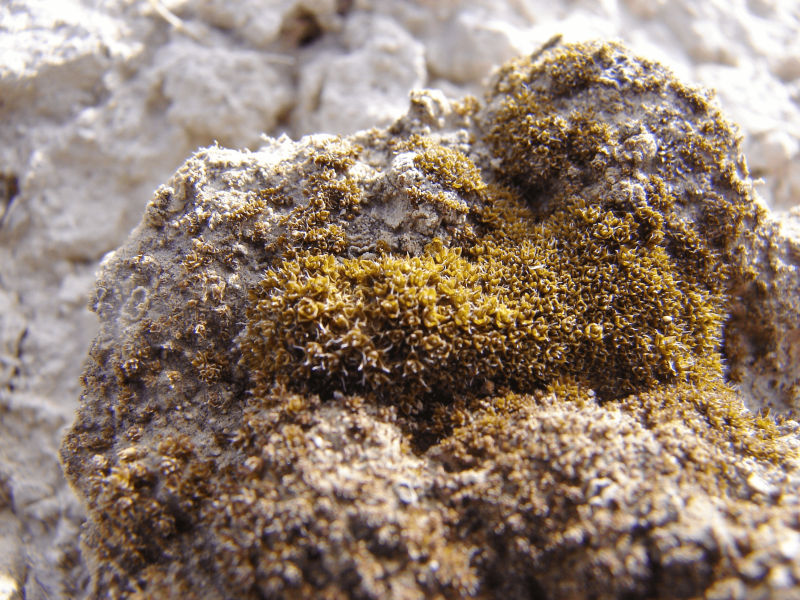
This desert moss can survive freezing temperatures and intense radiation. Might it be the first plant to grow on Mars?

Credit: Wikipedia
Credit: Wikipedia

A future civilization on Mars could be accompanied by one very special and resilient little plant.

A type of moss found in the desert—named Syntrichia caninervismay be able to survive and grow in the harsh environment of Mars, according to a new paper in the journal The Innovation.

This moss can grow in freezing temperatures as cold as -320.8 degrees Fahrenheit, and can survive levels of gamma radiation that would kill most other plants and life forms.

The plant can also withstand incredibly dry conditions, as well as a combination of dryness, heavy radiation, and cold weather in a simulation of the conditions on the Red Planet.

Follow the latest news and policy debates on sustainable agriculture, biomedicine, and other ‘disruptive’ innovations. Subscribe to our newsletter.

This is the first time that a whole plant has been tested for its ability to withstand conditions in space or on another world. Syntrichia caninervis is found across the world growing in harsh environments, ranging from Tibet to Antarctica, making it the perfect candidate for testing under Mars conditions.

S. caninervis represents a promising candidate as a colonist to facilitate terraforming efforts on Mars or other planets. This is not only because S. caninervis is a land plant with extreme multiple stress tolerance but also because it could serve as a pioneer species and the basis for the establishment and maintenance of the ecosystem by contributing to oxygen production, carbon sequestration, and soil fertility,” the researchers wrote. “Thus, S. caninervis can help drive the atmospheric, geological, and ecological processes required for other higher plants and animals while facilitating the creation of new habitable environments conducive to long-term human settlement.”


This is an excerpt. Read the original post here

{{ reviewsTotal }}{{ options.labels.singularReviewCountLabel }}
{{ reviewsTotal }}{{ options.labels.pluralReviewCountLabel }}
{{ options.labels.noReviewsLabel }}
{{ options.labels.newReviewButton }}
{{ userData.canReview.message }}

Related Articles

Infographic: Global regulatory and health research agencies on whether glyphosate causes cancer

Infographic: Global regulatory and health research agencies on whether glyphosate causes cancer

Does glyphosate—the world's most heavily-used herbicide—pose serious harm to humans? Is it carcinogenic? Those issues are of both legal and ...

Most Popular

organic scaled
Facts & Fallacies podcast: Organic food cuts pesticide exposure? A response to Dr. Rhonda Patrick
ChatGPT-Image-Mar-10-2026-01_39_01-PM
Viewpoint—“Miracle molecule” debunked: Why acemannan supplements don’t work
ChatGPT-Image-Jun-25-2026-02_53_56-PM
Embryo gene editing is on the horizon, stirring mixed emotions
ChatGPT-Image-Jul-6-2026-02_25_26-PM
40 million Americans take glucosamine. If you have memory loss, it could accelerate cognitive decline.
Screenshot-2026-07-01-at-2.49.48-PM
Dr. TikTok and male fertility: Viral claims tout GLP-1 drugs as fertility boosters. What does the science say?
using genetics to reverse aging
Is the longevity obsession a new form of ageism?
kratom
Viewpoint: Kratom ‘supplement’ crisis: DEA sits on its hands while patient addictions to this ineffective drug  rise
a-mature-farmer-working-in-the-field-at-sunrise-harvesting-crops-generated-by-ai-photo
What’s the prospect of developing gene-altered crops that are more nutritious and resist climate disruption
Blood blockage
High cholesterol? FDA approves effective oral medication
Screenshot 2026-07-22 at 10.25
Science brain drain escalates as Trump purge extends to USDA
png-upside-food-syn-bio-cultured-meat
Regulating cultured meat around the world
YearReview Grift
Viewpoint: A practical guide to evaluating social media wellness hype
Screenshot-2026-07-21-at-6.22.06-PM
The Indian physician’s one-woman battle against health disinformation on Wikipedia
ChatGPT-Image-Jun-25-2026-12_23_17-PM
No, Bill Gates did not secretly engineer ticks to promote veganism
glp menu logo outlined

Get news on human & agricultural genetics and biotechnology delivered to your inbox.