However, developing new varieties requires a long time—typically around 14 to 15 years—with classical methods. So, what could be the solution? Developing new varieties in a shorter time frame. The Gene Editing method (i.e., new breeding technique (NGT)) discovered in 2013 earned its discoverers the Nobel Prize and significantly shortened the breeding period. Using this method, soybeans with improved oil quality were developed in the USA in recent years, chickpeas in India in just four years, and sweet tomatoes in Japan.
This technique is essentially the laboratory version of classical mutation breeding. As is well-known, mutation is a spontaneous or intentional change in one of the genes of a living organism. Nearly 4,000 varieties have been registered worldwide using artificial mutation methods. In gene editing tools like CRISPR or other new genetic engineering methods, no external gene transfer occurs as it does with GMOs. On the contrary, the targeted gene is silenced using temporary DNA-cutting enzymes, which either enhance or diminish its effect—essentially subjecting it to micro-mutation.
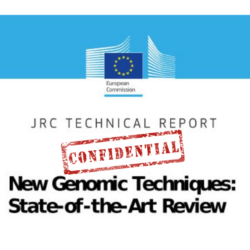
In the EU, genotypes developed using this method have, until now, been classified as genetically modified organisms (GMOs) in the registration processes. Under pressure from various groups, the EU amended its legislation regarding the registration of varieties developed under NGT at the beginning of 2024. Initially, the varieties were grouped into two categories. Varieties improved through gene editing were placed in Category 1 if they had characteristics indistinguishable from classical varieties, and in Category 2 if any differences were detected. The EU tasked the European Food Safety Authority (EFSA) with making the necessary legal arrangements within this framework. The report published by EFSA in September 2024 is summarized in the table above.

As can be seen from the table, there is no need for health and environmental tests for [the] registration of varieties belonging to Category 1 developed using the gene-editing method. Additionally, there is no obligation for packaging labels indicating that they were developed using gene editing. Conversely, varieties in Category 2 must undergo health and environmental tests for registration and must also carry a label on their packaging indicating that they were developed using gene editing. What is particularly striking is that none of the varieties in these categories can be used in organic agriculture! It is also worth noting that, within the framework of the Green Deal, the EU aims for 25% of its agriculture to be organic by 2030.
It is expected that nearly 40 candidate genotypes awaiting the EFSA report for registration in the EU as of 2024 will soon be available to EU farmers.



So, who will benefit from these regulations? Farmers and countries can achieve economic gains by planting varieties that adapt to changing climate conditions, while consumer food safety can be ensured. However, it is important to note that non-EU countries are not yet ready to supply products from these new varieties, as they have not established the necessary NBT procedures, and this will take time.
In developing countries, legal preparations for gene editing have not been initiated, and it cannot be said that the personnel and laboratory infrastructure are at a sufficient level. Biotechnology requires expert personnel and advanced laboratories. It may be considered that this infrastructure will be developed through inter-institutional cooperation. At this stage, when new breeding techniques, which the world is highly anticipating for variety development, are advancing in molecular biology, it is inevitable for seed companies that have not yet completed their full structuring to partner with universities and public research institutions.
It would be very appropriate to establish a “National Agricultural Research Institution” in each developing country to facilitate cooperation between the private sector, universities, and the public, similar to Brazil’s EMBRAPA.
Nazimi Açıkgöz graduated from Ankara University in 1964 and earned his Ph.D. degree at Munich Technical University in 1972. He then joined Ege University and worked there until his retirement in 2009. His rice breeding studies were supported by CENTO, NATO, IAEA, and TUBITAK. He is one of the founders of the “Seed Center” at Ege University, which he directed between 1998-2004 and was also one of the co-authors of Worldbank’s IAASTD report (2008).
Find Nazimi on Twitter @nazimiacikgoz
Read more of his articles at: https://nazimiacikgoz.
This article originally ran at No Chance to Food Crisis as Approval of Gene Editing in the EU and has been republished here with permission.