In 1974, researchers unearthed fossil AL 288-1, more commonly known as “Lucy”, in a 3.2-million-year-old deposit in the Hadar region of Ethiopia. In the fifty years since this monumental discovery, paleoanthropologists around the world have spent countless hours analyzing one the most complete fossil hominins ever discovered.
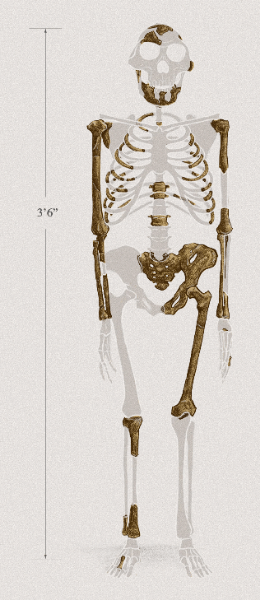
Just as hominins evolved over time, so has our understanding of Lucy and where she fits in the tangled tree of human evolution. Over the last half-century, Lucy has taught us about her own species, Australopithecus afarensis, and related species of australopiths and other hominins. Her skeleton has become a critical part of paleoanthropology and has shaped how we study ancient hominins.

While the fossils paleoanthropologists study are millions of years old, our understanding of the species that came before us is constantly changing with new discoveries and new advances in science. New perspectives in the field lead to researchers asking new questions about old fossils, which leads to a better understanding of the fossils we already have and those we have yet to find. And there’s still more to learn from Lucy even fifty years after she was first unearthed in Ethiopia.