ARCUS breakthrough: An advanced gene editing tool appears to have cured an infant of an early onset metabolic disorder

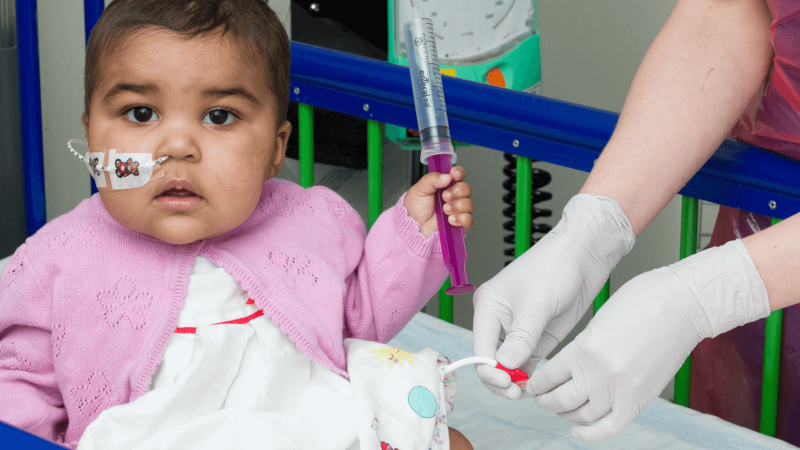
Layla, the first patient treated with a new genome-editing technology, at Great Ormond Street Hospital in London.
Credit: Gosh/STAT
Layla, the first patient treated with a new genome-editing technology, at Great Ormond Street Hospital in London. Credit: Gosh/STAT

A little-known gene editor, tested with help from a disgraced gene therapist seeking redemption, may have cured a 1-year-old boy of a deadly metabolic disorder. Announced last week by a company developing the therapy, the result could be the first success at stitching a curative gene into a “safe harbor,” a specific chromosomal location where its integration is unlikely to disrupt existing DNA in a way that triggers cancer or other problems. Because the gene should now be integrated in the baby’s genome, in this case within cells of the boy’s liver, it should persist as the organ—and person—grows.

Follow the latest news and policy debates on sustainable agriculture, biomedicine, and other ‘disruptive’ innovations. Subscribe to our newsletter.

The gene editor, dubbed ARCUS, is a DNA-cutting enzyme known as a nuclease, It is in some ways simpler and potentially better than the more famous CRISPR platform and could also help treat other genetic metabolic disorders. The company, iECURE, will not present data for the treated infant until March. But the apparent success of the safe harbor approach with the editor in the very first patient who received it is especially significant for iECURE co-founder James Wilson, who helped develop the new treatment.


This is an excerpt. Read the original post here

Related Articles

Infographic: Global regulatory and health research agencies on whether glyphosate causes cancer

Infographic: Global regulatory and health research agencies on whether glyphosate causes cancer

Does glyphosate—the world's most heavily-used herbicide—pose serious harm to humans? Is it carcinogenic? Those issues are of both legal and ...

Most Popular

ChatGPT-Image-Sep-2-2026-10_30_14-PM
Zero: That is the official American measles death toll for 2026. Here is what RFK Jr.’s CDC leaves out.
Screenshot-2026-09-10-at-12.20.19-PM
'Jet fuel didn't melt the steel': 9/11 conspiracy theories debunked
ChatGPT-Image-Sep-13-2026-10_24_17-AM
Bayer urges court to approve $7.25 billion Monsanto Roundup settlement that could limit its future liabilities
ChatGPT-Image-Sep-14-2026-11_36_25-AM
How the reckless AI race among Anthropic, OpenAI and China spawned today’s safety crisis
ChatGPT-Image-Aug-28-2026-03_33_46-PM
Viewpoint: Bad science—Five bogus Trump administration claims about vaccines and autism
ChatGPT-Image-Mar-10-2026-01_39_01-PM
Viewpoint—“Miracle molecule” debunked: Why acemannan supplements don’t work
screenshot at  am
‘Glyphosate is not carcinogenic’: Independent EU chemical oversight agency reaffirms—for the 3rd time in 9 years—that the herbicide is safe-as-used
Screenshot-2026-09-14-at-3.07.56-PM
Trump EPA rolls back power-plant climate rules—and moves to block future carbon limits
Screenshot-2026-09-14-at-10.52.30-AM
AI is being used in dangerous bioscience experiments
ChatGPT-Image-Sep-14-2026-02_57_24-PM
Viewpoint: 6 Atlantic Council expert opinions on the U.S., China and the AI safety crisis
Screenshot-2026-08-04-at-11.36.16-AM
Viewpoint: Emotion-driven stories of doctors allegedly ignoring patient concerns are driving vaccine hesitancy
ChatGPT-Image-Sep-13-2026-10_46_11-AM
“Hit the brakes”: Anthropic warns the race to superintelligence could spawn internet-seizing AI swarms—and empower authoritarians. Here’s how to stop it.
ChatGPT-Image-Aug-14-2026-11_16_47-AM
Fibermaxxing: Latest Instagram diet craze raises hope that a fiber-rich diet can improve health
glp menu logo outlined

Get news on human & agricultural genetics and biotechnology delivered to your inbox.