Bird flu outbreak edging towards becoming a full-fledged pandemic

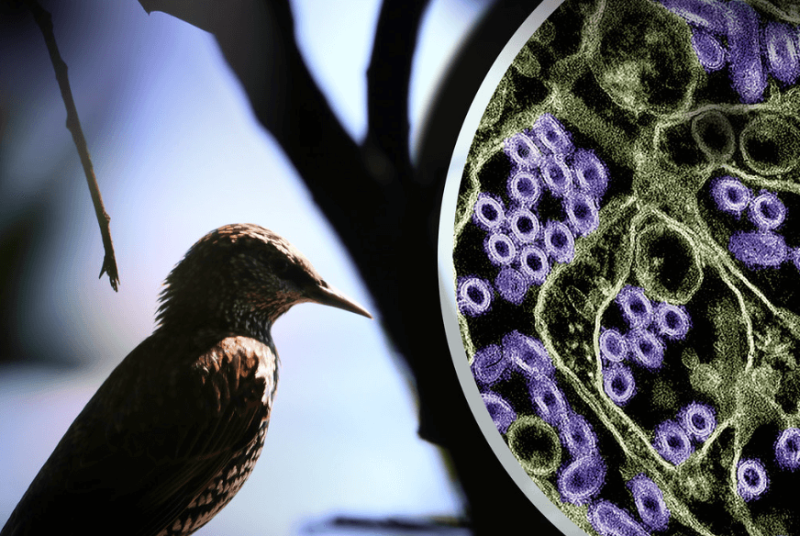
Photo of a wild bird. In the upper right corner is a colorized transmission electron micrograph of H5N1 virus particles (purple). H5N1 bird flu is widespread in wild birds worldwide, and in 2024 is causing a multistate outbreak in poultry and U.S. dairy cows. Credit: NIAID and CDC

When bird flu [H5N1] first struck dairy cattle a year ago, it seemed possible that it might affect a few isolated herds and disappear as quickly as it had appeared.

Instead, the virus has infected more than 900 herds and dozens of people, killing one, and the outbreak shows no signs of abating.

For at least a year, H5N1 has been infecting dairy cattle, which were not known to be susceptible to this type of influenza. …

Follow the latest news and policy debates on sustainable agriculture, biomedicine, and other ‘disruptive’ innovations. Subscribe to our newsletter.

And in 2024, the virus infected 67 Americans, compared with just one in the years before, in 2022. The sources of these infections are not all known; one person may have transmitted the virus to someone in their household.

Many of these developments are classic steps toward a pandemic, said Dr. James Lawler, a director at the University of Nebraska’s Global Center for Health Security. But, he noted, “where those were really supposed to trigger accelerated and amplified actions at the federal, state and local level, we’ve just kind of shrugged when each milestone has passed.”


This is an excerpt. Read the original post here

{{ reviewsTotal }}{{ options.labels.singularReviewCountLabel }}
{{ reviewsTotal }}{{ options.labels.pluralReviewCountLabel }}
{{ options.labels.newReviewButton }}
{{ userData.canReview.message }}

Related Articles

Infographic: Global regulatory and health research agencies on whether glyphosate causes cancer

Infographic: Global regulatory and health research agencies on whether glyphosate causes cancer

Does glyphosate—the world's most heavily-used herbicide—pose serious harm to humans? Is it carcinogenic? Those issues are of both legal and ...

Most Popular

ChatGPT-Image-May-26-2026-07_51_21-AM-2
Viewpoint: There are more than 1,000 chemicals in a cup of coffee—including many substances that can cause cancer. Why isn’t it banned?
Picture1
Sounds we can’t hear — the hidden planetary signals behind science, fear, and misinformation
Screenshot-2026-06-01-at-1.35.32-PM
Viewpoint: Swine farmers are under attack for allegedly mistreating their animals. Here are the facts.
Screenshot-2026-05-27-at-10.51.25-AM
Viewpoint: ‘Monsanto’ blues—Planned Netflix movie promises yet another round of anti-glyphosate disinformation
Screenshot 2025-07-30 at 10.48
Can gene editing eliminate Down syndrome? Scientists have done it in lab-grown cells
Screenshot-2026-06-02-at-11.59.11-AM
Magnifica Humanitas: Pope’s encyclical broadside against AI naivete and overreach
ChatGPT Image May 28, 2026, 08_16_38 PM
Viewpoint: Why the EPA mismeasures cancer risk of chemicals and what should be done to fix it
ChatGPT Image Jun 1, 2026, 11_39_17 AM
Viewpoint: When food myths go viral, farmers pay the price
Screenshot-2026-06-01-at-11.07.22-AM
Viewpoint: Many vaccine-suspicious conservatives and MAHA reject shots for their children by invoking ‘patient autonomy’. That’s ridiculous.
Screenshot 2025-11-18 at 3.45
Viewpoint—GMOs and sustainability: Why buying organic foods is the least environmentally-sensitive food choice—without offering any health benefits
ChatGPT-Image-May-28-2026-02_12_17-PM
Can ‘Social Stress Indicators’ help contain social media misfluencers?
glp menu logo outlined

Get news on human & agricultural genetics and biotechnology delivered to your inbox.