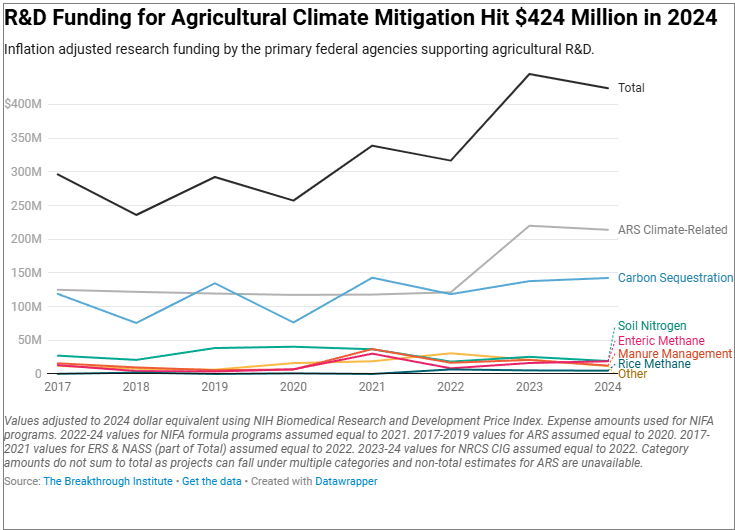
We estimate that eliminating all climate-related agricultural R&D could affect up to $424 million in grants and other spending at the Agricultural Research Service (ARS), the National Institute for Food and Agriculture (NIFA), and other federal agencies. This estimate is based on a keyword analysis of over 100,000 federal grant records, searching for terms related to greenhouse gas emissions or climate mitigation.
Widespread funding cuts would jeopardize not only climate mitigation, but also farmers’ productivity and international competitiveness. A large share of climate-related research focuses on improving farmers’ efficiency, with climate mitigation merely a co-benefit or component of the research project. Many other projects with a primary focus on climate mitigation—such as those researching how to cut nitrous oxide emissions by making fertilizer application more efficient—also contribute to making farmers more productive and reducing risk.
Yet federal R&D efforts could be improved by focusing less on reducing agriculture’s carbon footprint and more on increasing its productivity, for instance through breeding higher-yielding crops and livestock that are more disease-resistant. Productivity-enhancing research is critical to keeping food prices low and American farmers internationally competitive. In fact, funding more research that boosts yields, improves fertilizer efficiency and otherwise increases productivity could reduce greenhouse gas emissions even more than efforts narrowly focused on climate mitigation such as soil carbon sequestration and cattle methane inhibition.
Most Climate Research Is Productivity Research
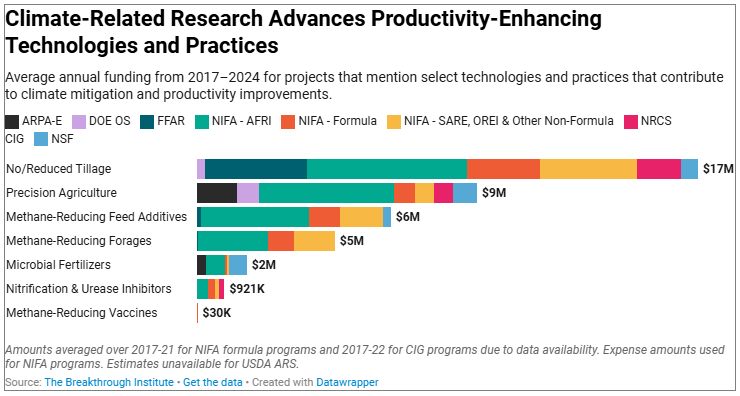
Indiscriminately freezing or halting funding for R&D projects that mention greenhouse gas emissions or carbon sequestration, or are otherwise climate-related would hurt farmers. Many of the projects related to climate mitigation also improve productivity and resiliency. Soil with a higher carbon content, for example, is typically better at retaining moisture, while novel fertilizer technologies and efforts to cut cattle methane emissions can reduce farmers’ input costs.
Soil Carbon Research Can Improve Yields
Research into soil carbon—the carbon stored within soil organic matter—is frequently cited as a key climate mitigation strategy in agriculture and accounts for the largest share of climate-related research we identified. For example, the Inflation Reduction Act included $300 million to study how farming practices, like reduced tillage or planting cover crops, can store carbon in the soil or reduce greenhouse gas emissions. While such research is important for identifying where and when climate mitigation is possible and most cost-effective, it has also shown that many widely promoted farming practices, including cover crops, fail to significantly increase soil carbon storage.
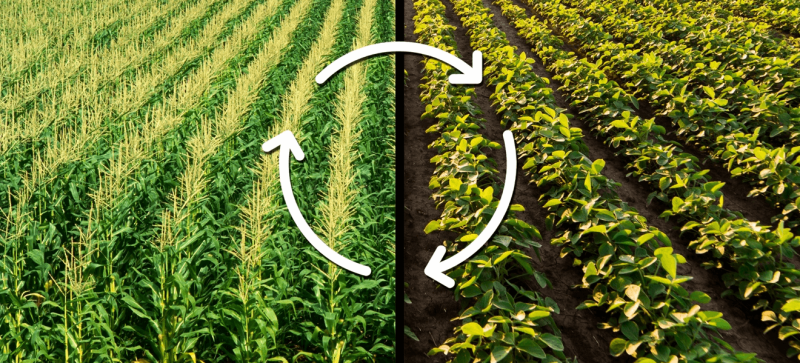
However, broader research into soil management—though it includes measurement or consideration of soil carbon and may therefore be considered “climate-related”—offers significant and tangible benefits for agricultural productivity. Practices such as no-till farming and cover cropping can enhance soil fertility, improve moisture retention, and reduce erosion—outcomes that directly boost crop yields and decrease the need for costly inputs like irrigation and fertilizers. This aspect of soil carbon research, which aims to understand and optimize farming methods to enhance soil health and productivity, is undeniably valuable to farmers.
Federally funded research has played a key role in identifying when, where and how no-till and low-till farming increases yields and where adoption may be less beneficial. A NASA-funded study found that no-till particularly improves yields on rainfed plots with smaller benefits or mixed effects in humid regions. An analysis supported by the Department of Energy found it also raises yields in arid regions and for oilseed crops. Other research, funded by NIFA and NSF, has demonstrated that the yield benefits increase with continuous no-till over at least fifteen years, and the majority of no-till systems recoup implementation costs within three decades.
Rather than focusing narrowly on carbon sequestration, crop and soil scientists at America’s land grant universities are exploring how soil, climate, and farming systems interact in order to optimize agricultural productivity. A recent NIFA-funded project at Purdue University, for example, employs artificial intelligence to optimize soil sampling. Though the project, “Leveraging Open-Source Geospatial Information For Sustainable Soil Management And Climate-Smart Agriculture” may appear to be climate-focused, one of its main goals is to help farmers precisely apply fertilizers and other inputs. This is a promising approach to increase productivity by reducing input costs, minimizing runoff, and improving soil nutrient availability.
Fertilizer Innovation Can Reduce Farmer Input Costs
Fertilizers are not only a leading expense for many farmers, but also one of the top sources of agricultural greenhouse gas emissions.
Federally-funded research on nitrogen-fixing soil microbes aims to convert more nitrogen from the air into a form crops can use, which could enable farmers to reduce fertilizer application rates, simultaneously lowering their costs and cutting nitrous oxide emissions, a potent greenhouse gas. Though this technology is emerging and uncertainties remain, its potential productivity and environmental benefits strongly justify continued investment. Research suggests certain microbial inoculants can decrease the need for chemical inputs, while microbial fertilizers can enhance soil health by improving nutrient availability and reducing dependency on synthetic fertilizers leading to lower costs for farmers.
A range of plant breeding studies related to nitrogen and nitrous oxide emissions also hold promise to reduce fertilizer needs by improving plants’ natural nutrient absorption. For example, a joint project between Prairie View A&M and Texas A&M supported by NIFA is studying sorghum cultivars that secrete a compound which mitigates soil nitrogen loss. Though ostensibly focused on climate change—”climate smart” is in the project title—the research could significantly reduce fertilizer requirements while maintaining or improving yields with the end effect of improving farmers’ economic bottom lines.
Reducing Cattle Methane Enhances Livestock Efficiency
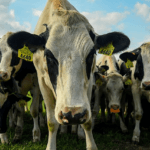
Livestock methane emissions are agriculture’s second-largest source of greenhouse gases. Methane is produced by methanogenic bacteria in cattle stomachs that convert complex starches into methane. These bacteria consume energy that cattle may otherwise be able to use for growth or milk production. Inhibiting methane-producing bacteria can thus directly improve productivity while cutting emissions. For instance, an analysis of 15 studies found that feed additives containing the compound 3-NOP, marketed in the U.S. under the name Bovaer by the animal pharmaceutical company Elanco, can reduce beef methane emissions by about 30% while maintaining weight gain and reducing the amount of feed animals need, thereby saving producers money. However, additional research on long-term efficacy, animal health implications, and meat safety of 3-NOP treated animals is likely needed to gain FDA approval and establish consumer trust in the novel technology. USDA has previously funded similar long-term research with dairy cows, which Bovaer is now approved for.
Other federally-funded research is exploring and developing alternative ways to reduce cattle methane emissions while also improving productivity, including projects focused on gut microbiomes and selective breeding. For example, researchers at the University of Wisconsin, with grant-funding from NIFA, are measuring enteric methane emissions of cattle across two University research farms, identifying low-emitting cattle, and conducting further research on the gut microbiome of these animals. The largest study of its kind to date, this effort leverages existing University resources to better understand cattle health and digestion and discover routes to reduce enteric methane production and improve feed efficiency. Research like this can pave the way to develop new methods of methane inhibition with lower costs for technology adoption and improved returns to farmers. Similarly, a NIFA-funded effort at University of Pennsylvania is setting the scientific foundation for selective breeding programs that target cattle with naturally lower methane emissions, which could enhance overall herd productivity.

More Productivity Research Needed
None of this is to say that the current distribution of federal agriculture R&D funding is optimal. In fact, shifting funding to focus more on efficiency and productivity would be a win-win-win, benefiting farmers, consumers, and the environment.
For farmers, improved seeds, practices, and technologies can raise yields, lower input costs, and increase resilience to pests, disease, and climate stress. Consumers benefit through more abundant and affordable food. Environmentally, higher productivity reduces pressure to convert forests or grasslands into farmland, thereby cutting land-use change emissions and preserving biodiversity. Productivity-focused research can also enable more efficient use of water, fertilizer, and other inputs, decreasing pollution and greenhouse gas emissions per unit of food produced.
Research commissioned by The Breakthrough Institute estimates that doubling public U.S. agricultural R&D spending would increase U.S. productivity by about 60% compared to a business-as-usual scenario, thereby expanding crop and livestock output more than 40%, reducing prices by more than 1/3, and substantially cutting greenhouse gas emissions, particularly from avoided deforestation. In fact, as this and other research shows, investing in productivity-enhancing R&D typically reduces emissions more cost-effectively and permanently than many efforts directly focused on helping farmers sequester carbon or reduce emissions.
While the private sector has an incentive to invest in productivity-enhancing research, public R&D fills many critical gaps in private funding. Government programs support early-stage basic research; high-risk, high-reward efforts; projects that require coordination across many public and private actors; and projects that benefit smaller markets that the private sector poorly serves. Historically, public R&D investments have spurred innovations such as hybrid crops, pest-resistant plants, and more efficient irrigation methods—critical drivers of productivity growth.
In particular, USDA should strive to better support early-stage initiatives that could dramatically increase yields and reduce food prices. These areas include developing low-cost and effective microbial fertilizers, livestock breeds genetically engineered to be disease-resistant, and next-generation solutions to reducing the amount of energy cattle lose as methane. The Department of Defense pioneered work to support such high-risk, high-reward R&D in other fields. USDA should follow their lead, for instance by establishing the Agriculture Advanced Research and Development Authority.
Smart Investment, Not Indiscriminate Cuts
Put simply, any change in priority areas eligible for federal R&D funding should be done in a targeted, evidence-based manner. Recent actions by the administration indicate a different approach. A recently leaked USDA memo suggests that ARS will not un-freeze funding for research projects that mention certain terms related to climate and environmental outcomes, including “climate”, “greenhouse gas emissions”, and “methane emissions.” The breadth of this list of censored terms is concerning, discouraging even the acknowledgement that a research proposal may have a climate related co-benefit.
A blanket cut for all research projects with a climate component, whether at ARS or USDA-wide, won’t just hinder climate progress—it would directly weaken the long-term viability of American farming. Agricultural research requires sustained investment to generate meaningful innovations. Abrupt funding reductions disrupt multi-year projects, squander past investments, and erode America’s competitive advantage in global agriculture. Any reallocation of funds must therefore be carefully done to avoid halting valuable research and wasting taxpayer funds as well as to ensure that funds are redirected toward promising research areas.
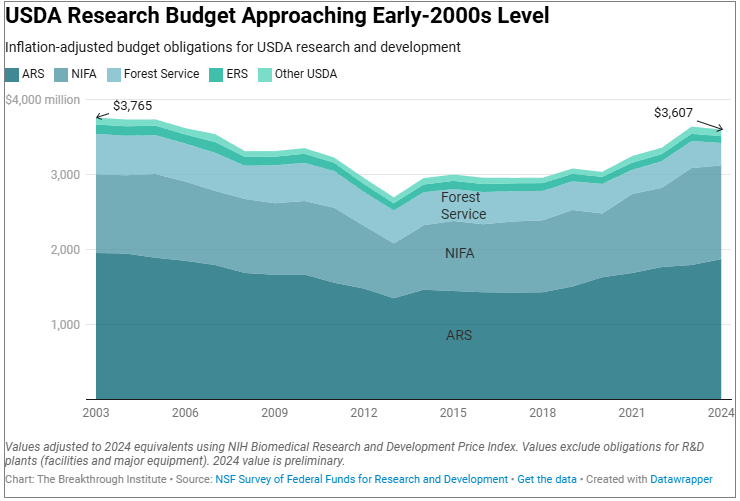
Shifts in funding should also not reduce total R&D funding, which would exacerbate a long-term slowdown in U.S. agricultural productivity. Public investment in U.S. agricultural research—from USDA, other federal agencies, and states—has declined significantly over the past two decades from $7.64 billion in 2002 to $5.16 billion in 2019—a nearly 30% reduction, adjusting for inflation. This decline is the leading contributor to a slowdown in agricultural productivity growth. The 2024 Global Agricultural Productivity Report found that U.S. agriculture has not been growing more productive, while India, for example, has a robust annual productivity growth rate of 1.7 percent. Greater productivity growth is crucial for improving America’s ability to sustainably feed a growing global population and maintain competitiveness in the international agricultural market.
Thanks to bipartisan support in Congress, USDA’s R&D funding has recently begun to rebound. Funding levels for USDA R&D agencies in 2024 surpassed $3.6 billion, just shy of the funding levels in the early- and mid-2000s. However, this rise in funding could easily be undone. If funding is cut for all climate-related agricultural research and is not reallocated to other areas, USDA’s R&D budget could fall by 11%, to approximately $3.2 billion. ARS could see a decline of as much as $214 million and NIFA a decline of as much as $144 million, primarily in its chief grant-making program, the Agriculture and Food Research Initiative (AFRI), which we estimate awarded $82 million to climate-related projects in 2024.
Ultimately, USDA’s research agencies should take a pragmatic, science-based approach, investing in a wide range of productivity-enhancing R&D efforts including projects focused on increasing fertilizer efficiency, reducing the energy that cattle lose as methane, and improving soil health. This should include shifting the emphasis of research away from a narrow focus on climate mitigation toward productivity growth, which could yield larger benefits for farmers, consumers, and the climate alike. At the same time, the administration should avoid indiscriminately slashing funding for projects that mention climate as these too are key for strengthening farmers’ productivity and resilience.
You can find the methods for the above analysis here.
Benjamin Goren is a researcher and writer with a focus on agricultural innovation, methane emissions and land use. Follow Benjamin on X @benjamin_goren
Dan Blaustein-Rejto is the Director of the Food and Agriculture program at Breakthrough. Follow Dan on X @danrejto
A version of this article was originally posted at Breakthrough Institute and has been reposted here with permission. Any reposting should credit the original author and provide links to both the GLP and the original article. Find Breakthrough Institute on X @TheBTI