Once upon a time, way back in 1990, a German company modified the genetics of a bacterium so it could efficiently ferment plant waste, turning the material into ethanol. There was, the story goes, just one problem: the bacteria, Klebsiella planticola, “almost killed the world with booze,” according to an article on Cracked.
Earth Island Journal took a less sarcastic tack, quoting retired genetics professor and now environmental activist David Suzuki:
Geneticist David Suzuki [Read the GLP’s profile of David Suzuki here.] understands that what took place was truly ominous. “The genetically engineered Klebsiella,” he says, “could have ended all plant life on this continent. The implications of this single case are nothing short of terrifying.”
In the early 1990s, a European genetic engineering company was preparing to field test its genetically modified version of Klebsiella planticola, which it had tested in the lab and presumed to be safe. But if it weren’t for the work of a team of independent scientists led by Dr. Elaine Ingham, that company could have literally killed every terrestrial plant on the planet.
A turn of events
Suzuki, known for his batty views on ag biotechnology, is not a reliable source. So, what did happen? Scientists and engineers have been spending decades looking at new ways to handle plant waste, which can become rich material for soil amendments, or can be fermented into other chemicals, including ethanol, and turned into biofuels. In fact, the Klebsiella planticola bacterium (which is now called Raoultella planticola after scientists re-examined the members of Klebsiella), has been studied for its ability to create ethanol from decaying plant material.
A German company received U.S. Environmental Protection Agency permission to conduct field trials on the amended bacterium, called SDF20, which had a plasmid (a short loop of DNA) inserted into its genome. This plasmid contained a gene for an enzyme, pyruvate decarboxylase that allowed SDF20 to ferment plant waste to ethanol.
This trial caught the attention of Elaine Ingham, a Green Party member who was then a scientist on the faculty of Oregon State University. In testimony to the New Zealand Royal Commission on Genetic Engineering, Ingham said one of her graduate students “discovered that the engineered bacterium, Klebsiella planticola, with an additional alcohol gene, killed all the wheat plants in microcosms into which the engineered organisms were added.”
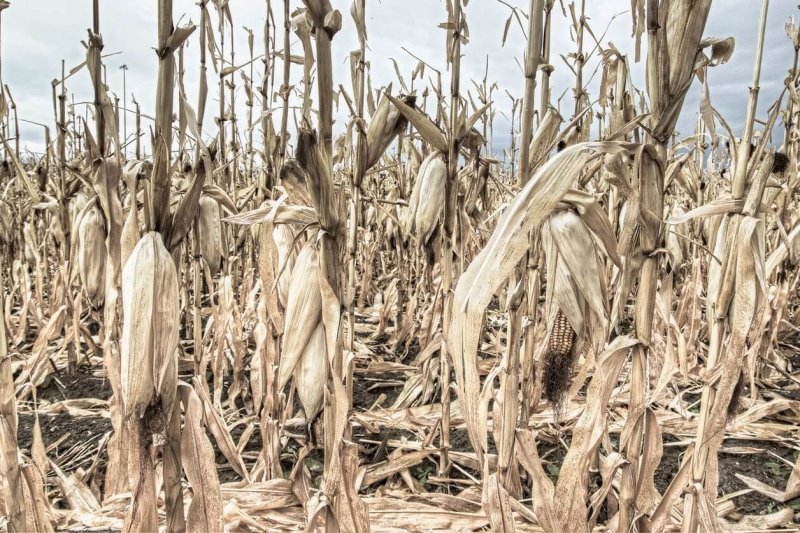
The engineered bacterium produces far beyond the required amount of alcohol per gram soil than required to kill any terrestrial plant. This could have been the single most devastating impact on human beings since we should likely have lost corn, wheat, barley, vegetable crops, trees, bushes, etc., conceivably all terrestrial plants.
To back this up, she cited a paper published in 1999 in Applied Soil Ecology. News of her testimony was picked up the Green Party members of the European Parliament, and a number of other activists who touted how the discovery underscored the grave planetary danger of GMOs.
The Greens rescue the world from GMOs?
According to an article in Organics.org, the Green Party activists and scientists saved us all in the nick of time:
This new miracle GMO had all the necessary approvals to be commercialized and it was going to be. However, a team of independent scientists led by Dr. Elaine Ingham remained skeptical and luckily so. They discovered after some testing what the bacteria is actually capable of doing and after exposing the results the gene-altered bacteria was never commercialized. If not for their efforts, there is no doubt that this would have ended the world.
As might be expected, all the usual science and genetic engineering activist groups promoted her comment as if it was a doomsday warning from god. EarthOut, GM Watch, and Earth Island Institute blathered on . “What they discovered was not only startling, but terrifying,” hissed ‘Say No to GMOs. “The biotech industry had created a biological monster–a genetically engineered microorganism that would kill all terrestrial plants.”
Scientists call shenanigans on GMO doomsday plant
Bullocks. It didn’t take long for real journalists and researchers to blow the whistle.. In a rebuttal to Ingham’s testimony, Christian Walter, with Forest Research Institute in Rotorua, New Zealand, Michael Berridge, of the Malaghan Institute of Medical Research in Wellington, and David Tribe, of the University of Melbourne, Australia, wrote:
-
The paper she and Holmes wrote with their results actually doesn’t exist (the volume and page numbers were false, and no other citation can be found).
-
Another paper, also by Holmes, Ingham and other colleagues, was cited later (after the rebuttal was published), but this paper reviewed the growth of spring wheat in poor, sandy soil that had been inoculated with the SDF20 strain of K. planticola. Not anything resembling grounds for worldwide plant Armageddon.
-
There was no evidence from the EPA or the US Department of Agriculture that any field trials for SDF20 were ever approved.
-
The SDF20 produced about 20 micrograms per milliliter of alcohol in the soil. “This concentration is several hundred times lower than that required to affect plant growth (10 milligrams per milliliter),” they wrote.
The scientists concluded :

Dr Ingham’s assertions have been published widely on the Internet and elsewhere. However, we have been unable to find any evidence that Dr Ingham has submitted her assertions about threats to terrestrial plant life to scientific publication in a peer-reviewed journal.
Our own literature search and resulting evidence further demonstrates that natural alcohol producing varieties of Klebsiella planticola already exist, and are routinely found in nature; however, no adverse consequences of this alcohol production on any organisms including plants have been observed.
In a twist, the studies on K. planticola (R. planticola today), actually showed that the new strain could not survive in poor soil, which probably wrote a death sentence not for the world, but for the commercial viability of a modified form of R. planticola.
As for Dr. Ingham, who went from Oregon State to the Rodale Institute — an organic promoting activist organization quite detached from reality itself–and now runs a soil management consulting company called SoilFoodWeb.
To her credit, she and the Green Party apologized to the New Zealand Royal Commission:
The Green Party incorrectly cited a paper that is has since discovered…does not exist. There are no records indicating that field testing approval was ever given. The Green Party would like to request that the commission disregard the final sentence in paragraph 30, recognize that this statement goes beyond the published literature. (This was Ingham’s assertion that SDF20 would kill all plant life on earth).
In her apology, Ingham wrotei:
I was incorrect in stating that the specifically genetically engineered Klebsiella planticola I was talking about had been approved for field trials and was going to be released. I would like to make clear that the possibility of destruction of terrestrial plants that I referred to as an outcome of releasing this organism is an extrapolation from the laboratory evidence. It is one possible scenario. There are other possible scenarios which could occur; we need more data to be able to make a clear judgement on the most likely outcome.
Any data to support her original, ridiculous propostion, would have been nice.
Andrew Porterfield is a writer and editor, and has worked with numerous academic institutions, companies and non-profits in the life sciences. BIO. Follow him on Twitter @AMPorterfield
This article originally ran on the GLP August 11, 2017.