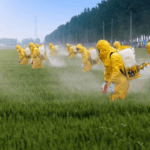
Ships, chips, and missiles dominate discussions about defense. But don’t forget food. Secure supplies are key to supply-chain sovereignty — and while China races ahead, the US rushes to keep up, and Europe plays catch-up.
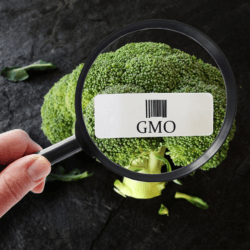
Agriculture biotech is undergoing a revolution. First-generation genetically modified crops inserted genes from unrelated species, such as bacterial traits for insect resistance, provoking public unease and stringent regulation. By contrast, today’s CRISPR-Cas systems mostly adjust a plant’s own genome — often leaving no foreign DNA — rewriting genomes with word-processor precision at record speeds and compressing breeding cycles from decades to years.
These biotechnology innovations create multiplier effects — lower costs, higher yields, stronger export competitiveness, rural jobs, and reduced reliance on authoritarian suppliers. Biotech-powered farmers harvest hardy wheat and rice that tolerate heat and drought, soybeans and rapeseed tuned for healthy oils, disease-resistant fruits, and crops calibrated for indoor or mechanized farming.
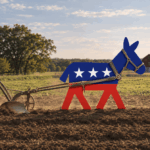
In recognition of the stakes, the US Congress aims to spur agriculture biotech. In September 2025, Democratic Senator Alex Padilla and Republican Todd Young introduced a bipartisan package of bills, including the Agricultural Biotechnology Coordination Act and the Synthetic Biology Advancement Act, based on a report published by the National Security Commission on Emerging Biotechnology. The new laws, if passed, would create a USDA biotech office, expand national synthetic biology infrastructure, and strengthen federal risk assessment research.
The goal is not only to modernize US farming but also to secure independence from volatile global inputs such as fertilizers, pesticides, and imported feedstocks. US regulation has largely treated biotech crops as cousins of conventional breeding. The 2020 SECURE rule exempted many gene-edited plants from pre-market review, and by late 2024, nearly a hundred varieties had cleared that bar.
But the regulatory picture has since blurred: a federal court vacated the so-called SECURE rule in December 2024, ruling that it failed to meet procedure requirements. SECURE streamlined oversight of genetically engineered organisms by evaluating their traits rather than the techniques used to create them. Regulation now returns to the pre-2020 framework requiring numerous permits.
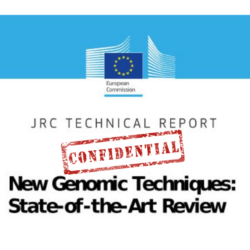
Europe, long defined by caution toward GMOs, is inching toward a flexible stance. The 2001 GMO Directive subjected gene-edited plants to the same constraints as transgenics; approvals were rare, and member-states wielded de facto vetoes. Now the mood is shifting. In 2023, the European Commission proposed “new genomic techniques,” the European Parliament voted in 2024 to ease requirements for certain edits, and the European Council endorsed a positive negotiating mandate in 2025.
China has no qualms. Beijing has approved multiple gene-edited varieties of soybean, wheat, corn, and rice, and is investing heavily in domestic gene-editing tools and “independent and controllable” seed systems. Its 2024–28 guidelines and annual rural policy directives cast biotechnology as a foundation of food security and sovereign capability. Chinese security agencies now warn of foreign espionage targeting seed genetics, framing agricultural biotech as an arena of intelligence and industrial competition.
Key policy questions persist: how to assess long-term ecological effects, how to protect biodiversity, and how to ensure that farmers and public breeders — not just patent holders — capture the benefits. Unlike small breeders, large agricultural players insist on labeling and patents. The European Commission wants to push ahead, while the European Parliament remains divided. In the US, gene-edited foods remain largely invisible to consumers, but that anonymity will fade as products proliferate.
Regulatory clarity will be key. Seeds are becoming strategic assets, and whoever shapes the rules of agricultural biotechnology will influence the future of global food systems. The race to edit the genome of agriculture need not be zero-sum, but American and European hesitation could allow China to define the trajectory of the bio-powered century.
The US has historically left innovation to the private sector. The biotech agriculture legislative package moving through Capitol Hill marks a shift toward strategic industrial policy: public funding for biofoundries, shared genomic databases, and new partnerships between USDA labs and growers. If successful, it could make US agriculture more self-sufficient and harder for adversaries to disrupt.


Across the Atlantic, Europe’s small-scale farming traditions, consumer skepticism toward agribusiness, and influential environmental movements inhibit commercialization despite strong research capacity. The result is dependence: large imports of genetically modified protein feed, vulnerability to fertilizer markets, and a growing gap between environmental ambition and technological tools.
Public trust remains the essential bottleneck. Critics warn of corporate concentration, reduced biodiversity, and ecological risk. Policymakers will need to impose transparency, clear labeling, open research, and demonstrable benefits for farmers to build legitimacy.
Together, the US and Europe could set global norms for safe, sustainable biotech agriculture. A transatlantic biotech framework could coordinate investment, harmonize regulations, and head off the challenge to dominate the crucial technology from China.

Elly Rostoum is a Resident Senior Fellow with the Tech Policy Program at the Center for European Policy Analysis (CEPA). She is currently a Lecturer in Strategic Studies at the Zanvyl Krieger School for Arts and Sciences at Johns Hopkins University and a nonresident Fellow at the SAIS China Research Center. Find Elly on X @EllyRostoum
A version of this article was originally posted at Center for European Policy Analysis (CEPA) and is reposted here with permission. Any reposting should credit both the GLP and original article. Find CEPA on X @CEPA