The Make America Healthy Again coalition is at it again. An increasingly organized alliance of anti-vaccine activists, environmental litigators, and wellness influencers has crystallized into a potent disinformation network that now shapes health policy. Florida is their latest hostage.
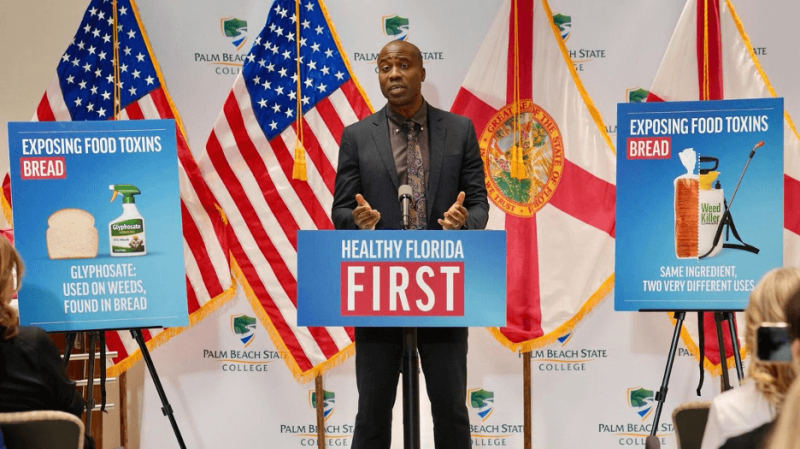
Last week, Governor Ron DeSantis, First Lady Casey DeSantis, and Florida Surgeon General Dr. Joseph Ladapo—the culture warrior who has compared school vaccine requirements to “slavery”—rolled out the state’s Healthy Florida First initiative, claiming that many everyday groceries are “contaminated” and a cancer-causing time bomb. It focuses on three product areas: baby formulas, candy, and bread. To ensure no one misses the magnitude of their claims, they ginned up a website, ExposingFoodToxins.com, dressed up to look like a sober explainer of food safety science but written like a lawsuit recruitment ad.

What a disinformation disaster. The initiative is branded as a transparency and prevention effort, but in structure and tone it mirrors classic fear-based campaigns far more than it resembles evidence-driven public health.
Here’s the sad science reality: The state’s claims are scientifically ridiculous, and the campaign will end up harming, rather than improving, public awareness and health. Public officials are using the kind of stark, list-driven hysteria messaging more commonly associated with advocacy campaigns and multi-district litigation rather than education-focused health agencies. Two of the many bizarre claims:
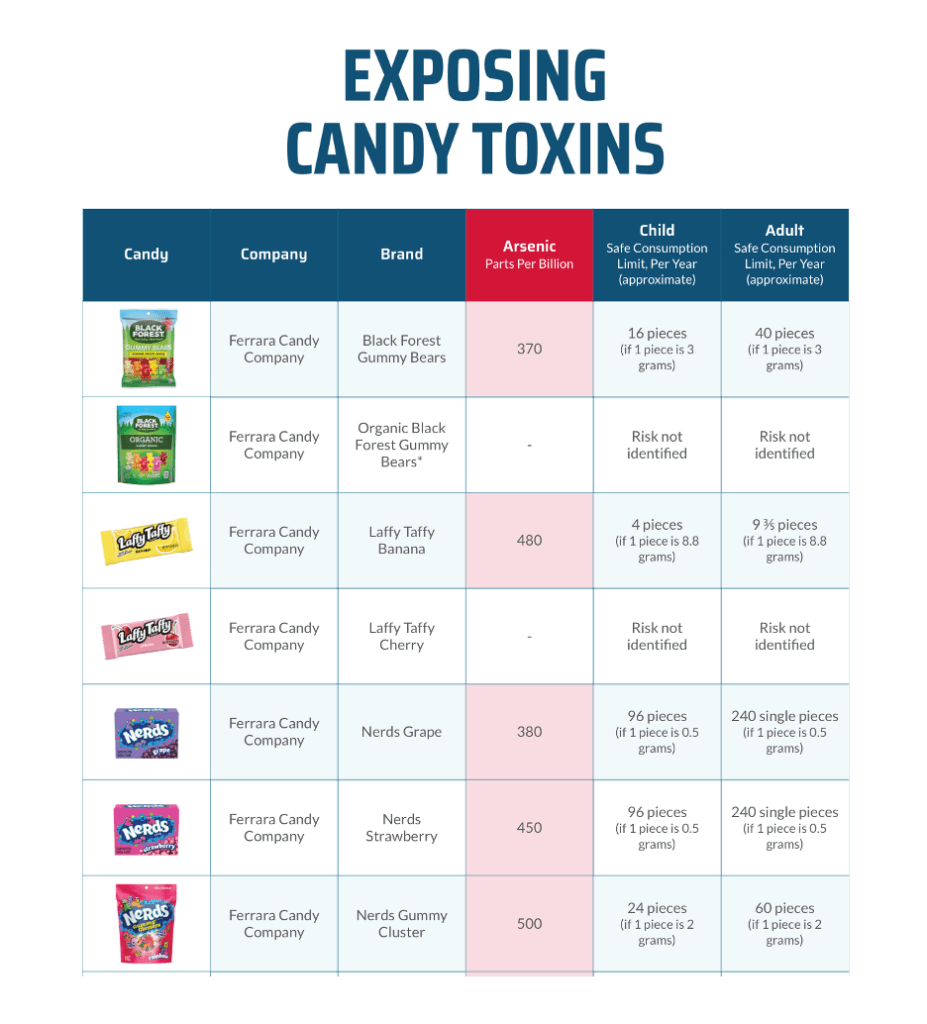
- Jolly Rancher Sour Apple is listed at having 540 parts per billion (ppb) of arsenic; that means a child’s “safe” intake would be six pieces.
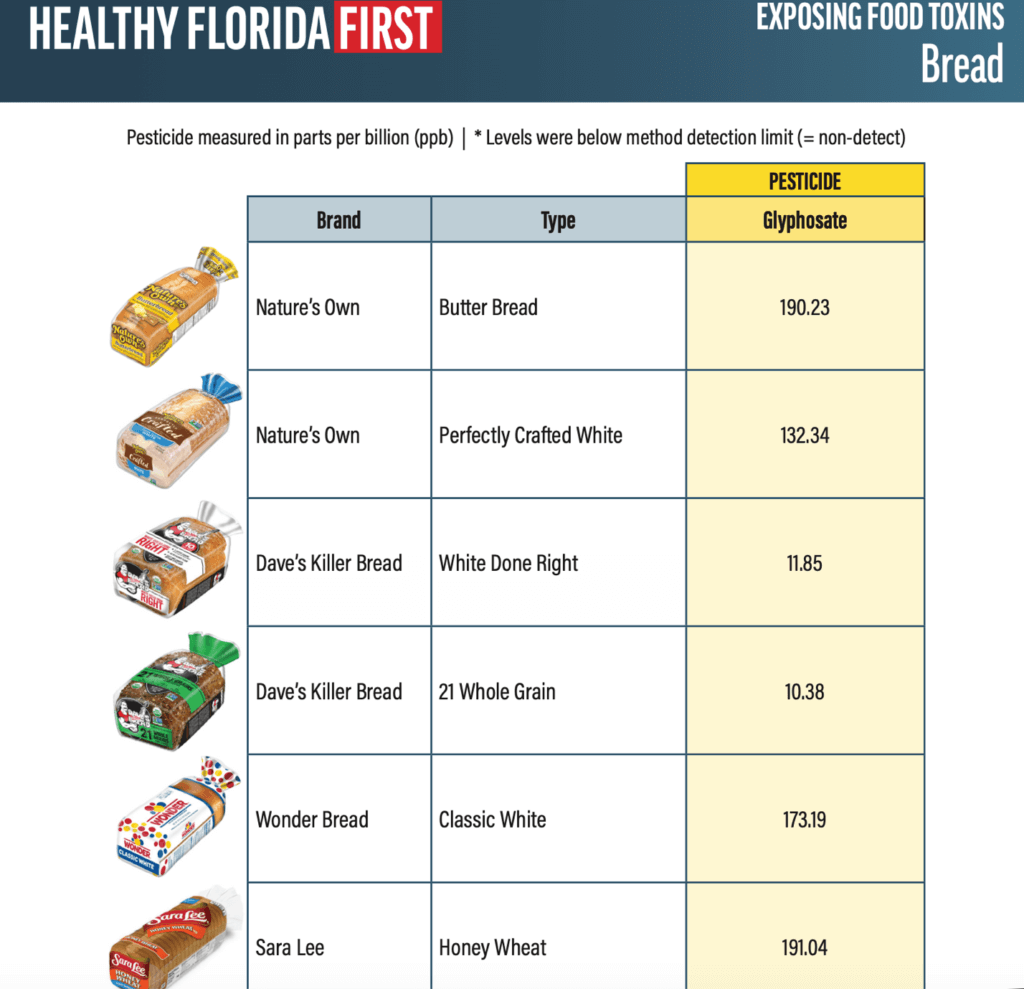
- Sara Lee Honey Wheat bread is listed as containing 191.04 ppb of glyphosate (the herbicide widely known as the active ingredient in Roundup); cancer, they imply, is inevitable
This bizarre program was developed to align with the “Make America Healthy Again” agenda, the Trump-era, Robert Kennedy, Jr.-driven “clean food/clean health” movement that has gained traction online and within liberal wellness and conservative policy circles. Its supporters frame the Florida food project as overdue accountability: find contaminants, publish results, and pressure companies to reduce exposures.
Scientists recognize it for what it is: “fear-forward” messaging: publish a random list of foods and chemicals, abuse the awesome power of modern analytical chemistry, detect trace residues of compounds present at the teetering edge of nothing, then frame them as toxic sludge that destroys your health and poisons your family. The website and its wild claims are generating uncritical, viral headlines and social media hysteria — perhaps the primary goal of the attention-groveling governor — but very little scientific understanding.

What Florida tested, how, and what it claims it found
Candy products can kill you, according to the state of Florida. The site claims to have detected arsenic in 28 of 46 candy products from 10 manufacturers—at levels far below what any food agency anywhere in the world believes are unsafe. It adds the irresponsible comment that “arsenic exposure beyond limits… can increase the risk of cancers.” That’s true in theory—just not at the limits used in Florida’s evaluation, which don’t match the risk-based benchmarks set by independent regulators equipped to evaluate real-world exposure.
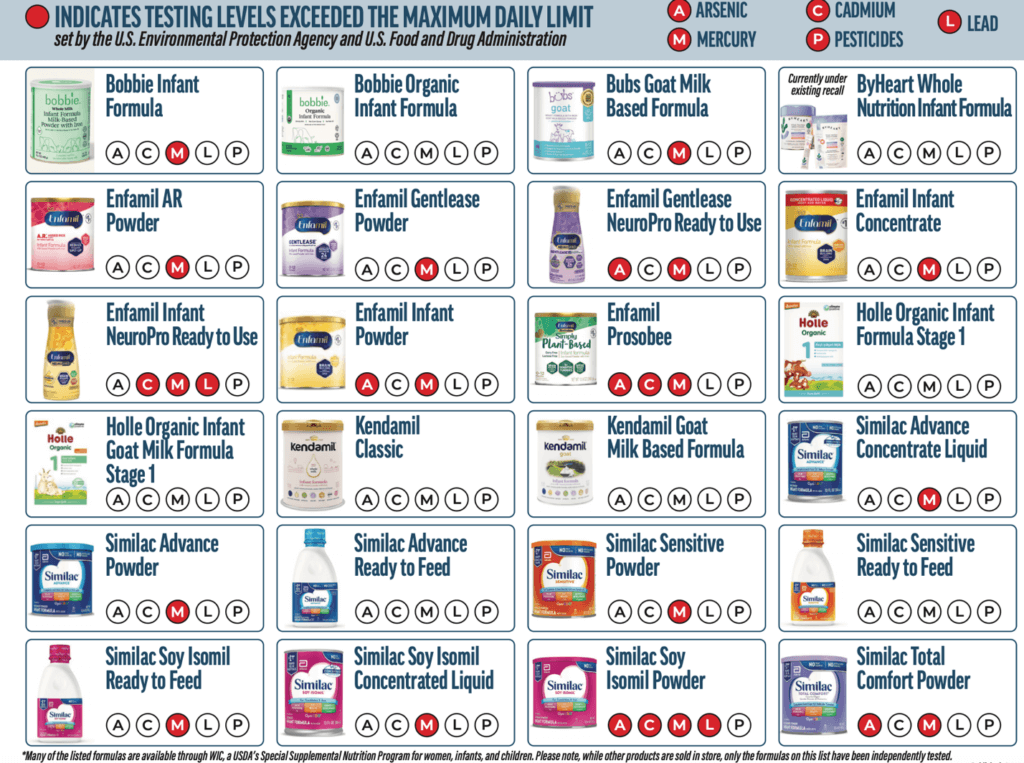
Florida also tested infant formula for a suite of heavy metals and pesticides, claiming that 16 of 24 tested had “elevated” and dangerous levels — without demonstrating that any product exceeded a legally enforceable safety standard. The term “elevated” is used as a scare adjective, not a scientific conclusion: the state offers no federal benchmark or internationally accepted limit to bolster their contention that these micro-traces represent real risk.
Most bread is toxic, apparently. Predictably, the MAHA cabal also flogged the glyphosate-will-give-you-cancer horse, detecting the herbicide in 6 of 8 bread products at levels from ~10 ppb (some whole grain) up to ~191 ppb (some white/wheat breads). For perspective, at worst, that’s the equivalent of about 16 milliseconds in a day. That’s vanishingly inconsequential.
Where did this hysteria originate?
This evaluation scheme is torn from the playbook of the tort industry-funded Environmental Working Group. Their blueprint is cleverly deceptive. First, publicize scary numbers at parts per billion or trillion on a website and in slick-looking reports, amplify them through a “if it bleeds, it leads” media ecosystem, then fly in like a culinary crusader to rescue consumers from industrial food and farm “chemikills” that are causing chronic diseases. Consumers don’t have the skill set to evaluate the data presented; they just know that chemical things that they can’t pronounce are found in their food in amounts that are not zero. That’s scary.
EWG has turned hysteria into a science-bending art form with its annual Dirty Dozen hysteriagram. Each year, the USDA tests more than 10,000 produce samples collected nationwide. The latest results, released in January, found that more than 99% of fruits and vegetables had pesticide residues below benchmark levels set by the U.S. EPA. EWG — and now Florida — dismisses those benchmarks (and similar standards used in Canada, the EU, Australia, New Zealand, and Japan) as captured by “Big Ag” and “Big Chem.” So it invents its own thresholds — untethered to toxicology — and then announces a fresh Dirty Dozen list. Donations roll in; lawsuits roll out.
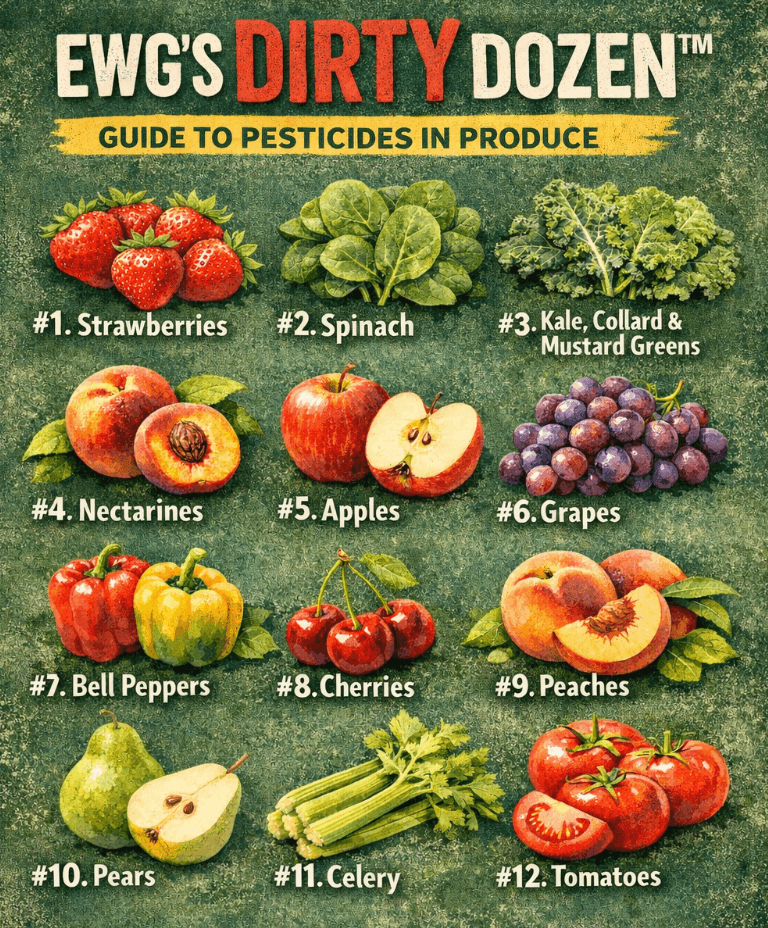
EWG’s thresholds are arbitrary, enabled by ultra-sensitive equipment that can detect vanishingly small residues far below established safety limits. But declaring that our fruits and vegetables are safe doesn’t generate headlines, touch off social media hysteria, fundraise, or feed litigation. Acknowledging the safety of conventional produce also undercuts organic marketing—the cause EWG was built to advance. So, the organization simply moves the goalposts and counts on sloppy, incurious media to amplify the alarm.
Clueless campaign
The keyword driving this hysteria: “detected”. NASA routinely detects giant space rocks, but that doesn’t mean they are going to slam into our planet and annihilate life on Earth. Minute chemical traces need to be viewed in perspective. Powerful analytical techniques have the potential to sense atoms, ions and molecules well into the parts per trillion range, and in all but the rarest of cases they present no health threat.
Florida’s residue numbers are junk science at its worst. They aren’t peer-reviewed, and the evaluation method is not disclosed. Sample extraction isn’t one-size-fits-all — what works for gummy bears won’t work for baguettes—yet Florida provides no protocols, no quality-control steps, and no validation data. It’s a jumbled mess that would embarrass even the hacks at EWG.
Each of the many analytical methods available to scientists these days has strengths and limitations, none of which was mentioned, let alone acknowledged. While some tests can discern micro levels, other tests, especially for glyphosate, have been riddled with false positives promoted by one activist group or predatory tort law firm as legitimate science. With no statement of the methods used, there is simply no way to even begin to evaluate the legitimacy of the reported detections.



Most of all, as the presence of a given chemistry approaches zero, the precision of the detection method inevitably wanes, and it becomes impossible to tell whether the numbers in the table are true signal or mere noise. Such analytical methods require researchers to run replicates on independent samples and report the variability observed. That can only be evaluated by disclosing the limit of detection (LOD) and the range of quantification (ROQ)—the linear range where “molecule present/molecule detected” tracks proportionally—meaning the test reports what is there, not spurious detections driven by contamination, matrix effects, or instrument drift. Then the test should be repeated across multiple independent samples, with error bars, confidence intervals, and uncertainty reported, rather than a single, context-free number that looks authoritative but may be analytically meaningless. There is no indication that any of these essentials were measured, much less reported.
Arsenic, lead, mercury, and cadmium are all naturally-occurring components of the earth’s crust, sometimes at non-trivial levels, and plants will take up some of these elements from the soil, so it is perfectly reasonable to detect trace amounts in plant-based products. More importantly, these elements rarely exist as “naked” atoms; they typically occur in specific chemical forms (species) that differ dramatically in bioavailability and toxicity. Without speciation, a number can mislead more than it informs. These tests often cannot distinguish relatively inert forms from more toxic ones.
This point is most critical: even if the amounts reported are accurate, they should not automatically raise alarm. For example, the mercury levels listed are comparable to acceptable levels in drinking water and far below concentrations found in some fish. Arsenic levels are also low and far below thresholds that would trigger regulatory concern. Yet Florida’s chart does not specify arsenic speciation—inorganic versus organic—while hyping the results as if all arsenic is the same “threat.” That’s not science; it’s sensationalism by omission.
Killer bread?
The attack on glyphosate is particularly bizarre considering the global consensus on its safety, although it is the tort lawyer—environmental activist coalition’s most lucrative whipping boy. Here, the science-versus-politics divide becomes stark. The herbicide has long been demonized by activist groups and the tort industry that funds them, so perhaps it’s no surprise that it’s now front and center among MAHA acolytes. Ladopo claimed, “Chronic exposure to glyphosate is linked to harmful gut microbiome changes, liver inflammation, and adverse neurologic effects.” DeSantis was alarmed by “triple-digit” levels of detection and insinuates that this compound is at the root of chronic disease.
They don’t understand their own data. These parts per billion are not “high” as claimed. The evidence of harm comes from rodents fed massive amounts, and there is scant evidence of harm at trace exposure levels. And anything may be made to sound terrifyingly large at “triple-digit” levels if you just slide the decimal point over a place or two and lean into the rhetoric of fear.
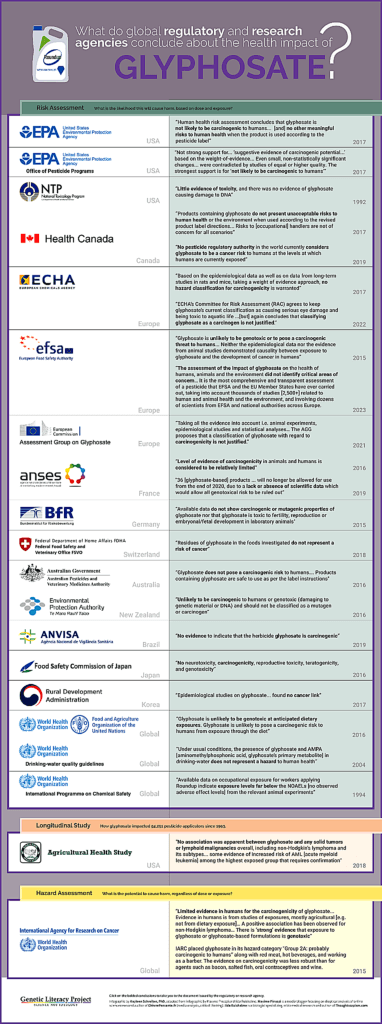
More than 15 regulatory and research risk agencies have conducted risk assessments, concluding unanimously that, when used as approved, glyphosate poses no harm at typical occupational or trace dietary exposure levels. EFSA found no ‘critical areas of concern’ in its peer review; ECHA’s Risk Assessment Committee found the evidence didn’t meet criteria to classify glyphosate as carcinogenic/mutagenic/reprotoxic; and the European Commission renewed glyphosate for 10 years, to 2033. As Health Canada has noted: “No pesticide regulatory authority in the world currently considers glyphosate to be a cancer risk to humans at the levels at which humans are currently exposed.”
Does the Florida analysis have redeeming public health value?
How should consumers interpret these findings? When reviewing claims about toxic pollution of our food, several criteria must be considered. All data should be accompanied by a method of detection, a limit of detection, a range of quantitation, and an assessment of which specific chemicals are present before there can be any assessment of risk.
We’re old enough to remember the good ol’ days when declaring your food was contaminated with a chemical cocktail of evil was the purview of hippies, detox wellness grifters, and organic food companies. Now, political interests that once reliably represented farmers and rural communities are pointing a clueless finger at the very farming practices and products that keep grocery bills lower and nutrition higher. The politicians that ran on platforms of rolling back regulations are now freaking out consumers and demanding tighter regulations.
Perhaps the greatest irony is that this database appears on a government-run website called “Healthy Florida First” — in a state where top officials claim that vaccines are a form of slavery, revolutionary mRNA technologies are dangerous, and proven methods of preventing childhood disease are unnecessary. The irony is thick: a public health department ostensibly built to protect Floridians now spends its energy manufacturing anxiety over trace food residues while downplaying real infectious disease threats.
Florida is home to thousands of academic, government, and industry experts who would happily advise public health efforts. For these scientists, physicians, and public health professionals, putting Floridian health first is a daily calling. But they are helpless to respond to inflammatory misinformation and rejection of consensus science.
We are firmly in “quack nation”. A government health agency ignores real risks and then manufactures risk where food is safe. It rejects the science that protects your family and condemns the science that doesn’t. These are classic foibles of the scientifically illiterate, adding to a disinformation ecosystem that hurts farmers, raises prices, and imperils public health, breaking trust in the institutions that ensure that our food is safe.
Jon Entine is the founding executive director of the Genetic Literacy Project and winner of 19 major journalism awards. He has written extensively in the popular and academic press on agricultural and population genetics. Follow Jon on X @JonEntine
Kevin Folta is a University of Florida professor, molecular biology researcher, GLP contributor, and strategic communication consultant who farms with his family in north-central Florida. He has hosted the weekly Talking Biotech Podcast since 2015. Find Kevin on X @kevinfolta