Kenya, Ethiopia show neighboring Uganda how to revive its dying cotton industry with pest-tolerant technology

uganda cotton
Credit: Fast Company

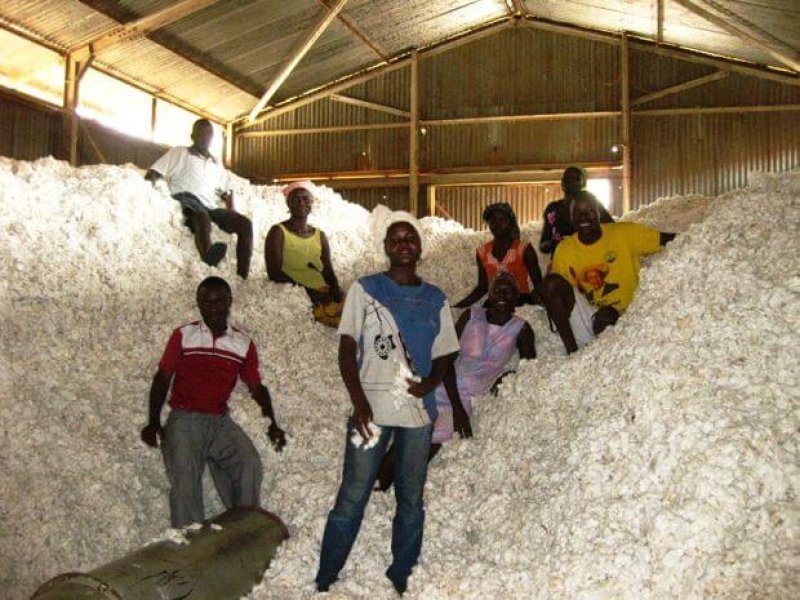
Cotton, once a cash cow in Uganda where growers aspired to outcompete each other in the acreage covered and income earned, could slowly become a crop of the past if nothing is done to curb the steady decline in its production.

According to data from the Cotton Development Organization, Uganda’s lint production in the 1970s exceeded 450,000 bales. (A bale is 185 kilograms). But in recent years, the highest amount of lint produced was barely 250,000 bales annually, occasionally dropping to 100,000 bales…the nation’s ginneries operating at merely 10 percent of their optimal capacity.

Dominic Etellu, a farmer and former chairman of Soroti District Farmers Association, comes from Serere district, a traditional cotton growing area in eastern Uganda. He blames the decline in cotton production in his area on the high costs of chemical pesticides and weeding.

Uganda is the only East African country to witness a consistent decline in cotton production. Though Ethiopia and Kenya experienced the same challenges as Uganda, those two nations responded by embracing cost-cutting [pest-tolerant] technology in cotton cultivation as an urgent measure to revive the sector.

If [Ugandan] lawmakers [ignore] the prevailing nonfactual information against GM crops, and adopt a good biosafety law, they could place Uganda right in step with Kenya and Ethiopia ….

Read full, original article: Uganda’s textile industry declines while its neighbors embrace GMO cotton

{{ reviewsTotal }}{{ options.labels.singularReviewCountLabel }}
{{ reviewsTotal }}{{ options.labels.pluralReviewCountLabel }}
{{ options.labels.newReviewButton }}
{{ userData.canReview.message }}

Related Articles

Infographic: Global regulatory and health research agencies on whether glyphosate causes cancer

Infographic: Global regulatory and health research agencies on whether glyphosate causes cancer

Does glyphosate—the world's most heavily-used herbicide—pose serious harm to humans? Is it carcinogenic? Those issues are of both legal and ...

Most Popular

Screenshot-2026-05-04-at-12.54.32-PM
How Utah became the country’s supplement capital  — and a haven for unregulated, ineffective and fake products
Screenshot-2026-03-13-at-12.14.04-PM
The FDA wants to make many popular prescription drugs OTC—a great idea. Here’s why it’s unlikely to happen
Screenshot-2026-04-20-at-2.26.27-PM
Viewpoint — Food-fear world: The latest activist scientists campaign: Cancer-causing additives
Screenshot-PM-24
Viewpoint: The herbicide glyphosate isn’t perfect. Banning it would be far worse.
images
The never-ending GMO debate: Pros and cons
Screenshot-2026-05-01-at-11.56.24-AM
‘Science moves forward when people are willing to think differently’: Memories of DNA maverick Craig Venter
Screenshot-2026-04-03-at-11.15.51-AM
Paraben panic: How a flawed study, media hype, and chemophobia convinced the public of the danger of one of the safest classes of preservatives
Screenshot-2026-04-30-at-2.19.37-PM
5 myths about summer dehydration that could damage your health — or even kill you
ChatGPT-Image-May-1-2026-02_20_13-PM
How RFK, Jr.’s false vaccine claims are holding up $600 million to fight diseases in poor countries
bigstock opioids on chalkboard with rol
GLP podcast: 'Safe injection sites': enabling drug addiction or saving lives?
glp menu logo outlined

Get news on human & agricultural genetics and biotechnology delivered to your inbox.