How emigrating to another country can change our microbiome

microbiome

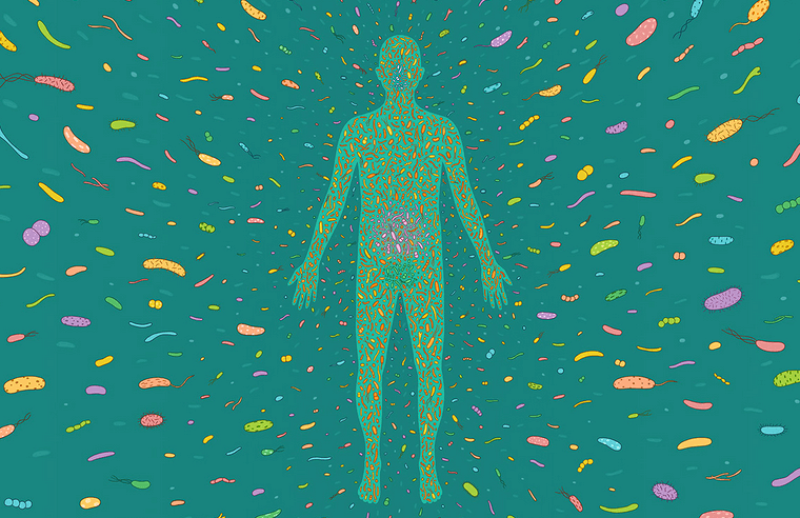
When people immigrate to the United States, their microbiomes quickly transition to a U.S.-associated microbiome, according to research published [November 1] in the journal Cell. Changes to their internal population of bacteria start to occur within nine months, and the longer someone lives in the U.S., the closer their microbiome is to that of a U.S.-born person.

…

Minnesota is home to Hmong and Karen refugees, minority ethnic groups from Southeast Asia. The research team collected stool samples from over 500 Hmong and Karen individuals, including people living in Thailand, who represented the pre-immigration cohort, people who recently moved to the U.S., and second-generation immigrants. They also took samples from 36 U.S.-born people with European-American ancestry to serve as a control.

…

Analysis of the stool samples showed that levels of Prevotella bacteria in the immigrant microbiomes went down, and levels of the western-associated Bacteroides bacteria went up. The ratio tipped more and more in favor of Bacteroides from the first- to second-generation of immigrants.
A different microbiome doesn’t necessarily mean a worse one, but their microbiomes didn’t just change—the mixture of bacteria that inhabited their guts became significantly less diverse.

…

Understanding the factors that transform the immigrant microbiome so quickly might help researchers develop ways to stave off that transition, particularly if future work shows that a changed microbiome does, in fact, have a negative health effects.

Read full, original post: Immigrants to the U.S. Rapidly Gain a New Microbiome

Related Articles

Infographic: Global regulatory and health research agencies on whether glyphosate causes cancer

Infographic: Global regulatory and health research agencies on whether glyphosate causes cancer

Does glyphosate—the world's most heavily-used herbicide—pose serious harm to humans? Is it carcinogenic? Those issues are of both legal and ...

Most Popular

Screenshot-2026-10-12-at-10.44.38-AM
Widely condemned as unethical, hepatitis B vaccine study funded by RFK Jr’s CDC gets a final greenlight
ChatGPT-Image-Mar-10-2026-01_39_01-PM
Viewpoint—“Miracle molecule” debunked: Why acemannan supplements don’t work
Open-Menthol-Cigarette-Pack
How the tobacco industry conspired with conservative activists to kill the Biden administration’s proposed ban on menthol cigarettes 
Caution-Taped-Fresh-Produce-Aisle
Should we be afraid of our food?
Cross and Syringe Standoff
Viewpoint: Hijacking Jesus: How anti-vaccine fanatics are exploiting religious exemptions and killing children
Profile and Vaccination Portraits
Convinced COVID shots cause widespread harm, Kennedy plans federal initiative to incentivize doctors to report alleged injuries
Screenshot-2026-10-12-at-12.18.57-PM
5 deaths, 1,000 reported cases: These horrific numbers underestimate the consequences of the anti-vax movement
Screenshot-2026-10-11-at-10.24.21-AM
Viewpoint: RFK Jr.’s new CDC head Erica Schwartz greenlights hepatitis B vaccine study critics call “unethical and designed to cast doubts on its safety”
Screenshot 2026-10-12 at 12.25
Tearful onions? CRISPR has a solution for that
Screenshot-2026-10-05-at-11.57.44-AM
Scaremongering or legitimate safety concerns? The political dogfight over America’s food safety system
Personalized-Cancer-mRNA-Vaccine-Vial
Personalized mRNA vaccines are poised to revolutionize cancer treatments. Here are the barriers.
Deepfake Democracy Media Mosaic
31 states have passed a patchwork of laws to limit election deepfake commercials. They’re not working very well.
Screenshot-2026-09-22-at-10.54.12-AM
‘They misunderstand science’: Research attempting to tie autism to changes in the gut microbiome comes under fire

glp menu logo outlined

Get news on human & agricultural genetics and biotechnology delivered to your inbox.