Brain implants may one day boost our abilities to text, drive, communicate and think

unnamed file
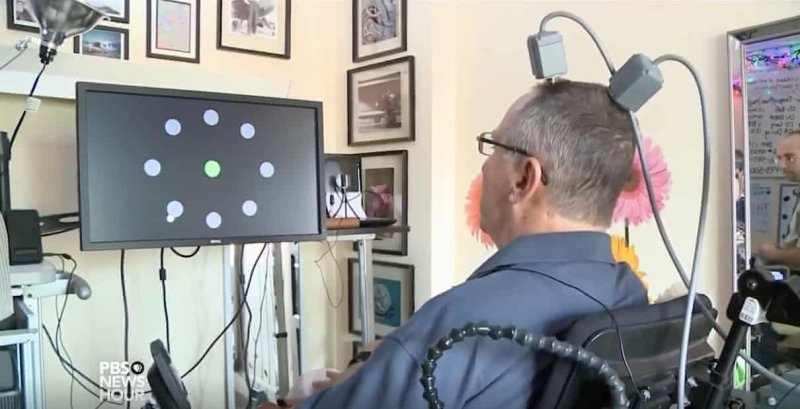
Dennis Degray uses Utah array implants to manipulate the cursor on a computer screen. Image: PBS

An injection of Silicon Valley chutzpah has energised the field of brain-computer or brain-machine interfaces in recent years. Buoyed by BrainGate and other demonstrations, big-name entrepreneurs and companies and scrappy startups are on a quest to develop a new generation of commercial hardware that could ultimately help not only [people] with disabilities, but be used by all of us.

…

In July Elon Musk … presented details of an implantable wireless system that his company Neuralink is building. It is already being studied in monkeys, Musk revealed, and it is hoped that human trials will start before the end of 2020.


None of the three companies sees nonmedical applications in the short term, but argue that the implant technology could gradually branch out into the general population as people start seeing how transformational it can be.

The most obvious application may be brain-controlled typing. [Synchron founder Tom] Oxley imagines a scenario where people who have grown up texting and typing … lose functionality as they age. … Eventually a tipping point will occur as people see BCIs working better than the human body. …

Of uses beyond that, no one is being specific. Brain commands to smart speakers? Brain-controlled car driving? Brain-to-brain communication? Enhanced memory and cognition?

Read full, original post: Are brain implants the future of thinking?

Related Articles

Infographic: Global regulatory and health research agencies on whether glyphosate causes cancer

Infographic: Global regulatory and health research agencies on whether glyphosate causes cancer

Does glyphosate—the world's most heavily-used herbicide—pose serious harm to humans? Is it carcinogenic? Those issues are of both legal and ...

Most Popular

ChatGPT-Image-Mar-10-2026-01_39_01-PM
Viewpoint—“Miracle molecule” debunked: Why acemannan supplements don’t work
ChatGPT-Image-Sep-10-2026-10_36_07-AM
Viewpoint: Even lousy scientific articles can shield authors when they hype dubious health claims and products
sorghum farmers in kenya FARMERS TREND
Here are all the ways CRISPR gene editing is transforming Africa’s staple crops—and there’s a lot more innovation to come
Screenshot-2026-10-01-at-11.21.27-AM
Vaccine hesitancy, like malaria, surges globally, topping 35% in some countries
ChatGPT-Image-Sep-30-2026-01_11_07-PM
How U.S. teamed with Russia to block global human AI weapons oversight
ChatGPT-Image-Sep-21-2026-03_15_09-PM
Viewpoint: Chipotle-inspired lesson: 10,000 sick customers suggest that processed foods can be safer than fresh ones
ChatGPT-Image-Sep-30-2026-01_25_34-PM
Blood tests for Alzheimer’s? The latest grifter, social media scam.
generated-1790707585414
Facts & Fallacies podcast: America's health care system is broken. A doctor explains how to fix it
ChatGPT-Image-Sep-29-2026-12_16_42-PM
Social media influencers are driving food misinformation across Europe
ChatGPT-Image-Sep-30-2026-01_38_36-PM
Viewpoint: Died “with measles” vs. died “from measles”: RFK, Jr.’s dangerously subversive word games
Screenshot-2026-09-28-at-1.16.38-PM
Defying public perceptions, U.S. cancer deaths plunged 35% since 1991
glp menu logo outlined

Get news on human & agricultural genetics and biotechnology delivered to your inbox.