Could food of the future come from ‘microbial protein factories’ instead of plants and animals?

icream
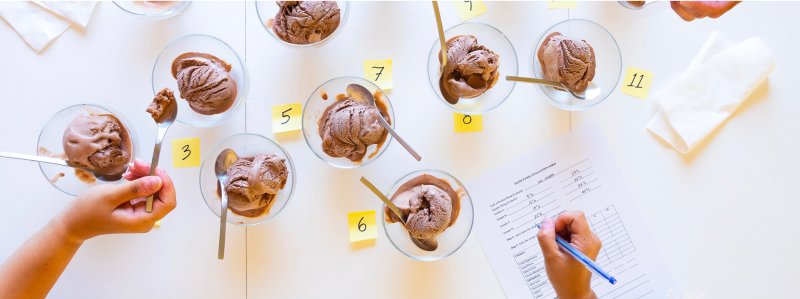
More synthetic animal proteins for foods like ice cream could hit the market in 2021. Credit: Motif Foods

Could a suite of microscopic microbial protein factories (yeast, bacteria, fungi, algae) give plants and animals a run for their money?

It’s early days, says the Good Food Institute (GFI), but microbial fermentation is rapidly emerging as the “third pillar in the alternative protein industry [alongside cell-cultured and plant-based],” attracting $435m in investment capital in 2020 alone.

Right now, producing protein – whether from peas and soybeans or cows and chickens – is resource-intensive and time-consuming, requiring large amounts of land, energy and water, says the GFI, which has just released a 72-page report on fermentation in the alternative protein industry, arguing that its “potential is still largely untapped.”

Mis- and disinformation are distorting science and public policy. Subscribe to our Daily and Weekly Digests for incisive coverage of ‘disruptive’ innovations in AI, agricultural biotechnology, food, chemicals, nuclear energy, vaccines, and other disruptive innovations.

Put another way, it takes years to grow animals, and months or years to grow plants, while microbes can double their biomass in a matter of hours, as Nature’s Fynd CEO Thomas Jonas recently observed: “Microbes are pretty damn efficient. They make great protein and they do it really fast.”
Many microorganisms also [are] innately high [in] protein content (over 50% by dry weight) coupled with “extraordinarily fast and self-sucient growth, requiring only simple and inexpensive nutrient feedstocks,” noted the GFI.


Read the original post

Related Articles

Infographic: Global regulatory and health research agencies on whether glyphosate causes cancer

Infographic: Global regulatory and health research agencies on whether glyphosate causes cancer

Does glyphosate—the world's most heavily-used herbicide—pose serious harm to humans? Is it carcinogenic? Those issues are of both legal and ...

Most Popular

ChatGPT-Image-Sep-23-2026-02_36_39-PM
Viewpoint: After firing the entire National Science Board, Trump reshapes funding initiatives. Here’s the good and the bad.
ChatGPT-Image-Mar-10-2026-01_39_01-PM
Viewpoint—“Miracle molecule” debunked: Why acemannan supplements don’t work
ChatGPT-Image-Sep-10-2026-10_36_07-AM
Viewpoint: Even lousy scientific articles can shield authors when they hype dubious health claims and products
sorghum farmers in kenya FARMERS TREND
Here are all the ways CRISPR gene editing is transforming Africa’s staple crops—and there’s a lot more innovation to come
Screenshot-2026-10-01-at-11.21.27-AM
Vaccine hesitancy, like malaria, surges globally, topping 35% in some countries
ChatGPT-Image-Sep-30-2026-01_25_34-PM
Blood tests for Alzheimer’s? The latest grifter, social media scam.
ChatGPT-Image-Sep-30-2026-01_38_36-PM
Viewpoint: Died “with measles” vs. died “from measles”: RFK, Jr.’s dangerously subversive word games
ChatGPT-Image-Sep-21-2026-03_15_09-PM
Viewpoint: Chipotle-inspired lesson: 10,000 sick customers suggest that processed foods can be safer than fresh ones
ChatGPT-Image-Sep-30-2026-01_11_07-PM
How U.S. teamed with Russia to block global human AI weapons oversight
Screenshot-2026-09-28-at-1.16.38-PM
Defying public perceptions, U.S. cancer deaths plunged 35% since 1991
glp menu logo outlined

Get news on human & agricultural genetics and biotechnology delivered to your inbox.