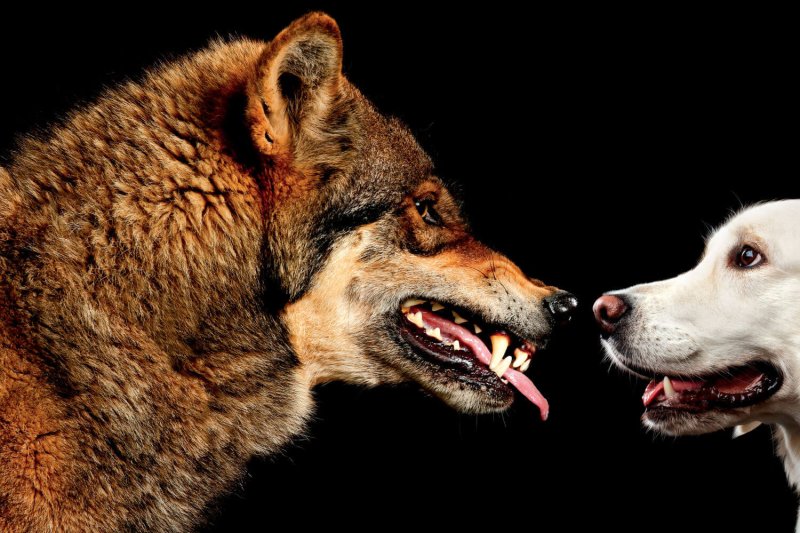
Who let the dogs out: When and how were dogs first domesticated?

Credit: Fayzulin Serg/Shutterstock

We still don’t know exactly when or where dog domestication first happened; it already had a pretty complex history by 11,000 years ago. But it looks like it only happened once. The ancient genomes suggest that dogs all share a common ancestor, which they don’t share with modern wolves. According to [researcher Anders] Bergstrom and his colleagues, that probably means that dogs all descend from one group of wolves, and that group is now extinct.

Modern gray wolves don’t appear to be very closely related to any of the ancient or modern dogs in the study. That suggests that since domestication set them apart, wolves haven’t contributed much DNA to dog bloodlines.

Mis- and disinformation are distorting science and public policy. Subscribe to our Daily and Weekly Digests for incisive coverage of ‘disruptive’ innovations in AI, agricultural biotechnology, food, chemicals, nuclear energy, vaccines, and other disruptive innovations.

Bergstrom and his colleagues wanted to know how dogs’ population history lined up with that of humans. They compared their ancient dog data to what ancient human DNA tells us about how groups of people migrated and interacted during the last 12,000 years. Not too surprisingly, the timing of splits, mergers, and movements mostly matched up. That suggests that, as groups of people migrated, they brought their dogs with them, and the dogs got up to much the same things the humans got up to when they met new neighbors.

Read the original post

Related Articles

Infographic: Global regulatory and health research agencies on whether glyphosate causes cancer

Infographic: Global regulatory and health research agencies on whether glyphosate causes cancer

Does glyphosate—the world's most heavily-used herbicide—pose serious harm to humans? Is it carcinogenic? Those issues are of both legal and ...

Most Popular

ChatGPT-Image-Mar-10-2026-01_39_01-PM
Viewpoint—“Miracle molecule” debunked: Why acemannan supplements don’t work
ChatGPT-Image-Sep-23-2026-02_36_39-PM
Viewpoint: After firing the entire National Science Board, Trump reshapes funding initiatives. Here’s the good and the bad.
ChatGPT-Image-Sep-10-2026-10_36_07-AM
Viewpoint: Even lousy scientific articles can shield authors when they hype dubious health claims and products
generated-1790707585414
Facts & Fallacies podcast: America's health care system is broken. A doctor explains how to fix it
ChatGPT-Image-Sep-21-2026-03_15_09-PM
Viewpoint: Chipotle-inspired lesson: 10,000 sick customers suggest that processed foods can be safer than fresh ones
ChatGPT-Image-Sep-21-2026-11_54_00-AM
Viewpoint: Activist environmental NGOs are turning from public funding to activist billionaires to support their campaigns. It won’t end well.
Screenshot 2026-08-12 at 1.22
Activists vs. Scientists: Could “Butterfly Effect” fears derail gene-drive research targeting the flesh-eating screwworm?
ChatGPT-Image-Sep-22-2026-11_17_31-AM
The exploding controversy over AI’s built-in survival drive
Screenshot-2026-09-16-at-10.27.33-AM
Viewpoint: SCOTUS poised to address First Amendment tension between mandatory vaccines, children’s health and religious freedom 
sorghum farmers in kenya FARMERS TREND
Here are all the ways CRISPR gene editing is transforming Africa’s staple crops—and there’s a lot more innovation to come
glp menu logo outlined

Get news on human & agricultural genetics and biotechnology delivered to your inbox.