Only female chickens produce eggs, so millions of newborn male chicks are killed each year. Here’s how gene editing could put an end to this cruel practice

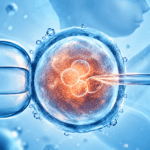
Gene editing offers an alternative to the unpopular practice of culling. Credit: Ric Field

Pressure has been growing for some time on the layer sector to end the culling of male chicks, which are culled at one day old because they are unsuitable for either egg or meat production.

Mis- and disinformation are distorting science and public policy. Subscribe to our Daily and Weekly Digests for incisive coverage of ‘disruptive’ innovations in AI, agricultural biotechnology, food, chemicals, nuclear energy, vaccines, and other disruptive innovations.

Now researchers from Kent’s School of Biosciences and the Francis Crick Institute may have an answer. In announcing their results, they say had been able to produce female-only or male-only offspring with a 100% success rate.

“In scientific research and also farming, there is often a need for either male or female animals,” they said in a release outlining their work.

“For example, laboratory research into male or female reproduction requires only animals of the sex being studied.

…

Charlotte Douglas, first author said: “This method works as we split the genome editing process in half, between a male and female, and it is only when the two halves meet in an embryo through breeding, that it is activated. Embryos with both halves cannot develop beyond very early cell stages.”

There were also no harmful effects of the gene edit in the surviving offspring, she said.

This is an excerpt. Read the original post here.

Related Articles

Infographic: Global regulatory and health research agencies on whether glyphosate causes cancer

Infographic: Global regulatory and health research agencies on whether glyphosate causes cancer

Does glyphosate—the world's most heavily-used herbicide—pose serious harm to humans? Is it carcinogenic? Those issues are of both legal and ...

Most Popular

Crumbling MAHA Stage Portrait
Cataloging the RFK Jr.-MAHA crushing midterm collapse
Microscopic IVF Egg Injection
With technical barriers to human embryo editing falling, ethical concerns escalate
ChatGPT-Image-Mar-10-2026-01_39_01-PM
Viewpoint—“Miracle molecule” debunked: Why acemannan supplements don’t work
Blue Checklist in Centered Hand
Viewpoint: From Medicaid cuts to MAHA-backed anti-vaccine and chemical hysteria, voters reject Republicans’ science-skeptical agenda
Hipster eugenics: better babies for billionaires
Viewpoint: “Positive eugenics”: Reviving a movement reviled and condemned for a century
Reaching Through the Woven Sky
Challenging genetic modification rejectionists: Our evolving food system has relied on science for thousands of years
Smiling-Woman-Over-Teal-Abstract-Shapes
Viewpoint: RFK Jr.’s latest foray into junk science: Even Kennedy’s hand-picked NIH director balks at appointment of crackpot mental health director
Picture1
Viewpoint: How badly is the U.S. food-safety net fraying? FDA’s bungled handling of the tainted lettuce crisis deepens concerns over cuts to disease tracking and response
Screenshot 2026-11-04 at 12.02
Ever wonder why AI can so easily be duped into manufacturing health misinformation?    
Bayer Crop Circle in Golden Wheat
Making fertilizer from thin air: Bayer’s gene-editing innovation could dramatically cut chemical fertilizer use in growing food
Screenshot-2026-10-29-at-11.18.34-AM
Viewpoint: ‘Just the flu’: Skipping your child’s flu shot could be a fatal mistake
Screenshot-2026-11-02-at-11.34.28-AM
Farmers are collateral damage in the PFAS “forever chemicals” crossfire. Here’s what they need to know.
Neon Genome_ Fetal Dreamscape
The race to genetically engineer babies
glp menu logo outlined

Get news on human & agricultural genetics and biotechnology delivered to your inbox.