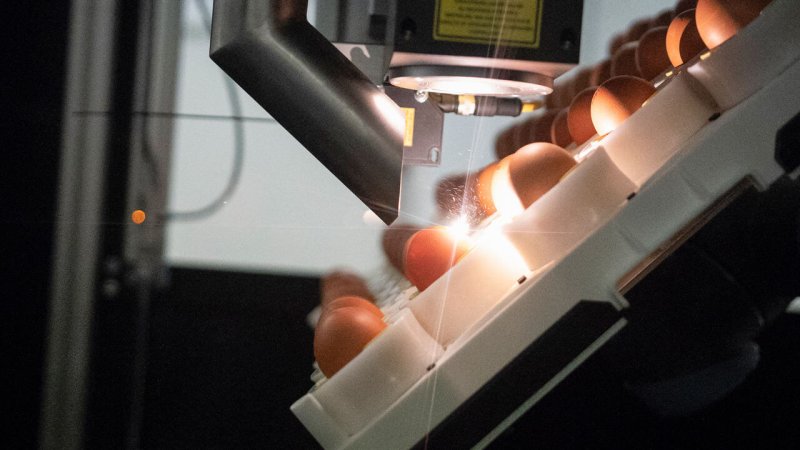
CRISPR-edited eggs offer novel way to eliminate slaughter of newborn male chicks

Credit: SELEGGT
Credit: SELEGGT
[Most consumers] are blissfully unaware that the egg industry also slaughters billions of animals every year, but not to put meat on the table. Indeed, the animals in question (male chicks) have literally just been born.

The reasons are simple, says Yehuda Elram, co-founder and CEO of Israeli startup eggXYt​​, which recently hit the headlines after teaming up with Tropic Biosciences on a groundbreaking project to harness gene silencing technology to develop genetic resistance in chickens to avian flu.

The food industry, says Elram, raises two different breeds of chicken: broilers for meat, and layers for eggs. The problem is that male layers are of no use to the egg or meat industry: they can’t lay eggs, and there’s no market for their meat (too scrawny).

So we waste millions of dollars incubating billions of eggs, waiting for them to hatch, hiring trained ‘sexers’ to determine if they’re female or male, and then culling 50% of chicks the very day they’re born.

The appeal of eggXYt’s solution – using CRISPR gene editing techniques to add a genetic marker​​ to male eggs that glows when it goes through a scanner – is that it enables sex detection of chick embryos immediately after the eggs are laid.

Follow the latest news and policy debates on sustainable agriculture, biomedicine, and other ‘disruptive’ innovations. Subscribe to our newsletter.

Above all, he says, “you’re saving lives, and giving supermarkets and consumers what they want, which is more ethical food.”


Read the original post

{{ reviewsTotal }}{{ options.labels.singularReviewCountLabel }}
{{ reviewsTotal }}{{ options.labels.pluralReviewCountLabel }}
{{ options.labels.newReviewButton }}
{{ userData.canReview.message }}

Related Articles

Infographic: Global regulatory and health research agencies on whether glyphosate causes cancer

Infographic: Global regulatory and health research agencies on whether glyphosate causes cancer

Does glyphosate—the world's most heavily-used herbicide—pose serious harm to humans? Is it carcinogenic? Those issues are of both legal and ...

Most Popular

Picture1
The FDA couldn’t find a vaccine safety crisis, so it buried its own research
Screenshot-2026-04-22-at-12.21.32-PM
Viewpoint: Why the retracted Monsanto glyphosate study doesn’t change the science—the world’s most popular herbicide is safe 
ChatGPT-Image-May-7-2026-12_32_36-PM
Viewpoint: The state of U.S. vaccine policy? Dismal nationally, but some states are stepping up.
placebo
Viewpoint — Alternative medicine and the placebo effect: Selling a reassuring illusion of health
Screenshot-2026-04-22-at-10.46.29-AM
Viewpoint: How to counter science disinformation? Science journalist offers 12 practical tips
Screenshot-2026-04-13-at-1.39.26-PM
Viewpoint: ‘Safer for children?’ Stonyfield yogurt under fire for deceptive organic marketing
_20250221_nib_rfk_trump
Viewpoint: 'Crisis of public trust': Autism support community shocked RFK continues to peddle false claims about the danger of vaccines
ChatGPT-Image-May-18-2026-01_45_05-PM-2
Newest hantavirus conspiracy: Online disinformation turns outbreak into latest ivermectin grift
the magic of mRNA
Viewpoint: Anti-vax fake ‘turbo cancer’ claims threaten cancer treatment breakthroughs
ChatGPT-Image-May-7-2026-12_16_37-PM-2
Viewpoint: Are cancer rates ‘skyrocketing’ as RFK, Jr. and MAHA claim? The evidence says mostly the opposite
artificial intelligence brain think illustration md
Viewpoint — Digital gods and human extinction: Will we be the first species ever to design our own descendants?
Defense_Secretary_Ash_Carter_tours_the_Microsoft_Cybercrime_Center_in_Seattle_March_3_2016
How criminals are using AI to target social media users and steal their money and confidential data
glp menu logo outlined

Get news on human & agricultural genetics and biotechnology delivered to your inbox.