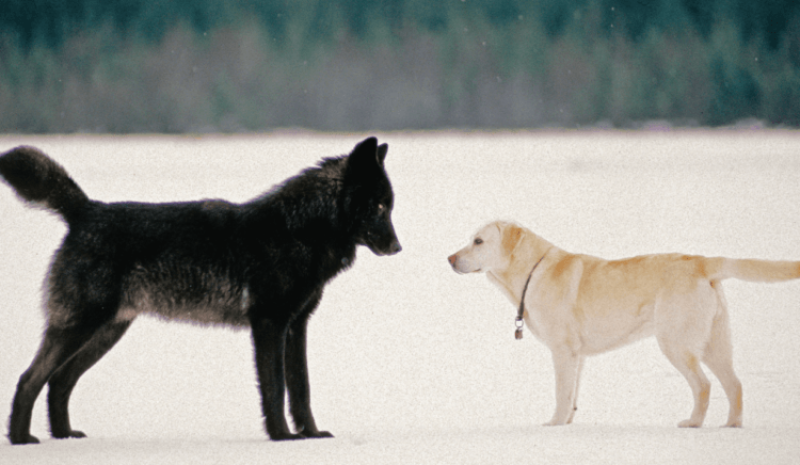
Despite the vast diversity of the size, shape and behavior of dogs, they share a deep evolutionary history

screen shot at pm
Credit: Jos Bakker

The closest living relative to modern dogs is the gray wolf (Canis lupus). The ancestor of modern dogs and the ancestor of modern wolves probably split at some point in the late Pleistocene, the last ice age. Genetic studies put different dates on this split.

Mis- and disinformation are distorting science and public policy. Subscribe to our Daily and Weekly Digests for incisive coverage of ‘disruptive’ innovations in AI, agricultural biotechnology, food, chemicals, nuclear energy, vaccines, and other disruptive innovations.

The oldest fossil that scientists agree came from a dog, rather than a wolf, comes from a site in Germany called Bonn-Oberkassel and dates back about 14,200 years. But archaeologists have found fossil specimens that might be domesticated dogs dating back more than 30,000 years. It’s difficult to confidently identify a Pleistocene fossil fragment as being from either a dog or a wolf, and because dogs and wolves interbred even after they diverged genetically, genomic studies are complicated. Researchers also debate whether dog domestication happened once or at multiple sites around the world.

It is clear that humankind’s bond with dogs goes way back. The 14,200-year-old dog from Bonn-Oberkassel was buried with two humans and had been nursed through several episodes of canine distemper before it died. In a 12,000-year-old cemetery in Israel, a woman was found buried with her hand on a small wolf or dog puppy. A Stone Age dog from what is now Sweden was buried with a human companion about 8,400 years ago, researchers reported in 2020.


This is an excerpt. Read the full article here

Related Articles

Infographic: Global regulatory and health research agencies on whether glyphosate causes cancer

Infographic: Global regulatory and health research agencies on whether glyphosate causes cancer

Does glyphosate—the world's most heavily-used herbicide—pose serious harm to humans? Is it carcinogenic? Those issues are of both legal and ...

Most Popular

ChatGPT-Image-Sep-2-2026-02_03_32-PM
AI data centers and water usage: It’s a genuine and growing problem
ChatGPT-Image-Mar-10-2026-01_39_01-PM
Viewpoint—“Miracle molecule” debunked: Why acemannan supplements don’t work
ChatGPT-Image-Sep-16-2026-11_28_54-AM
Viewpoint: Study links childhood vaccination to autism!!! Here’s how anti-vaxxers twist evidence to corrupt science
Screenshot-2026-09-16-at-2.26.42-PM
Viewpoint: How to ecologically damage America’s forests: Ban glyphosate
Screenshot-2026-09-18-at-11.35.25-AM
RFK Jr.’s latest crank obsession: Protecting Americans from perfectly safe electromagnetic radiation
ChatGPT-Image-Sep-21-2026-10_18_59-AM-2
Viewpoint: Is corporate embrace of regenerative agriculture greenwashing?
ChatGPT-Image-Sep-20-2026-09_47_55-AM
Trump says he’ll require drugmakers to end multiple vaccine doses, reviving discredited autism claims
Screenshot-2026-09-20-at-9.03.54-AM
From Malaysia to the world: A pioneering science communicator reimagines global science communication for a digital age
Screenshot 2026-09-18 at 10.26
Slowdown AI development? China acknowledges serious risks but sees warnings as U.S. ploy to control the technology
ChatGPT-Image-Sep-17-2026-12_28_43-PM
Vitamin D, omega-3 fish oil and glucosamine supplements could cause brain damage 
ChatGPT-Image-Sep-18-2026-10_49_24-AM
‘Symptom borrowing’: Young people are copying health problems they see on TikTok
Screenshot-2026-09-20-at-4.31.28-PM
White House drafting executive order to control what OMB Director Vought claims are “woke” NIH science grants
glp menu logo outlined

Get news on human & agricultural genetics and biotechnology delivered to your inbox.