China has very small farms; there hasn’t been a lot of infrastructure put in place in terms of knowledge or solid assets. Now Syngenta is enabling them with agronomists and digital infrastructure.
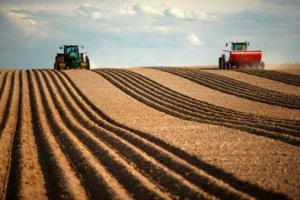
When it comes to Beijing’s technological ambitions, high profile hardware like semiconductors and electric vehicles tend to dominate global headlines. But in China, where almost 20 percent of the global population lives on 8.5 percent of the world’s arable land, finding innovative ways to reap more food from every hectare of seeds sown has long been one of the government’s highest priorities.
“Chinese agriculture and food demand is in inherent conflict,” says Wendong Zhang, an assistant professor at Cornell University’s Dyson School of Applied Economics and Management and a specialist in China’s agricultural development. “China won’t be able to have more land. They won’t be able to have better quality soil. The thing they can control is technology.”
Beijing’s realization that technology would be key to increasing its food self-sufficiency is what made Syngenta such a valuable target for ChemChina. Syngenta, after all, is the world-leader in crop protection products and globally the number three producer of seeds, including selectively-bred “hybrids” and genetically modified seeds. Alongside rivals like Germany’s Bayer and America’s Corteva (formerly DowDupont), the company is pushing the boundaries of seed genomics using CRISPR-Cas9, a tool that allows researchers to tweak the genetics of living organisms.
Emboldened by its ownership of Syngenta, China seems to be crossing the rubicon when it comes to high-tech agriculture. Officials are now calling cutting-edge seeds “agriculture microchips,” according to Chinese state media.
And safety approvals for GM seeds appear to be speeding up: in early 2022, Beijing’s Ministry of Agriculture and Rural Affairs (MARA) granted safety certificates to three Syngenta GM corn seeds as well as a seed from the domestic firm Hangzhou Ruifeng Bio-Tech Company and several others from Chinese universities. In June, MARA also released guidelines, for the first time, that could pave the way for companies to begin commercial planting of GM products.


…
And with its high-profile Shanghai listing, Syngenta might help the Chinese government out of a dilemma of its own making: convincing the general public that GMOs are safe. At the very least, the company can’t be viewed as a trojan horse for U.S. bioweapons. Syngenta’s MAP program has even introduced QR codes on food packaging so consumers can scan their food and see a photo of the Chinese farmer who grew it.
To help itself out of its GMO bind, Beijing is also positioning its efforts in direct gene editing as a kind of technological leapfrogging — these newer engineering methods do not require the introduction of foreign DNA, unlike today’s genetic modification, in which bacteria from one organism is transplanted into another (á la the Bt genes added into the corn genome). As [Shane] Thomas, the analyst, notes, the industry as a whole is moving towards this more precise kind of genetic tweaking.
This is an excerpt. Read the original post here