How can US farmers adapt to climate change? Environmental Defense Fund offers five key options

Credit: US Farmers and Ranchers In Action

Farmers have a long history of steadily increasing crop yields through technological innovation and improvements in management practices. However, as climate change makes weather more extreme and variable than ever before, productivity progress will likely stall by 2030 — even if the U.S. maintains past rates of R&D investment and innovation. Adaptation efforts must begin now to protect food supplies and farmer livelihoods.

Mis- and disinformation are distorting science and public policy. Subscribe to our Daily and Weekly Digests for incisive coverage of ‘disruptive’ innovations in AI, agricultural biotechnology, food, chemicals, nuclear energy, vaccines, and other disruptive innovations.

Option 1: Reworking crop breeding practices

Recent technological strides have enabled scientists to rework plant characteristics at the genome level through CRISPR editing and genomics-enabled hybrids. For example, desired traits like drought tolerance found in ancient wheat varieties from the Middle East and Africa have been incorporated into new wheat hybrids and are currently deployed on over 10,000 acres of Kansas winter wheat, projected to grow to 100,000 acres by 2025.

Option 2: Improving soil health

Soil health is critical for building resilience to climate change and can be improved through a range of soil health practices, namely the planting of cover crops and the reduction or elimination of tillage. In times of water stress, like flooding or drought, fields with healthy soils can retain and drain water with minimized impact to crop yields.

Option 3: Extended crop rotations

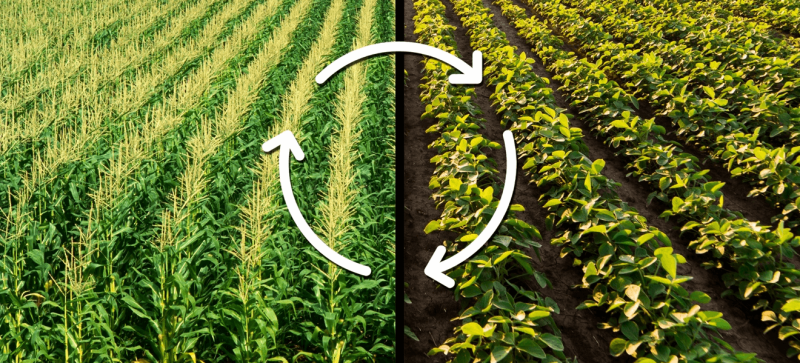
Crop rotation is the practice of growing different crops in succession on the same land. Extended crop rotations contain more distinct crop types than the average crop rotation.  An example of this would be to include more wheat in the standard corn-soybean crop rotation. Expanding the number of crops in crop rotations can help break cycles of pests and disease, reducing pesticide costs and improving yield.


This is an excerpt. Read the original post here

Related Articles

Infographic: Global regulatory and health research agencies on whether glyphosate causes cancer

Infographic: Global regulatory and health research agencies on whether glyphosate causes cancer

Does glyphosate—the world's most heavily-used herbicide—pose serious harm to humans? Is it carcinogenic? Those issues are of both legal and ...

Most Popular

ChatGPT-Image-Mar-10-2026-01_39_01-PM
Viewpoint—“Miracle molecule” debunked: Why acemannan supplements don’t work
ChatGPT-Image-Sep-10-2026-10_36_07-AM
Viewpoint: Even lousy scientific articles can shield authors when they hype dubious health claims and products
ChatGPT-Image-Sep-23-2026-02_36_39-PM
Viewpoint: After firing the entire National Science Board, Trump reshapes funding initiatives. Here’s the good and the bad.
generated-1790707585414
Facts & Fallacies podcast: America's health care system is broken. A doctor explains how to fix it
ChatGPT-Image-Sep-21-2026-03_15_09-PM
Viewpoint: Chipotle-inspired lesson: 10,000 sick customers suggest that processed foods can be safer than fresh ones
ChatGPT-Image-Sep-21-2026-11_54_00-AM
Viewpoint: Activist environmental NGOs are turning from public funding to activist billionaires to support their campaigns. It won’t end well.
Screenshot 2026-08-12 at 1.22
Activists vs. Scientists: Could “Butterfly Effect” fears derail gene-drive research targeting the flesh-eating screwworm?
Screenshot-2026-09-16-at-10.27.33-AM
Viewpoint: SCOTUS poised to address First Amendment tension between mandatory vaccines, children’s health and religious freedom 
sorghum farmers in kenya FARMERS TREND
Here are all the ways CRISPR gene editing is transforming Africa’s staple crops—and there’s a lot more innovation to come
glp menu logo outlined

Get news on human & agricultural genetics and biotechnology delivered to your inbox.