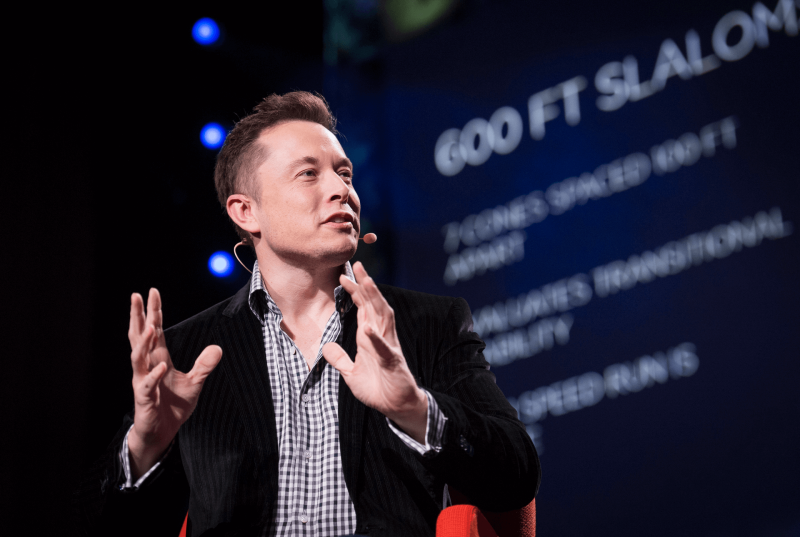
Brain-computer interface: Elon Musk’s Neuralink venture hopes to dramatically increase communication. What’s he up to?

neuralink
Credit: James Duncan Davidson (CC BY-NC 3.0)
[Elon Musk] claimed that sticking electrodes in people’s heads is going to lead to a huge increase in the rate of data transfer out of, and into, human brains.

The occasion of Musk’s post was the announcement by Neuralink, his brain-computer interface (BCI) company, that it was officially seeking the first volunteer to receive the “N1,” an implant comprising 1,024 electrodes able to listen in on brain neurons.

Follow the latest news and policy debates on sustainable agriculture, biomedicine, and other ‘disruptive’ innovations. Subscribe to our newsletter.

One day, it might be possible to transmit a picture between two brains over a cable.

“Elon thinks a lot about mental imagery, and I believe he’s imagining a future where the image that I’m thinking of could be presented to you, or stimulated directly in your cortex,” says Vikash Gilja, a professor at the University of California, San Diego.

So that’s where more bandwidth could make a difference—not in speeding up speech, but in unexpected forms of thought transfer. It’s also possible, for example, to detect emotional states, like whether a person is depressed, by measuring the brain. Those feelings are not only hard to describe, but you might not even be aware of them.


This is an excerpt. Read the original post here

Related Articles

Infographic: Global regulatory and health research agencies on whether glyphosate causes cancer

Infographic: Global regulatory and health research agencies on whether glyphosate causes cancer

Does glyphosate—the world's most heavily-used herbicide—pose serious harm to humans? Is it carcinogenic? Those issues are of both legal and ...

Most Popular

ChatGPT-Image-Sep-2-2026-10_30_14-PM
Zero: That is the official American measles death toll for 2026. Here is what RFK Jr.’s CDC leaves out.
Screenshot-2026-09-10-at-12.20.19-PM
'Jet fuel didn't melt the steel': 9/11 conspiracy theories debunked
ChatGPT-Image-Sep-14-2026-11_36_25-AM
How the reckless AI race among Anthropic, OpenAI and China spawned today’s safety crisis
ChatGPT-Image-Aug-28-2026-03_33_46-PM
Viewpoint: Bad science—Five bogus Trump administration claims about vaccines and autism
ChatGPT-Image-Sep-13-2026-10_24_17-AM
Bayer urges court to approve $7.25 billion Monsanto Roundup settlement that could limit its future liabilities
ChatGPT-Image-Mar-10-2026-01_39_01-PM
Viewpoint—“Miracle molecule” debunked: Why acemannan supplements don’t work
screenshot at  am
‘Glyphosate is not carcinogenic’: Independent EU chemical oversight agency reaffirms—for the 3rd time in 9 years—that the herbicide is safe-as-used
Screenshot-2026-09-14-at-10.52.30-AM
AI is being used in dangerous bioscience experiments
Screenshot-2026-09-14-at-3.07.56-PM
Trump EPA rolls back power-plant climate rules—and moves to block future carbon limits
ChatGPT-Image-Sep-14-2026-02_57_24-PM
Viewpoint: 6 Atlantic Council expert opinions on the U.S., China and the AI safety crisis
Screenshot-2026-08-04-at-11.36.16-AM
Viewpoint: Emotion-driven stories of doctors allegedly ignoring patient concerns are driving vaccine hesitancy
ChatGPT-Image-Sep-13-2026-10_46_11-AM
“Hit the brakes”: Anthropic warns the race to superintelligence could spawn internet-seizing AI swarms—and empower authoritarians. Here’s how to stop it.
ChatGPT-Image-Sep-14-2026-01_57_57-PM
Anthropic claims to thwart AI-based cyberattacks, surveillance, and biological weapons research
glp menu logo outlined

Get news on human & agricultural genetics and biotechnology delivered to your inbox.