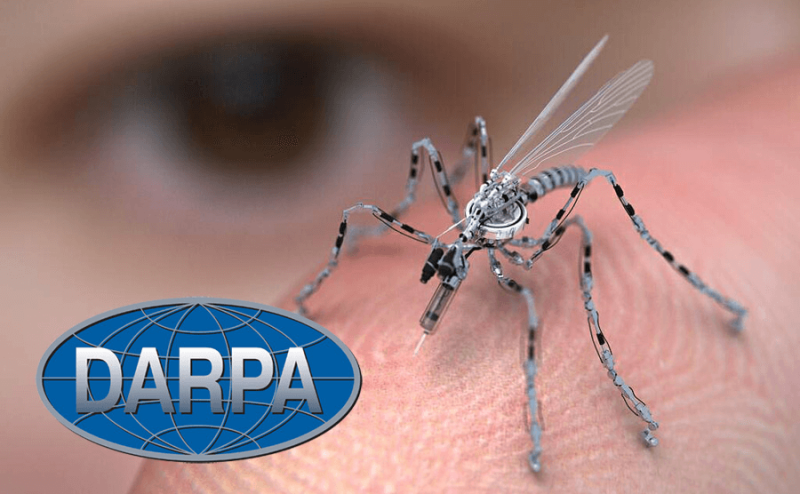
Insect Allies: Why the Pentagon’s plan to transmit plant viruses with gene edited insects to increase climate resilience is stirring such controversy

darpa
Credit: Ento Nation

Recent investigations have illuminated controversial projects by the Pentagon’s Defense Advanced Research Projects Agency (DARPA), specifically the “Insect Allies” program, which has raised alarm among leading biologists and researchers. This initiative aims to utilize insects to genetically modify crops in the field, a method that could potentially be weaponized, sparking fears of a new form of bio-warfare.

Launched by DARPA, the “Insect Allies” project seeks to deploy insects as carriers to transmit genetically modified viruses to plants, with the stated goal of enhancing crop resilience against stressors like climate change and pests. However, the underlying technology, notably CRISPR gene-editing, and the deployment method have prompted a robust debate about the program’s true intent and its potential misuse in biological warfare. Critics argue that the technology could easily be repurposed to harm, rather than help, agricultural systems.

Mis- and disinformation are distorting science and public policy. Subscribe to our Daily and Weekly Digests for incisive coverage of ‘disruptive’ innovations in AI, agricultural biotechnology, food, chemicals, nuclear energy, vaccines, and other disruptive innovations.

The international community is closely watching the developments of the “Insect Allies” program, considering its potential to violate the Biological Weapons Convention (BWC). The fear is that, if unchecked, such technologies could lead to a new arms race in biological warfare, targeting global food supplies and ecosystems. The controversy underscores the urgent need for global dialogue and transparency in the development and deployment of advanced genetic technologies.


This is an excerpt. Read the original post here

Related Articles

Infographic: Global regulatory and health research agencies on whether glyphosate causes cancer

Infographic: Global regulatory and health research agencies on whether glyphosate causes cancer

Does glyphosate—the world's most heavily-used herbicide—pose serious harm to humans? Is it carcinogenic? Those issues are of both legal and ...

Most Popular

ChatGPT-Image-Mar-10-2026-01_39_01-PM
Viewpoint—“Miracle molecule” debunked: Why acemannan supplements don’t work
ChatGPT-Image-Sep-2-2026-02_03_32-PM
How much of a problem is AI’s water use?
ChatGPT-Image-Aug-26-2026-12_46_16-PM
Viewpoint: The fake controversy over whether combining childhood vaccines is dangerous— a debate science resolved 25 years ago
ChatGPT-Image-Sep-22-2026-10_32_46-AM
There has been a slew of recent reports of food recalls and foodborne outbreaks. Do we face an escalating problem?
ChatGPT-Image-Sep-21-2026-03_41_02-PM
Viewpoint: Does IQ really measure intelligence? BBC gets it wrong.
ChatGPT-Image-Sep-18-2026-01_38_09-PM
Microsoft exec: AI is a ‘doom loop’ scraping the ‘largest theft of labor in human history'
Screenshot-2026-09-17-at-12.00.30-PM
Investigative group ProPublica finds links between ectopic pregnancy deaths and abortion bans
ChatGPT-Image-Sep-23-2026-11_47_32-AM
Facing pressure from Trump administration, fewer hospitals offer medical treatment for transgender minors
Screenshot-2026-09-23-at-11.55.01-AM
How can we know if social media bans actually help teens?
Screenshot-2026-09-17-at-1.07.08-PM
'We are dangerously addicted to antidepressants': Should we heed RFK Jr.’s sobering warning?
Screenshot-2026-09-16-at-3.14.20-PM
19%: Plunging support for Trump-RFK, Jr. measles vaccine safety oversight
ChatGPT-Image-Sep-17-2026-12_28_43-PM
Vitamin D, omega-3 fish oil and glucosamine supplements could cause brain damage 
Screenshot-2026-09-16-at-2.26.42-PM
Viewpoint: How to ecologically damage America’s forests: Ban glyphosate
glp menu logo outlined

Get news on human & agricultural genetics and biotechnology delivered to your inbox.