Terraforming Mars? How cultivating symbiotic soil bacteria could transform ‘inhospitable’ Martian dust into fertile soil

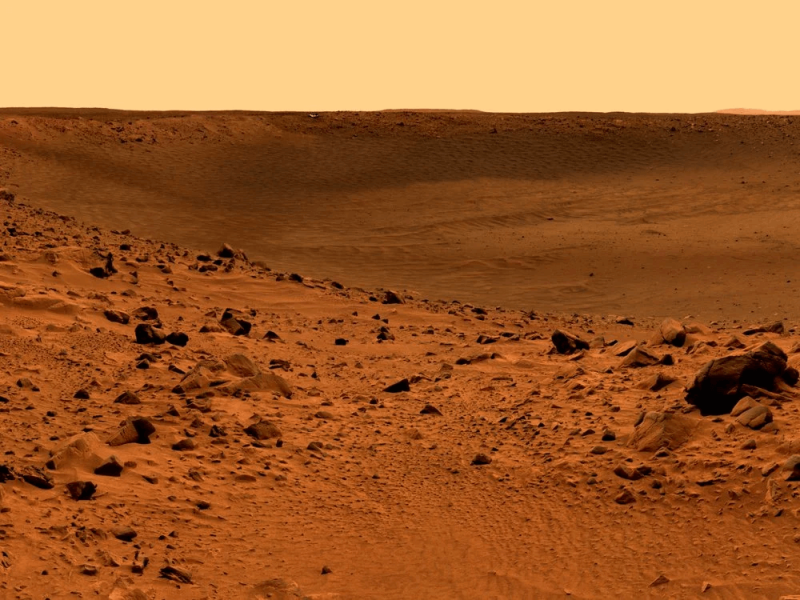
The Bonneville Crater on Mars. Credit: NASA/JPL/Cornell University

Martian soil differs significantly from Earth’s—it lacks essential nutrients, contains perchlorates (a toxic chemical), and is highly alkaline. These factors make it inhospitable for most plant life.

So, how might human explorers support themselves on Mars? It turns out, an ancient agricultural strategy pioneered by Mayan civilization farmers may come to their rescue.

This approach, known as intercropping, is still in practice and entails growing two to three different types of crops together. This strategy is advantageous because it produces plants with complementary traits that can help each other survive.

Mis- and disinformation are distorting science and public policy. Subscribe to our Daily and Weekly Digests for incisive coverage of ‘disruptive’ innovations in AI, agricultural biotechnology, food, chemicals, nuclear energy, vaccines, and other disruptive innovations.

The study team [at Wageningen University & Research] reportedly added beneficial microorganisms and nutrients. They also adjusted the greenhouse’s gases, temperature, and humidity to simulate Martian greenhouse conditions.

Remarkably, tomatoes grown in this intercropping method doubled their yield compared to monocropped plants in the same simulated Martian soil. Tomato plants also exhibited early flowering, accelerated maturation, increased fruit production per plant, and thicker stems. However, intercropping did not result in increased yields for peas and carrots.

…

The team postulates that tomato plants performed better in intercropping due to the presence of pea plants, which can fix nitrogen from the air with the help of symbiotic bacteria called rhizobia.


This is an excerpt. Read the original post here

Related Articles

Infographic: Global regulatory and health research agencies on whether glyphosate causes cancer

Infographic: Global regulatory and health research agencies on whether glyphosate causes cancer

Does glyphosate—the world's most heavily-used herbicide—pose serious harm to humans? Is it carcinogenic? Those issues are of both legal and ...

Most Popular

ChatGPT-Image-Mar-10-2026-01_39_01-PM
Viewpoint—“Miracle molecule” debunked: Why acemannan supplements don’t work
Screenshot-2026-09-17-at-1.07.08-PM
'We are dangerously addicted to antidepressants': Should we heed RFK Jr.’s sobering warning?
ChatGPT-Image-Sep-2-2026-02_03_32-PM
How much of a problem is AI’s water use?
Screenshot-2026-09-16-at-2.26.42-PM
Viewpoint: How to ecologically damage America’s forests: Ban glyphosate
Screenshot-2026-09-17-at-12.00.30-PM
Investigative group ProPublica finds links between ectopic pregnancy deaths and abortion bans
Screenshot-2026-08-19-at-6.19.42-PM
Facts & Fallacies podcast: 'Regenerative farming'? RFK Jr.’s federal push romanticizes the past and risks food security
Screenshot-2026-09-16-at-3.14.20-PM
19%: Plunging support for Trump-RFK, Jr. measles vaccine safety oversight
Screenshot-2026-09-10-at-12.20.19-PM
'Jet fuel didn't melt the steel': 9/11 conspiracy theories debunked
Screenshot-2026-09-20-at-9.03.54-AM
From Malaysia to the world: A pioneering science communicator reimagines global science communication for a digital age
glp menu logo outlined

Get news on human & agricultural genetics and biotechnology delivered to your inbox.