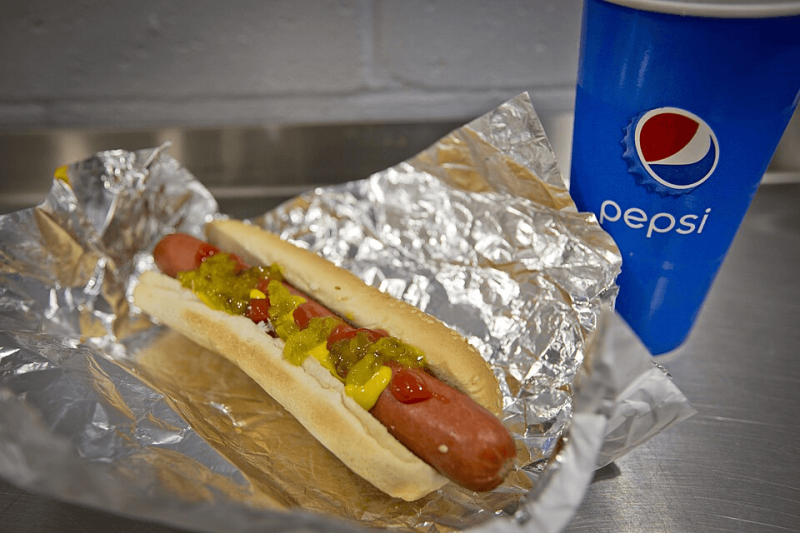
“A hot dog at the ballgame beats roast beef at the Ritz.” – Humphrey Bogart
Even though baseball may no longer be our national pastime, the link between a baseball game and hot dogs has never been greater. Among the 7 billion hot dogs consumed between Memorial and Labor Day, 21.4 million are consumed in ballparks. 63% of fans consider it the #1 ballpark meal, #2, peanuts, trail at 18%.
From Joy to Guilt in Under 500 Words
The PCMR commissioned an online survey of 2,000 adults in the US. Here are some takeaways:
- Over half of US adults have eaten a hot dog at a baseball stadium. Adults with higher household incomes are most likely to have done so.
- 7-in-10 adults, especially those with advanced degrees, know that eating hot dogs and processed meats has health risks.
- 4-in-10 US adults report that they would try a plant-based hot dog if they were getting food at a baseball stadium.
- Nearly two-thirds of US adults believe baseball stadiums should make plant-based hot dogs available as an option to fans. [emphasis added]
As for the first finding, given that the average ticket for a ball game is now $33.00, you need a higher income to afford to go, let alone consume a hot dog. The second finding provides a bit of “you know better” shaming. The third and fourth findings highlight a classic public health tension: what people say they might do versus what they think others should be doing.
Assigning a Moral Value to Mustard
The PCMR press release goes on.
“Tens of millions of Americans could eat hot dogs this baseball season, but most of them are unaware that doing so raises their risk of colorectal cancer and other diseases.”
– Noah Praamsma, MS, RDN, nutrition education coordinator PCMR
Echoing a meta-analysis from the World Cancer Research Fund that
“Just 50 grams of processed meat—the amount in an average hot dog—consumed daily increases colorectal cancer risk by 18%.”
What they fail to note is the studies involved processed meats that were cooked at high temperatures (e.g., grilled), generating mutagenic heterocyclic amines (HCAs) and polycyclic aromatic hydrocarbons (PAHs), which may increase cancer risk. “Dirty-water” ballpark hot dogs are heated with water, producing the lowest possible amounts of these mutagens. Moreover, with only 81 home games, only 22% of the year might be spent eating a ballpark hot dog. (Assuming your team is not in the playoffs).
While not mentioned in the press release, my favorite hot dog facts come from a study I discussed a few months ago. A single hot dog and bun will reduce your life by 36 minutes. Washing it down with the most popular beverage, a soda subtracts another 12 minutes; a beer subtracts up to 30 minutes more. For comparison, one cigarette is estimated to reduce your life by 20 minutes. Those dogs must be pretty powerful.

“The good news is that many stadiums across the country now offer plant-based hot dogs as alternatives to meat hot dogs.” Fans who trade even one serving of processed meat a day for a plant-based alternative would hit a home run for their health.” – Noah Praamsma, MS, RDN
They note “that men who ate the most plant-based foods had a 22% reduced risk of colon cancer, compared with those who ate the least.” However, a few moments reading their citation reveals the study compared the most healthful to least healthful plant-based diets. Meat was not necessarily on the menu, let alone hot dogs.
They also forgot to mention that the plant-based diet does not affect the incidence of colorectal cancer in women.
Nostalgia versus Nutritionism
The narrative is clear: the hot dog is a culinary criminal. While stadiums offer a far greater range of eating options, including plant-based foods, let’s not pretend carrot dogs are winning any taste tests for the fans sitting in the stadiums. The messaging isn’t about giving fans choices—it’s about nudging them toward what the nutrition police deem correct.
The annual rite of baseball has become a minefield of dietary guilt, as public health messaging crossed over from “inform the public” to “shame them into submission.” There’s no room for nostalgia, no acknowledgment that food is culture, connection, and memory. People aren’t stupid. They know what a hot dog is and eat it anyway. Not for the antioxidants but for the experience. Because sometimes joy is worth the nitrates.
Dr. Charles Dinerstein, M.D., MBA, FACS is the Medical Director at the American Council on Science and Health. He has over 25 years of experience as a vascular surgeon. He completed his MBA with distinction in the George Washington University Healthcare MBA program and has served as a consultant to hospitals. Follow Charles on X @CRDtoday
A version of this article was originally posted at American Council on Science and Health and has been reposted here with permission. Any reposting should credit the original author and provide links to both the GLP and the original article. Find American Council on Science and Health on X @ACSHorg