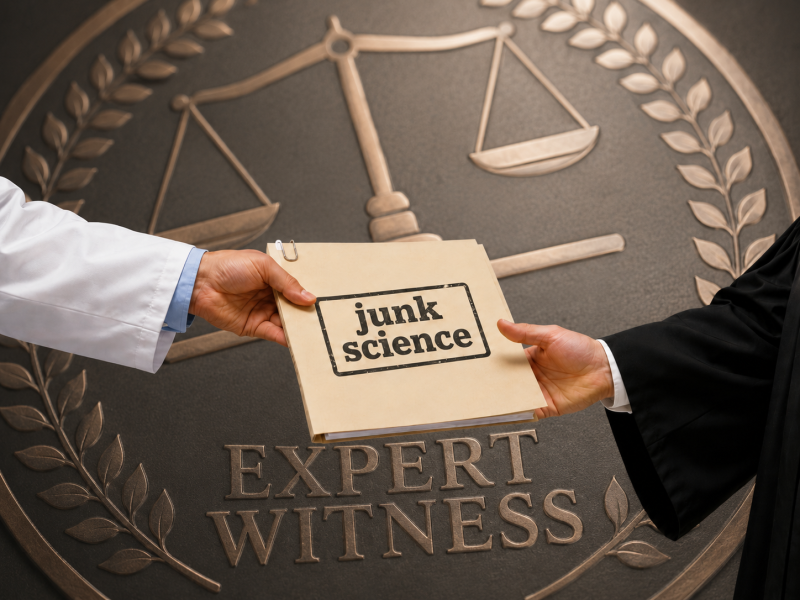
A New York federal appeals court is poised to decide one of the more consequential courtroom battles over scientific evidence in decades: whether the pain reliever acetaminophen increases the risk of autism, ADHD, or intellectual disabilities when used during pregnancy. Acetaminophen is the active ingredient in Tylenol and other over-the-counter pain relievers. The case will ultimately hinge on what expert evidence a judge allows the jury to hear.
The stakes are considerable: the case will decide what counts in judicial proceedings as reliable scientific evidence—shaping public confidence in the science-based standards that keep food safe, the environment clean, and medical care effective. Public health is at stake too: acetaminophen is considered the only pain reliever and fever reducer indicated for use during pregnancy; its continued availability is critical for pregnant women and their babies.
In federal court, the admissibility of expert testimony is governed by Federal Rule of Evidence 702 (most recently clarified in 2023 amendments).[1] Rule 702 charges judges to screen out unreliable expert testimony before it can mislead jurors. Judges are not supposed to decide which side’s science is “correct,” but whether each side’s expert evidence is methodologically sound enough to be heard at all. Only after that screening does a jury weigh the competing testimony, often through the imperfect proxy of which expert seems more credible. This gatekeeping power can dramatically change the course of sprawling mass-tort cases, where a single ruling on expert testimony can determine the fate of thousands of claims at once—often effectively deciding a case before a jury ever hears it.
In practice, that screening typically turns on markers of reliability—and on red flags that signal “made-for-litigation” science: analyses prepared by retained experts tailored to support a legal theory rather than generated through independent inquiry. Originally intended to screen out unreliable science, Rule 702’s judicial gatekeeping requirement has taken on outsized importance in a country fractured by online misinformation, political agendas, and the expanding alignment of environmental activists and mass-tort lawyers that sometimes target popular consumer products.[2],[3]
Tylenol in court
The debate over science in court is at the center of the ongoing legal battle around the alleged dangers posed by acetaminophen. The drug’s critics, an amalgam of mass-tort lawyers and MAHA-aligned public-health populists led by Health and Human Services Secretary Robert F. Kennedy, Jr. (a former mass-tort lawyer himself), claim that the pain reliever increases the risk of autism, ADHD, or intellectual disabilities when used during pregnancy.
The claims have simmered in the courts for years despite growing body of evidence to the contrary. Most recently, a comprehensive review of forty-three studies and 300,000 pregnancies published in January 2026 in The Lancet reaffirmed dozens of prior studies finding no link between acetaminophen use during pregnancy and Autism, ADHD, or other neurodevelopmental disorders in children.[4]
But strong scientific evidence on science controversies involving food, chemicals, drugs and other commonly used products has never deterred trial lawyers who, often working in tandem with environmental activist groups, have turned trials of safe and approved products into political spectacles: consider talcum powder, Roundup (glyphosate), Zantac, and paraquat as recent examples. FRE Rule 702 is one of the few courtroom tools available to limit the spread of politicized science.
The controversy over acetaminophen is the most recent example of this ongoing tension. In December 2023, a federal judge applying Rule 702 dismissed thousands of claims alleging that Tylenol causes autism, excluding the plaintiffs’ scientific experts, who were poised to tell jurors that prenatal exposure to Tylenol causes Autism and ADHD[5]—claims contradicted by substantial evidence, and reaffirmed in 2026.[6] For an average juror, this is exactly the kind of dispute that is hardest to adjudicate: observational studies, confounding variables, and causal inference questions that can be made to sound like certainty in the hands of a skilled witness.
The ruling appeared to set a constructive and seemingly decisive precedent for challenging the manipulation of contested scientific evidence — but it caused outrage among tort lawyers who have leveraged the complexity of scientific issues to score recoveries worth billions of dollars targeting safe chemicals, foods, and drugs.
In 2024, the mass-tort lawyers appealed the trial court’s ruling in an effort to revive their case. In September 2025, on the eve of an important court hearing before the Second Circuit Court of Appeals,[7] Secretary Kennedy and President Trump made public remarks — unsupported by the evidence — that were seemingly intended to bolster the tort case and pressure the appellate court.[8] President Trump publicly warned: “If you’re pregnant, don’t take Tylenol.”[9]
Now, with the new Lancet review reaffirming no causal link, the Tylenol battle is poised to become a new test of what amended Rule 702 is supposed to accomplish: prevent “science on trial” from converting unsettled hypotheses into high-dollar verdicts — or whether it improperly prevents juries from weighing disputes that plaintiffs insist deserve their day in court.[10]
Daubert and the Path to Amended Rule 702
Will the legal guardrails that protect scientific reliability hold? For much of the period from 1923 to 1993, many courts applied Frye v. United States,[11] under which courts would admit scientific testimony only if it had “general acceptance”—broad consensus—within the relevant scientific community. The Federal Rules of Evidence, which took effect in 1975, broadened admissibility and shifted attention toward methodology.[12]
The modern standard emerged out of the United States Supreme Court’s decision in Daubert v. Merrell Dow Pharmaceuticals (1993),[13] a birth-defects lawsuit alleging that the anti-nausea drug Bendectin caused congenital malformations. Daubert, as the standard came to be known, held that federal judges must act as gatekeepers and that the core admissibility inquiry is reliability and relevance, not mere consensus.
Daubert did not give carte blanche to any new theory; it required reliability, relevance, and “fit”—a demonstrable connection between the research and the facts of the case. In practice, that screening typically turned on familiar reliability cues—testability, peer review, known or potential error rates, standards controlling a method’s operation, and general acceptance.
In the years that followed, the Court clarified and extended Daubert in two major rulings: General Electric v. Joiner (1997)[14] emphasized that courts may exclude expert opinions where there is too great an analytical leap between the data and the conclusion, and Kumho Tire v. Carmichael (1999)[15] confirmed that the gatekeeping obligation applies to all expert testimony, not just “hard science.”
Other illustrative cases[16] where the application of Daubert has been questioned also include the In re Paoli R.R. Yard PCB Litigation xxx[17], Lust v. Merrell Dow Pharmaceuticals, Inc.[18], and Rider v. Sandoz Pharmaceuticals Corp.[19] These and other examples, as noted by the Institute for Legal Reform suggest a pattern of representative evidence of an emerging broader doctrinal pattern.[20]
In 2000, Federal Rule of Evidence 702 was amended by the federal judiciary to reflect the Daubert-era focus on reliable methods, sufficient grounding, and reliable application. Still, confusion persisted: a U.S. Court of Appeals found those amended guidelines “did not eliminate confusion and establish uniformity….”[21]
In 2023, Rule 702 was amended again to underscore that judges must decide before trial whether the expert evidence is reliable enough to be heard (“more likely than not”)—not “let it in and let the jury decide.”
The goal was not to “raise” the bar for the admission of expert evidence, but to correct a recurring judicial drift: treating reliability problems as issues for the jury to “weigh,” rather than admissibility requirements the judge must enforce at the threshold. Under the amended rule, expert testimony should not reach jurors unless the proponent shows—more likely than not—that the opinion rests on sufficient facts, reliable methods, and a reliable application of those methods to the case. And because several state courts still follow Frye as the governing admissibility standard, expert-evidence rules can vary significantly depending on where a case is filed.
The most pressing question: Will Rule 702’s guardrails be applied consistently in major product tort cases that could shape science for decades to come?
The biggest concern is the inconsistent application of Rule 702’s gatekeeping framework,[22] especially by lower courts.[23] Judges on the frontlines are not supposed to be deciding “who is right,” but rather to ensure that what reaches a jury is methodologically reliable, relevant, and tightly fit to the facts. Cross-examination is a backstop, not a substitute: it can expose bias and sloppiness, but it cannot reliably repair a flawed methodology once the jury has heard it.
That assignment has become harder in a post–social-media, post-AI world—where fabricated “studies,” AI-generated citations, and even digital deepfakes can be laundered into litigation narratives, and where financial and ideological conflicts are often disclosed late or not at all.[24] It has also become easier for weak claims to “look scientific” through selective citation—what courts often call cherry-picking, and what skeptics describe as a Chinese-menu approach to evidence (pick the favorable items, ignore the rest).[25],[26]
The problem is compounded by modern publishing realities: an explosion of journals, rising retractions, and litigation-adjacent “research” that can look peer-reviewed while resting on fragile methods—making basic hygiene (checking retractions, conflicts, impact, and whether an opinion was developed for litigation) newly central to gatekeeping.[27] In 1993, “published and peer reviewed” was often a meaningful reliability signal; today it is sometimes just a starting point—especially when journals are low-quality, conflicted, or when the “publication” is merely a letter or commentary dressed up as evidence.
Recent cases provide insights into these growing concerns.
Tylenol (Acetaminophen) — The Tylenol-Autism MDL illustrates how courtroom disputes can function as public-health proxy wars: courts can end up “deciding” science indirectly through admissibility calls, long before a jury ever hears a case. It also highlights recurring gatekeeping red flags: experts relying on unpublished reanalysis, selective endpoints, or one-sided literature reviews without a consistent, field-appropriate method for excluding contrary evidence.
Zantac — Since 2019, more than 200,000 plaintiffs across multiple states have alleged that the heartburn drug (ranitidine) was causing multiple cancers caused by its key ingredient, NDMA. Plaintiff attorneys have been exploiting the ambiguity over the potential harm that NDMA could cause, although it is a carcinogenic hazard, real-world risk depends on dose and exposure. Regulators evaluate it through risk-based thresholds, not the lower threshold of “any detectable amount” deployed by plaintiff attorneys. No regulatory agency has determined that NDMA, at the amount found in Zantac, poses a cancer risk.
Plaintiffs’ narratives have relied on tests conducted by laboratories that pushed conditions far beyond normal use—including heating Zantac in an “artificial stomach” to 266°F and adding extreme salt—to generate NDMA and make the product appear more dangerous than typical real-world ingestion would suggest. It was later revealed in discovery that the lab behind this work, Valisure, coordinated with—and been paid by—one of the plaintiff’s firms.[28]
A Florida federal judge and the FDA rejected key elements of plaintiff’s cancer claims, forcing the withdrawal of tens of thousands of cases. But the attorneys opportunistically shopped the case to other venues more willing to admit contested expert testimony. In Delaware, a state trial judge overseeing more than 75,000 cases allowed plaintiffs to present substantially the same NDMA testing and causation theories to a jury — theories that had been rejected in federal court and dismissed in other states. Some California trial judges have also allowed Zantac claims to proceed.[29]
That Delaware episode became a cautionary tale because it exposed how forum selection can change outcomes even when the underlying science does not. Critics argued that the trial court effectively treated core scientific disputes as matters of “credibility,” leaving reliability screening to jurors rather than requiring a methodological showing up front.[30] They also noted that, in the federal Zantac MDL, plaintiffs themselves narrowed their theory to five cancers, dropping the rest—a tacit concession that the broader ten-cancer theory was not equally supportable.
The Delaware docket was strikingly national: roughly 99% of plaintiffs lived outside of Delaware—a vivid illustration of venue-shopping when a jurisdiction appears willing to admit contested expert testimony. The underlying “fit” question was acute: if NDMA formation depended on extreme heat and other unrealistic conditions, did the experiment model real-world exposure—or manufacture a litigation-friendly result?
That Delaware divergence has now been sharply curtailed. In July 2025, the Delaware Supreme Court reversed the trial court and rejected the notion that Delaware applies a more permissive admissibility standard, emphasizing that Rule 702 requires real gatekeeping rather than a “liberal thrust” toward letting juries sort it out.[31] But the practical lesson remains: one permissive trial-level ruling can create settlement leverage long before an appellate court restores discipline.
One firm pursuing Zantac claims promotes the benefits of the ability to forum-shop to different venues in pursuit of favorable rulings, noting: “Despite [the Delaware Supreme Court’s ruling], state courts in some jurisdictions may still offer avenues for claims to proceed, applying their own specific rules of evidence.”[32] But that talking point is also a candid description of the business model: when one court excludes made-for-litigation science, plaintiffs can migrate to another that will entertain it—at least long enough to force settlement leverage.
Even when the Delaware Supreme Court reversed the trial court’s ruling, the years of litigation expense, discovery burdens, reputational fallout, and uncertainty were a major driver of targeted pharmaceutical companies offering settlements exceeding $2 billion.[33] That’s the leverage problem: the cost of litigation can overwhelm the scientific merits. Centralization is supposed to build scientific fluency—and when that fluency exposes defects in an expert opinion, it makes little sense for other courts to pretend those defects don’t exist.
For those watching closely, it was clear the science and the evidence supporting the product’s safe use were sidelined in the settlement.[34] That happens all too often, because companies are forced to price in asymmetric risk: even a scientifically weak case can produce catastrophic jury awards, plus the sheer cost of defending tens of thousands of claims. In the current environment, many companies will not gamble their existence or reputation on the hope that juries will sort out dueling experts.
One under-discussed downstream effect: settlement and defense costs do not disappear; they are often redistributed—through higher prices, higher insurance premiums, reduced innovation budgets, or product withdrawals that deprive consumers of beneficial products.
Glyphosate/Roundup — Ongoing cancer claims targeting Roundup, the patented version of the herbicide glyphosate, along with related suits over product labeling, reveal significant breakdowns in Rule 702 protections. There have been more than $12 billion in settlements paid to date, and tens of thousands of cases are pending, with additional filings yet to be adjudicated in Canada.[35]
The litigation campaign against the world’s most popular herbicide has generated conflicting findings across courts. Many U.S. courts as well as jurisdictions in France and Australia have rejected the claims. The U.S. Environmental Protection Agency, USDA, European Food Safety Authority, European Chemicals Agency, German Federal Institute for Risk Assessment, and Japan’s Food Safety Commission, among many agencies, have consistently concluded glyphosate does not pose a cancer risk.[36] In 2019, Health Canada, in its second review of glyphosate, explicitly stated that “No pesticide regulatory authority in the world currently considers glyphosate to be a cancer risk to humans at the levels at which humans are currently exposed.”
Here, as in the other noted examples, the legal differences among hazard, risk, general causation, specific causation, and admissibility are arguably being blurred.[37] All the plaintiffs have based their case not on the findings of risk agencies, but on the outlier assessment by the International Agency for Research on Cancer (IARC), which focuses on the far lower threshold of hazard.[38] As a result, it has determined that many common chemicals or life-situations that risk agencies consider safe—such as consuming processed meat, drinking wine, or going to a hairdresser—have been found likely carcinogens by IARC.[39]
The distinction between risk and hazard is often difficult for juries to make — a confusion often exploited by plaintiff attorneys. Blurring the difference between risk and hazard is debatably the central strategy of plaintiff attorneys in many chemical- and product-related cases. A hazard label can misleadingly sound like a verdict on real-world risk, unless courts force experts to connect the label to dose, exposure, and causation under realistic conditions. Many judges have not adequately provided clear guidance to the juries about these discrepant conclusions and public misinformation.
In August 2025, the Ninth Circuit in Engilis v. Monsanto Co. upheld a federal trial court’s decision to bar a plaintiff’s expert from testifying that Roundup caused the plaintiff’s cancer.[40] The court underscored a basic gatekeeping rule: expert witnesses can’t simply say “Roundup caused this cancer” and expect the jury to sort it out. If the expert can’t show, step by step, how the evidence supports that conclusion, the judge can keep the testimony out. And if that expert testimony is the plaintiff’s main proof, the case may be thrown out before it reaches a jury. The ruling, however, came after years of litigation momentum; by 2025, glyphosate’s manufacturer Bayer (which acquired Monsanto in 2018) had already paid billions in settlements and had even discussed the possibility of bankruptcy.
Talcum Powder — Lawsuits alleging links between talc-based baby powder and ovarian cancer (and, in some cases, mesothelioma) began in 2009. Johnson & Johnson, the primary manufacturer of talcum powder, has consistently asserted that its baby power was asbestos-free. (J&J ended global sales of talc-based baby powder in 2023, shifting to a cornstarch-based product).
In 2019, FDA testing of a single J&J lot found a “sub-trace” level not exceeding 0.00002%—a miniscule level.[41] Even at exponentially higher doses, there is no clear relationship between ovarian cancer and talc. No medical studies of its use on the genitals show a strong association and most show no association at all. The National Cancer Institute says the evidence is not strong enough to conclude that talcum powder causes ovarian cancer.
Those conclusions have been overshadowed in numerous court cases where hazard language can be misread as proof of real-world risk.[42] Numerous court filings have cited IARC’s designation that talc is “probably carcinogenic to humans.”[43] That is not a real-world risk estimate, yet it is often cited in the media and by litigators as if it settles causation.
The designation by IARC that talc is “probably carcinogenic to humans” is a hazard classification, not a real-world risk estimate. This IARC hazard classification is often misunderstood and mis-conveyed by the media.[44] This IARC classification is purposefully blurred by litigators for plaintiffs alleging harm.
Divergent applications of Daubert and Rule 702 across state and federal cases, like Roundup and Zantac, have created costly uncertainties. J&J has pursued bankruptcy-based strategies to resolve large blocks of claims, even as tens of thousands of claims remain pending.
Paraquat — Currently more than 10,000 cases across state and federal courts allege Parkinson’s disease was caused by exposure to the pesticide, and filings continue to grow. Like other product cases, a key federal judge applied rigorous scientific-evidence standards,[45] only to see similar theories revived in state courts—creating settlement pressure even when federal gatekeeping rejects the science. In effect, defendants face a “heads-I-win, tails-you-pay” dynamic: exclude the expert in one forum, and the claims migrate to another.
Paraquat claims against Syngenta and Chevron were consolidated into a federal class action in the Southern District of Illinois in 2016. Initial bellwether cases set to go to trial in 2024 were thrown out by the presiding judge after finding that plaintiffs’ sole general-causation expert relied on litigation-driven research and failed to meet core reliability standards.[46] The purported evidence was characterized as “made-for-litigation testimony,” created for the lawsuit rather than anchored in independent, replicable science.[47]
In addition, hundreds of individual federal MDL claims were withdrawn following discovery-related demands by the presiding judge, who questioned the documentation in support of the suits. Many of those dismissed or withdrawn claims were re-filed in state venues where similar standards of evidence are applied less strictly. The venue “migration” dynamic is not a technicality; it is the mechanism by which rigorous gatekeeping in one courtroom can be neutralized by permissive gatekeeping in another. The practical result is leverage: the cost and risk of continuing litigation can drive enormous settlement demands even before juries ever hear a single bellwether trial.
Recommended path forward
First, lower courts must follow Rule 702: act as gatekeepers and take the role seriously. When trial courts shirk this obligation, the burden shifts to appellate courts—pressuring litigants, clogging the system, and potentially distorting outcomes.
In practice, jurors can weigh competing evidence, but judges must screen scientific reliability under Rule 702 before jurors ever hear testimony—because juries can’t “unring the bell.” The current idea that a lack of statistical significance isn’t automatically disqualifying cannot become a permission slip for introducing speculative causation. Judges should make the reliability call up front; the jury’s role should only begin after questionable science has been screened pursuant to Rule 702.
Second, the role of IARC and similar sources must be better understood by courts. Too often, IARC’s hazard-focused classifications are treated—by advocates, headlines, and sometimes experts—as if they were risk determinations or proof of causation at real-world doses and exposures. That confusion can drive scientifically unsupported verdicts. Because IARC assesses hazard—not real-world risk or causation—its use in court should be narrow and carefully explained. Under Rule 702’s “fit” requirement, experts should be required to connect any hazard label to real-world dose, exposure, and biological plausibility, rather than cite hazard labels as a proxy for causation.[48]
Third, the growth of litigation funding by investors overwhelms both defendants and courts, enabling Rule 702 abuses.[49] Like the Valisure testing lab in the Zantac litigation, plaintiff-financed nonprofit groups, including the Heartland Health Research Alliance (HHRA) and the Health Research Institute (HRI), have been described by critics as designed to help create evidence in support of injury claims.
The case of HHRA is particularly egregious and illustrative. Its founder and executive director Charles Benbrook is a paid consultant and expert witness for litigators in glyphosate, paraquat, and other pesticide lawsuits.[50] HRI is listed as an HHRA partner and conducts pesticide and GMO testing for NGOs and organic marketing interests. FOIA-produced emails indicate that Benbrook offered to produce research with desired results and timing for the right fees to his clients. Like Valisure, HHRA provided “testing” services via its partner HRI and promoted findings via litigator-linked marketing agencies.[51]
Testimony from sources like these undermines trust in the judicial process and raises the question of why institutional guardrail rules failed to exclude them. When “research” is effectively commissioned for litigation, courts should treat it as advocacy unless the methodology, data access, and independence are clearly demonstrated—not presumed—and should demand that showing at the admissibility stage under Rule 702, not postpone it to cross-examination.
This is also where basic justiciability principles—legal standing, concrete injury, traceability—matter most: when financing and aggregation incentives reward scale, courts need sharper filters before weak science and weak causation theories metastasize into thousands of claims. And general causation should not be divorced from dose: courts should require evidence that the agent can cause the alleged harm at exposure levels people realistically experience, rather than at levels achieved only by “torturing” samples in artificial conditions. Make the threshold question: “Can it cause the harm at plausible exposures?” That is Daubert “fit” in practical terms—and it should be enforced through Rule 702.
Former Pennsylvania Rep. Becky Corbin recently warned that scientific knowledge—“the foundation of modern life, ensuring food safety, a clean environment, and effective medical treatments”—is being steadily undermined by misinformation, ideological agendas, and profiteering within our legal system.[52] The result is an erosion of scientific integrity in America’s courtrooms, accelerated by the rise of mega-lawsuits and private equity and litigation-finance operations that can extract large shares of billion-dollar settlements even when the underlying claims rest on thin or disputed scientific footing.
Corbin’s point is ultimately institutional, not partisan: evidence-based science is the basis for public trust and a safe, flourishing society. Yet the threats now extend beyond familiar distortions—venue shopping, pay-to-play experts, Wall Street wagering on courtroom outcomes.[53] Courts can’t eliminate venue shopping, but they can blunt it: enforce jurisdiction and venue rules strictly, transfer cases with thin local ties, and in MDLs set early, uniform Rule 702 admissibility rulings on core experts that do not depend on geography.
Artificial intelligence and deepfakes, a growing tide of scientific retractions, and the politicization of health policy all increase the risk that unreliable claims will be laundered into “courtroom facts.” That makes Rule 702’s insistence on sufficient data and reliable application even more consequential in practice. Sprawling dockets like Zantac, Roundup, baby powder, and paraquat—despite settlements totaling tens of billions of dollars—continue to generate new filings that erode confidence in regulators, drive up consumer costs, and reward uncertainty.
That is why Rule 702’s guardrails must be applied consistently and reinforced where needed: and why the amended rule matters as a course-correction, not a technicality—to protect the integrity of scientific reasoning, the credibility of agency safety determinations, the fairness of the legal system, and the public’s pocketbook. A system that imposes legal liability absent reliable proof of causation doesn’t just redistribute money — it undermines due process and substitutes persuasion for proof.[1]
 Predatort Part II: How predatory lawyers, activist scientists hijacked IARC—International Agency for Research on Cancer—for personal profit and ideological vanity
 Viewpoint: ‘Roundup game plan’—How ‘environmental’ activists, IARC’s Chris Portier plotted attacks on Monsanto-Bayer to get glyphosate banned and cripple ag biotechnology
 Viewpoint—Toxic Narratives: The lucrative environmentalist–tort lawyer-media disinformation network driving drug and chemical scares



Jon Entine is the Executive Director of the Science Literacy Project.
The article was reviewed by Drew Kershen, Professor of Law Emeritus, Earl Sneed Centennial Professor of Law Emeritus at the University of Oklahoma, College of Law.
This article was originally posted at Journal of Science and Law. Any reposting should credit the original article and the SLP.
ENDNOTES
[1] See Fed. R. Evid. 702; Mark Behrens & Andrew Trask, Federal Rule of Evidence 702: A History and Guide to the 2023 Amendments Governing Expert Evidence, 12 Tex. A&M L. Rev. 43 (2024); see also Stephen McConnell, New Law Review Article Explains the History and Application of Amended Fed. R. Evid. 702, Drug & Device Law Blog, Jan. 8, 2025, https://www.druganddevicelawblog.com/2025/01/new-law-review-article-explains-the-history-and-application-of-amended-fed-r-evid-702.html.
[2] See Mark A. Behrens & Andrew J. Trask, The Rule of Science and the Rule of Law, 49 Sw. U. L. Rev. 436, 438 (2021) (“science in courtrooms should track mainstream science and not change in outcome-determinative ways based on location. When the rule of science is lost in the courts, so is the rule of law.”); Victor E. Schwartz, Expert Evidence: The Gatekeeper Role of Justice, 18 Brook. J. Corp. Fin. & Com. L. 69, 71 (2023) (stating, “With verdicts in tort cases increasing in frequency and amount, it is more important than ever that judges . . . act as gatekeepers against misleading and unreliable expert evidence.”).
[3] Leonhard, Chunlin and Leonhard, Christoph (2024) “Through Smoke and Mirrors: Excluding Malingering Expert Testimony Under the Daubert Standard,” Georgia Law Review: Vol. 59: No. 1, Article 2. Available at: https://digitalcommons.law.uga.edu/glr/vol59/iss1/2
[4] Francesco D’Antonio, et al., Prenatal Paracetamol Exposure and Child Neurodevelopment: A Systematic Review and Meta-Analysis, The Lancet Obstetrics, Gynaecology & Women’s Health, Jan. 16, 2026, https://www.thelancet.com/journals/lanogw/article/PIIS3050-5038%2825%2900211-0/fulltext.
[5] In re Acetaminophen – ASD-ADHD Prods. Liab. Litig., 707 F. Supp. 3d 309 (S.D.N.Y. 2023), appeal filed.
[6] Sarah Braner, No Link between Acetaminophen Use in Pregnancy and Autism or ADHD, Chem. & Eng’g News, Jan. 16, 2026, https://cen.acs.org/pharmaceuticals/link-between-acetaminophen-use-pregnancy/104/web/2026/01.
[7] Amanda Bronstad, 2nd Circuit Delays Arguments in Acetaminophen Appeal After Trump Targets Tylenol, Law.com, Sept. 25, 2025, https://www.law.com/2025/09/25/2nd-circuit-delays-arguments-in-acetaminophen-appeal-after-trump-targets-tylenol/.
[8] Press Release, President Trump, Secretary Kennedy Announce Bold Actions to Tackle Autism Epidemic, U.S. Dep’t of Health & Human Servs., Sept. 25, 2025, https://www.hhs.gov/press-room/hhs-trump-kennedy-autism-initiatives-leucovorin-tylenol-research-2025.html.
[9] Madison Czopek, Trump Claims ‘No Downside’ to Avoiding Tylenol During Pregnancy. He’s Wrong, J. Health Econ. & Outcomes Res., Sept. 24, 2025, https://jheor.org/post/3465-trump-claims-no-downside-to-avoiding-tylenol-during-pregnancy-he-s-wrong.
[10] L.S. Howard, US Nuclear Verdicts Break Records and Drive Social Inflation to 7% in 2023, Ins. J., Oct. 7, 2024, https://www.insurancejournal.com/magazines/mag-features/2024/10/07/795733.htm.
[11] Frye v. United States, 293 F. 1013 (D.C. Cir. 1923).
[12] In 1975, Federal Rule of Evidence 702 said: “If scientific, technical, or other specialized knowledge will assist the trier of fact to understand the evidence or to determine a fact in issue, a witness qualified as an expert by knowledge, skill, experience, training, or education, may testify thereto in the form of an opinion or otherwise.”
[13] Daubert v. Merrell Dow Pharms., Inc., 509 U.S. 579 (1993).
[14] Gen. Elec. Co. v. Joiner, 522 U.S. 136 (1997).
[15] Kumho Tire Co. v. Carmichael, 526 U.S. 137 (1999).
[16] Ronald J. Allen & Esfand Nafisi, Daubert and its Discontents, 76 Brook. L. Rev. (2010). Available at: https://brooklynworks.brooklaw.edu/blr/vol76/iss1/3
[17] Joseph C. Kohn, In Re Paoli Railroad Yard PCB Litigation: The Jury’s Role in Resolving the Battle of the Experts, 4 Vill. Envtl. L.J. 1 (1993). Available at: https://digitalcommons.law.villanova.edu/elj/vol4/iss1/1
[18] Sanford L. Steelman, Jr., Welcome Back Daubert, North Carolina Superior Court Judge’s Conference, Wilmington, NC (June 21, 2012) (unpublished manuscript). https://www.sog.unc.edu/sites/default/files/course_materials/Steelman_702%20Manuscript.pdf
[19] Rider v. Sandoz Pharmaceutical Corp., 295 F.3d 1194 (11th Cir. 2002). https://www.casebriefs.com/blog/law/torts/torts-keyed-to-twerski/daubert-test/rider-v-sandoz-pharmaceutical-corp/
[20] Cary Silverman, Fact or Fiction: Ensuring the Integrity of Expert Testimony (U.S. Chamber Institute for Legal Reform, Feb. 2021), https://instituteforlegalreform.com/reports/fact-or-fiction-ensuring-the-integrity-of-expert-testimony/
[21] Engilis v. Monsanto Co.,151 F.4th 1040, 1048 (9th Cir. 2025).
[22] See Fed. R. Evid. 702 advisory committee’s note to 2023 amendment; David E. Bernstein & Eric G. Lasker, Defending Daubert: It’s Time to Amend Federal Rules of Evidence 702, 57 Wm. & Mary L. Rev. 1 (2015) (noting widespread misapplication of Rule 702).
[23] National Academies of Sciences, Engineering, and Medicine and Federal Judicial Center. “The Admissibility of Expert Testimony.” Reference Manual on Scientific Evidence: Fourth Edition. Washington, DC: The National Academies Press, 2025. doi: 10.17226/26919. https://www.nationalacademies.org/read/26919/chapter/2#9
[24] Natalie Runyon, Deepfakes on Trial: How Judges Are Navigating AI Evidence Authentication, Thomson Reuters Inst., May 8, 2025, https://www.thomsonreuters.com/en-us/posts/ai-in-courts/deepfakes-evidence-authentication/.
[25] “Recent Rule: Federal Rule of Evidence 702,” 138 Harv. L. Rev. 899 (2025). https://harvardlawreview.org/print/vol-138/federal-rule-of-evidence-702/
[26] Michael R. Blumenthal, Douglas W. Charnas, James William Sandy, and David B. Waxman, The End of Chevron Deference: What Does It Mean, and What Comes Next?, Business Law Today, Am. Bar Ass’n (Aug. 16, 2024), https://www.americanbar.org/groups/business_law/resources/business-law-today/2024-august/end-chevron-deference-what-does-it-mean-what-comes-next/
[27] Richelle W. Kidder & Trent A. Mansfield, Turnabout Is Fair Play—‘Junk Science’ Litigation Aftermath: Requisite Retractions and Dubious Do-Overs, JD Supra, Mar. 27, 2025, https://www.jdsupra.com/legalnews/turnabout-is-fair-play-junk-science-2460172/.
[28] Editorial, The Zantac Scare and Junk Science, Wall St. J., Dec. 8, 2022, https://www.wsj.com/articles/the-zantac-scare-and-junk-science-federal-judge-valisure-lawsuit-ranitidine-cancer-11670537783.
[29] In re: Zantac (Ranitidine) Litigation, General Zantac Litigation, C.A., No. N22C-09-101 ZAN (Del. Super.Ct. Jan. 29, 2026), Jones, J. https://courts.delaware.gov/Opinions/Download.aspx?id=390850.
[30] Bexis, “Hundreds of Non-Resident Zantac Plaintiffs Run Out of Connecticut,” Drug & Device Law (Oct. 3, 2025), available at https://www.druganddevicelawblog.com
[31] In re Zantac (Ranitidine) Litig., 342 A.3d 1131, 1134 (Del. 2025) (holding “the Superior Court erred in adopting a standard that favored or presumed the admissibility of expert testimony. Under our rules and existing precedent, the proponent of an expert opinion bears the burden of establishing that the opinion is based on sufficient facts or data and on dependable principles and methods that are reliably applied to the facts of the case.”).
[32] Caputo & Mariotti, P.C., Zantac Litigation: A Comprehensive Guide to Recent Developments, Feb. 15, 2026, https://caputomariotti.com/zantac-litigation-a-comprehensive-guide-to-recent-developments/.
[33] GSK, Press Release, Zantac (Ranitidine) Litigation – Settlement Agreements Reached, Oct. 9, 2024, https://us.gsk.com/media/mnlfcuoa/statement-zantac-ranitidine-litigation-settlement-agreements-reached.pdf.
[34] Barbara Pfeffer Billauer, An ACSH Ringside Update on The Zantac Daubert Appeal, Am. Council on Sci. & Health, Oct. 30, 2025, https://www.acsh.org/news/2025/10/30/acsh-ringside-update-zantac-daubert-appeal-49799.
[35] Barbara Pfeffer Billauer, Corporations, Too, Can Be Slandered: The Roundup Story, Am. Council on Sci. & Health,, Sept. 30, 2025, https://www.acsh.org/news/2025/09/30/corporations-too-can-be-slandered-roundup-story-49746.
[36] Iida Ruishalme, European Scientist: WHO’s IARC Faces Scrutiny over Glyphosate Cancer Designation, Genetic Literacy Project, Nov. 7, 2016, https://geneticliteracyproject.org/2016/11/07/european-scientist-whos-iarc-faces-justifiable-scrutiny-glyphosate-cancer-designation/.
[37] Eric M. Kraus & Kyle W. Mack, “Regulatory Risk Assessment vs. Tort Law Causation: A Distinction with a Difference,” (July 2021), Phillips Lytle LLP, available at https://phillipslytle.com/wp-content/uploads/2021/07/ARTICLE-2021-07-20-Kraus.pdf
[38] IARC Working Group on the Evaluation of Carcinogenic Risks to Humans, Some Organophosphate Insecticides and Herbicides: Diazinon, Glyphosate, Malathion, Parathion, and Tetrachlorvinphos (2015), https://publications.iarc.who.int/549.
[39] Nathan A. Schachtman, IARC’s Precautionary Science: How the WHO Cancer Research Agency Misinforms Regulation and Litigation, Wash. Legal Found., May 18, 2026,https://www.wlf.org/2026/05/18/publishing/iarcs-precautionary-science-how-the-who-cancer-research-agency-misinforms-regulation-and-litigation/.
[40] Engilis v. Monsanto Co.,151 F.4th 1040 (9th Cir. 2025).
[41] U.S. Food & Drug Admin., Press Release, Johnson & Johnson Consumer Inc. to Voluntarily Recall a Single Lot of Johnson’s Baby Powder in the United States, Oct. 18, 2019, https://www.fda.gov/safety/recalls-market-withdrawals-safety-alerts/johnson-johnson-consumer-inc-voluntarily-recall-single-lot-johnsons-baby-powder-united-states.
[42] Samuel M. Cohen, et al., The Hitchhiker’s Guide to an IARC Monograph Conclusion: Don’t Panic, Eur. Sci., June 10, 2022, https://www.europeanscientist.com/en/features/the-hitchhikers-guide-to-an-iarc-monograph-conclusion-dont-panic/.
[43] Int’l Agency for Res. on Cancer, Press Release No. 352, IARC Monographs Evaluate the Carcinogenicity of Talc and Acrylonitrile, July 5, 2024, https://www.iarc.who.int/wp-content/uploads/2024/07/pr352_E.pdf.
[44] Niree Kraushaar & Mary Schubauer-Berigan, Hazard Identification Versus Risk Assessment, IARC Monographs News, Vol.13, at 3 (Nov. 2025), https://monographs.iarc.who.int/wp-content/uploads/2025/11/Newsletter-IssueNo13.v3.pdf.
[45] In re Paraquat Prods. Liab. Litig., 2024 WL 1659687 (S.D. Ill. Apr. 17, 2024), appeal filed.
[46] Craig A. Woods & Linda X. Shi, In re Paraquat: Studious Gatekeeping Exposes and Excludes Made-for-Litigation Testimony, Washington Legal Found., Vol. 39 No. 8, June 23, 2024, https://www.wlf.org/wp-content/uploads/2024/06/062424WoodsShi_LB.pdf.
[47] Nidhi Subbaraman, Scientific Journals Can’t Keep Up with Flood of Fake Papers, Wall St. J., Aug. 4, 2025, https://www.wsj.com/science/scientific-journals-fake-paper-mills-92e42230.
[48] Christine G. Rolph & Laura J. Glickman, Satisfying ‘Daubert’ in Environmental Toxic Tort Litigation, Latham & Watkins Environment, Land & Resources Blog (Nov. 22, 2019), https://www.globalelr.com/2019/11/satisfying-daubert-in-environmental-toxic-tort-litigation/
[49] Mark Behrens, Third Party Litigation Funding: A Call For Disclosure and Other Reforms to Address the Stealthy Financial Product That is Transforming the Civil Justice System, 34 Cornell J.L. & Pub. Pol’y 1 (2025)
[50] John Sammon, Defense Attorney for Monsanto Portrays Plaintiff Witness as Well-Paid Litigation Mouthpiece, St. Louis Record, Aug. 5, 2022, https://www.legalnewsline.com/stlouis-record/defense-attorney-for-monsanto-portrays-plaintiff-witness-as-well-paid-litigation-mouthpiece/article_258a1bbe-767e-5ba3-a674-31a1ca498a01.html.
[51] Julie Kelly, FOIA: Organic Industry, Chuck Benbrook Orchestrated Anti-GMO ‘Independent’ Research, Marketing, Genetic Literacy Project, Oct. 13, 2015, https://geneticliteracyproject.org/2015/10/13/foia-organic-industry-chuck-benbrook-orchestrated-anti-gmo-independent-research-marketing/.
[52] Becky Corbin, When Junk Science Wins in Court, Society Loses, DC J., July 28, 2025, https://dcjournal.com/when-junk-science-wins-in-court-society-loses/.
[53] Sidney R. Aloisi, Protein, Profits, and Public Policy: Why Intervention by Third-Party Litigation Funders Threatens the American Civil Justice System, 111 Iowa L. Rev. 1709, 1710 (2026). https://ilr.law.uiowa.edu/volume-111-issue-4/protein-profits-and-public-policy-why-intervention-third-party-litigation-funders