Law and Order: Using DNA to generate suspects’ facial profiles

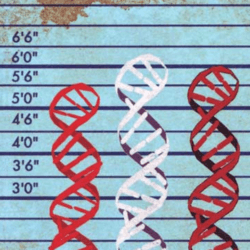
Police in Columbia, S.C., last month released a sketch of a possible suspect in a murder investigation. In what may be the first effort of its kind, rather than an artist’s rendering based on witness descriptions, the face was generated by a computer relying solely on DNA found at the scene of the crime.

Investigators are increasingly able to determine the physical characteristics of crime suspects from the DNA they leave behind, providing what could become a powerful new tool for law enforcement.

But forensic DNA phenotyping, as it is called, is also raising concerns. Some scientists question the accuracy of the technology, especially its ability to recreate facial images. Others say use of these techniques could exacerbate racial profiling among law enforcement agencies and infringe on privacy.

Law enforcement authorities say that information about physical traits derived from DNA is not permitted in court because the science is not well established. Still, the prospect of widespread DNA phenotyping has unnerved some experts.
Conventional DNA profiling, used for matching, does not rely on DNA linked to characteristics of the person, other than sex. Until now, that had helped blunt concerns that forensic use of DNA would violate the Fourth Amendment protection against unreasonable searches, said Erin Murphy, a professor of law at New York University.

It also opens up a new set of questions: What traits are off limits? Should the authorities be able to test whether a suspect has a medical condition or is prone to violence should such testing be possible?

Read full, original story: Building a Face, and a Case, on DNA

Related Articles

Infographic: Global regulatory and health research agencies on whether glyphosate causes cancer

Infographic: Global regulatory and health research agencies on whether glyphosate causes cancer

Does glyphosate—the world's most heavily-used herbicide—pose serious harm to humans? Is it carcinogenic? Those issues are of both legal and ...

Most Popular

ChatGPT-Image-Mar-10-2026-01_39_01-PM
Viewpoint—“Miracle molecule” debunked: Why acemannan supplements don’t work
ChatGPT-Image-Sep-30-2026-01_11_07-PM
How U.S. teamed with Russia to block global human AI weapons oversight
ChatGPT-Image-Sep-21-2026-03_15_09-PM
Viewpoint: Chipotle-inspired lesson: 10,000 sick customers suggest that processed foods can be safer than fresh ones
ChatGPT-Image-Sep-29-2026-12_16_42-PM
Social media influencers are driving food misinformation across Europe
Screenshot-2026-09-29-at-11.06.43-AM
Astrology, homeopathy, vaccine rejectionism, creationism: Why pseudoscience thrives as science advances
Screenshot-2026-09-28-at-1.16.38-PM
Defying public perceptions, U.S. cancer deaths plunged 35% since 1991
generated-1790707585414
Facts & Fallacies podcast: America's health care system is broken. A doctor explains how to fix it
ChatGPT-Image-Sep-23-2026-02_36_39-PM
Viewpoint: After firing the entire National Science Board, Trump reshapes funding initiatives. Here’s the good and the bad.
ChatGPT-Image-Jun-18-2026-04_15_29-PM
Viewpoint: Kennedy’s ‘bad science’: MAGA embrace bolsters HHS secretary’s influence and popularity
Screenshot-2026-09-17-at-1.07.08-PM
'We are dangerously addicted to antidepressants': Should we heed RFK Jr.’s sobering warning?
glp menu logo outlined

Get news on human & agricultural genetics and biotechnology delivered to your inbox.