For scientists who study human evolution, the last few months have been a whirlwind. Every couple of weeks, it seems, another team pulls back the curtain on newly discovered bones or stone tools, prompting researchers to rethink what we know about early human history.
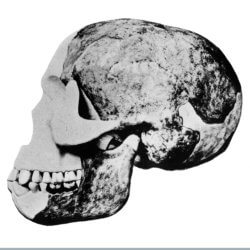
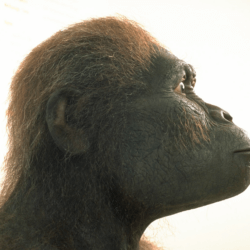
On Wednesday, it happened again. Yohannes Haile-Selassie of the Cleveland Museum of Natural History and his colleagues reported finding a jaw in Ethiopia that belonged to an ancient human relative that lived some time between 3.3 and 3.5 million years. They argue that the jaw belongs to an entirely new species, which they dubbed Australopithecus deyiremeda. While some experts agree, skeptics argued that the jaw belongs to a familiar hominid species, known as Australopithecus afarensis, that existed from about 3.9 to 3 million years ago.
Studies like this one are adding fresh fuel to the debate over the pace of human evolution. Until about three million years ago, experts thought, there weren’t a lot of hominid species. In fact, some researchers argued that most hominid fossils represented just a single species. But with new discoveries like Australopithecus deyiremeda, this eons-long story may need to change. Hominids may have become much more diverse much earlier than previously thought. Australopithecus afarensis may have had a lot of company.



But some hominid experts remain unconvinced that the road to Homo took so many turns. Tim D. White, a paleoanthropologist at the University of California, Berkeley, argues that most of the new studies have been rushed into publication without careful peer review.
The GLP aggregated and excerpted this blog/article to reflect the diversity of news, opinion and analysis. Read full, original post: Adding Branches to the Human Family Tree