Indian government caps GMO cotton price, cuts Monsanto seed royalties by 70 percent

The GLP aggregated and excerpted this blog/article to reflect the diversity of news, opinion and analysis.

India cut the royalties paid by local firms for Monsanto’s genetically modified cotton seeds by nearly 70 percent on [March 9], ignoring a threat by the world’s biggest seed company to leave if it did.

The move follows complaints from local seeds companies that Mahyco Monsanto Biotech (India)(MMB), a Monsanto joint venture with India’s Mahyco, was charging high royalties. This prompted the agriculture ministry to form a panel to look into the matter, whose recommendation the government has now accepted.

MMB has filed a case in a Delhi court, challenging the authority of the panel to determine the trade fee agreed upon by MMB and a number of Indian seed companies.

As well as cutting the royalties, the government also capped GM cotton seed prices at 800 rupees for a packet of 400 grams after appeals by some state governments and farmers to lower the rate of the Bt variety that commands 90 percent of the market.

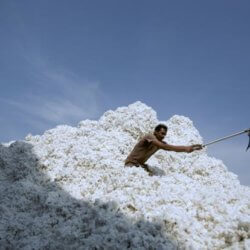
Bt cotton seeds are being sold at between 830 and 1,100 rupees per packet in different parts of the country.

The government’s move came after Monsanto threatened on [March 4] to pull out of the country and hold off new technology if the government forced a big cut in its payments from Indian seed companies.


Read full, original post: India cuts Monsanto cotton seed royalties despite threat to quit

Related Articles

Infographic: Global regulatory and health research agencies on whether glyphosate causes cancer

Infographic: Global regulatory and health research agencies on whether glyphosate causes cancer

Does glyphosate—the world's most heavily-used herbicide—pose serious harm to humans? Is it carcinogenic? Those issues are of both legal and ...

Most Popular

ChatGPT-Image-Mar-10-2026-01_39_01-PM
Viewpoint—“Miracle molecule” debunked: Why acemannan supplements don’t work
Screenshot-2026-09-17-at-1.07.08-PM
'We are dangerously addicted to antidepressants': Should we heed RFK Jr.’s sobering warning?
Screenshot-2026-09-03-at-10.51.20-AM
Viewpoint: Why do online health lies outlive the evidence that debunks them? Read "Everyone Else Is Lying to You"
ChatGPT-Image-Sep-23-2026-01_52_03-PM
Viewpoint: 4 very real AI doomsday scenarios
ChatGPT-Image-Sep-2-2026-02_03_32-PM
How much of a problem is AI’s water use?
Screenshot-2026-09-22-at-11.40.28-AM
After Idaho criminalized abortion providers in 2022, one-third of obstetricians fled. Health care advocates are making rural health the case for repealing the ban
Screenshot-2026-09-23-at-3.15.09-PM
Anti-GMO activists in Pakistan rev up their campaign of dire warnings
ChatGPT-Image-Aug-26-2026-12_46_16-PM
Viewpoint: The fake controversy over whether combining childhood vaccines is dangerous— a debate science resolved 25 years ago
ChatGPT-Image-Sep-22-2026-10_32_46-AM
There has been a slew of recent reports of food recalls and foodborne outbreaks. Do we face an escalating problem?
Screenshot-2026-09-23-at-11.55.01-AM
How can we know if social media bans actually help teens?
Screenshot-2026-09-17-at-12.00.30-PM
Investigative group ProPublica finds links between ectopic pregnancy deaths and abortion bans
Screenshot-2026-09-10-at-12.20.19-PM
'Jet fuel didn't melt the steel': 9/11 conspiracy theories debunked
glp menu logo outlined

Get news on human & agricultural genetics and biotechnology delivered to your inbox.