


Ancestry & Evolution
Evolution of the eyebrow and why it’s so important for communication
Modern humans might never have raised a quizzical eyebrow had Homo sapiens not lost the thick, bony brows of its ancient ...

Viewpoint: Precision medicine based on white populations could ‘reinforce existing societal and economic inequalities’
Sequencing the human genome has shown us that we are mostly all made up of the same stuff, but it’s ...
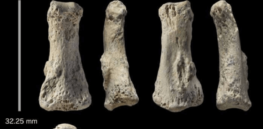
Discovery of ancient finger in Saudi Arabia suggests humans left Africa 20,000 years earlier than assumed
It’s just a lone, boney middle finger, but the scientists who found it say it’s the oldest directly dated fossil ...

Trellises not trees: Human populations have split, reformed and remixed over millennia
The ingrained notion – that there has only ever been one species of human being, Homo sapiens – is a latterday fiction ...

Analyzing Kevin MacDonald’s ‘Culture of Critique’ and the alt-right’s embrace of anti-Jewish ideology
The biblical commentator Rashi observes that in order for a falsehood to be successful, it has to contain at least ...

About phosphorous and why extraterrestrial life may be a long shot
Phosphorus is an essential element for life — but that there was enough of it for life to start on ...
Why humans and Neanderthals look so different
Compared to modern humans, Neanderthals had heavy eyebrows, huge noses, and large, long faces that bulged forward. Using 3D computer ...
How ‘number crunching’ and big data has transformed the study of fossils, evolution
The field of paleobiology has advanced paleontology by using big data to analyze the history of life ...

Why the cockroach is hard to kill—and what its genetics teaches us about adapting to environments
The second-largest genome ever sequenced belongs to a small but fascinating creature. Called “xiao qiang” or “little mighty” in China, ...

Review: Is evolution ‘God’s Word or Human Reason?’
Is there a contradiction between religion and an evolutionary, Old Earth view of the natural world? While this varies from ...

Viewpoint: Ignoring genetics threatens to make racial discussions ‘more extreme and divisive’
[A controversial op-ed] by David Reich, a professor of genetics at Harvard, [...] carefully advanced the case that there are genetic ...
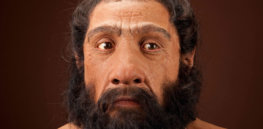
Revising human history: Asian paleoanthropology reveals human, Neanderthal relationships
[T]he first analyses of Neanderthal DNA seemed to indicate that Neanderthals and modern humans did not interbreed. But this popular ...

‘Star cluster’ genetic analysis illuminates history’s social inequalities
In humans, the profound biological differences that exist between the sexes mean that a single male is physically capable of ...
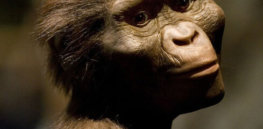
Where do we come from? Question grows ever more complicated
It was recently discovered that modern humans are part of the African great apes family, but how did this classification ...

Mood disorders more common in children of first-cousin parents, study finds
Having parents who are first cousins doubles the risk of inheriting a single-gene condition, from 2.5 percent to about 5 ...

Earth’s first life forms were incredibly resilient to dramatic environmental changes
Life on Earth could have originated in cold conditions near the surface, before spreading to warmer environments, according to research ...

Life on Earth: How aliens might go about discovering us
[L]ight-years from our solar system, other intelligent beings on a similar planetary oasis might be gazing in our direction and ...

Viewpoint: Population declines are a greater crisis than extinctions
Forget extinctions. Population decline is a much greater crisis. ... We watch for extinctions like those with the thought that, ...

If Neanderthals mated with early modern humans, why does their genome show no evidence of human DNA?
Gene flow between Neanderthals and early modern humans may have been a one-way street, researchers have found. While the presence ...
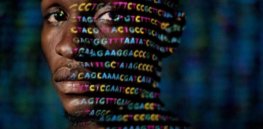
Harvard geneticist David Reich NY Times’ op-ed ignites debate over whether ‘races’ exist
On Monday morning, I woke up to a tweet from Sam Harris, the bestselling author and popular podcast host, referencing ...

Which came first, intensive agriculture or complex society?
A fundamental question about the precise role of agriculture in early human history remains unanswered. Did the advent of intensive ...

What spurred the Cambrian explosion? Evolving animals may have led to more oxygen, not other way around
Scientists have long sought to determine what caused the Cambrian explosion, and to explain why animal life didn’t take this ...

Viewpoint: ‘Race’ may be a social construct, but denying ancestral-based group genetic differences is ‘indefensible’
With the help of [advances in DNA sequencing], we are learning that while race may be a social construct, differences ...
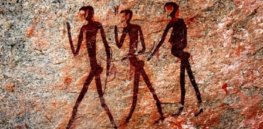
Viewpoint: We have much to gain from questioning the theory that humans evolved in Africa
The African origin theory reigns supreme. Every attempt to disprove the theory offers a chance to consider the evidence all ...

Kenyan cave spears suggest human trade may have developed 100,000 years earlier than thought
Humans may have developed advanced social behaviours and trade 100,000 years earlier than previously thought. This is according to a series of ...

Babies begin making logical reasoning decisions by the age of one
In intriguing research, a team of scientists may have discovered the earliest age at which a person can reason logically: 12 months ...
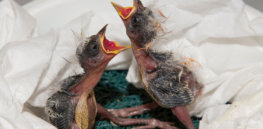
Conservation steward challenge: Which endangered species should we intervene to save?
[O]ur role as stewards of the earth is becoming more and more like that of doctors in a global intensive-care ...
