


Ancestry & Evolution
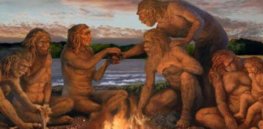
Evolution and cooking: Was it key to human development?
The shift to a cooked-food diet was a decisive point in human history. The main topic of debate is when, ...

Getting to the roots of insomnia and what you can do about it
Ever struggle with sleep? Almost all of us will at some point our lifetime. Several factors are at play--including travel ...
How will climate change and genetics affect migratory songbirds?
An article published in January 2018 connected genetic variations in migratory songbirds with population changes due to climate change. UC Davis evolution ...
Evolution may be tough to predict, but it’s not random
Can we predict the course evolution will take? That’s the question an international team of researchers decided to tackle, using ...
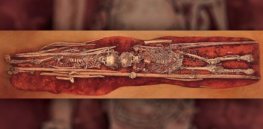
Sunghir: What the strange paleolithic burial site tells us about ancient humans
Around 34,000 years ago, hunter-gatherers who roamed the Russian plains started to bury their dead at the site of Sunghir, ...

Will evolution protect humans from alcoholism?
Humans may be evolving a genetic variant that would make them physically unable to consume large amounts of alcohol, new research suggests ...

How might humans react to alien life? ‘We will take it rather well’
[R]esearchers say the discovery of alien life is more likely to be welcomed with open arms than panic. … To ...
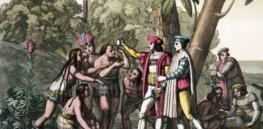
What happened to the native Caribbeans? Ancient DNA could solve mystery
The Bahamas weren’t settled until 1,500 years ago. The people who settled there are known as the Lucayan Taino, and ...
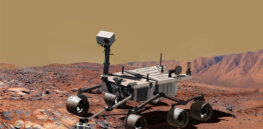
Fossil-like traces found on Mars—How can we know if this is biological life?
In early January, NASA's Curiosity Mars rover came across what some researchers thought might be trace fossils on Mars. ... A strictly ...

Viewpoint: Rethinking scientist Richard Dawkins’ classic book ‘The Selfish Gene’
Richard Dawkins’ 1976 book The Selfish Gene, which topped a poll last year for the most inspiring science books of all ...
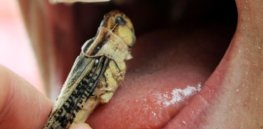
Bugs as food? They may have played a role in our evolution
Editor's note: Darcy Shapiro is an evolutionary anthropologist at Rutgers University Did you know that what your ancestors ate affects your ...
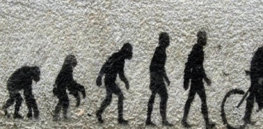
Genetic engineering will ensure that human evolution will continue–for better or worse
Editor's note: Scott Solomon is an associate teaching professor in the department of BioSciences at Rice University [Feb. 12 was] Charles Darwin's ...
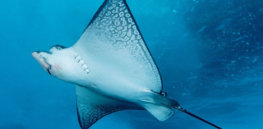
Evolution of walking: Primitive fish shows key nerves appeared 20 million years before land animals
The genes and nerve cells that allow people and other mammals to walk around can also be found in a ...

Extraterrestrial life may have different chemistry, but evolutionary forces will be Earth-like
If the forces of natural selection have shaped the development of life on Earth, there's no reason to believe those ...
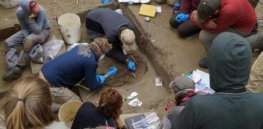
Archaeologist skeptics reject evidence humans settled Americas 130,000 years ago
When researchers made the astonishing suggestion last year that early humans settled the Americas 100,000 years earlier than thought, they asked doubters ...
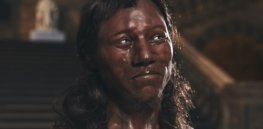
First Britons had dark skin, DNA ear scraps found in 10,000 year-old ‘Cheddar Man’ reveal
The earliest Britons were black-skinned, with dark curly hair and possibly blue eyes, new analysis of a 10,000-year-old Somerset skeleton ...
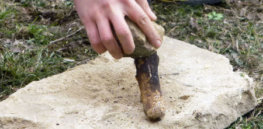
Charred ‘digging sticks’ found in Italy could be oldest Neanderthal tools made with fire
In the spring of 2012, while digging a hole for a thermal pool, construction workers in Grosseto, Italy, hit scientific ...
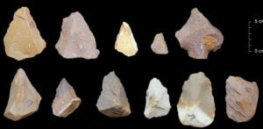
Stone artifacts in India spark new questions about when and how humans developed tools
Sometime around 400,000 years ago human ancestors went on an innovation bender. No longer content to make do with only the large ...
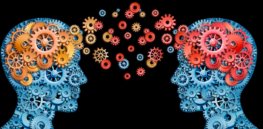
Speech mystery: Language relies on brain pathways that predate human beings
New research has identified the brain systems involved in language learning and discovered that these systems pre-date the human species ...

Did life begin in water—or some other liquid?
[W]hile water is an indispensable solvent for all known life forms that exist today, water also inhibits the formation of ...
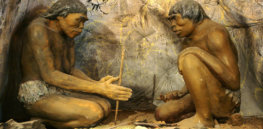
Ancient Eurasian DNA helps untangle humanity’s twisted family tree
Advances in ancient DNA sequencing are shedding light on the genetic links between our Stone Age ancestors and modern humans, ...
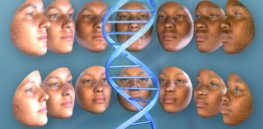
Viewpoint: Racism rather than ‘race’ better explains racial disparities in addiction and other diseases
[T]he assumption that health disparities are caused by race rather than racism permeates more subtly in the practices of many ...
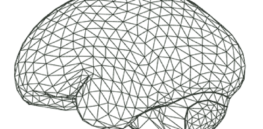
Evolution of modern human behavior linked to the rounding of our brains
In a study published [January 24] in Science Advances, researchers from the Max Planck Institute for Evolutionary Anthropology announced that the earliest Homo sapiens did ...
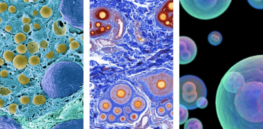
Human Cell Atlas: The quest to build biology’s periodic table
Realizing the need and potential for an atlas of all human cells, two scientists, Aviv Regev and Sarah Teichmann, have ...
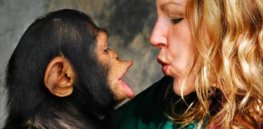
Unique mix of brain chemicals separates humans from other primates
A team of researchers has now used a novel technique to form a hypothesis on the origins of our rich ...
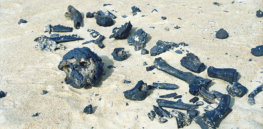
Earliest human relative? Mystery and controversy surround 7-million-year-old femur
When anthropologists meet in France at the end of January, one of the most provocative fossils in the study of ...
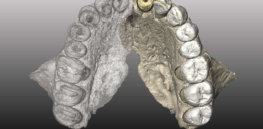
Rewriting human history: Fossils discovered in Israel suggest earlier departure from Africa
A small bit of human jawbone found in Israel has been dated to between 177,000 and 194,000 years ago. Before ...
