


Chemical Controversies
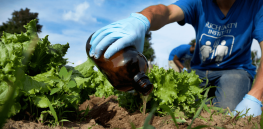
With fertilizer shortage threatening to cripple agriculture, farmers in Niger turn to nutrient-rich human urine
In a bid to revive dying crops in Niger Republic, scientists are using a mineral-rich, low-cost and easily accessible fertilizer ...

Viewpoint: No, trace pesticides do not make fruits and vegetables unhealthy
A recent article in the French daily Le Monde speaks of a study with “impressive” conclusions. Reading it, there is reason to ...

Viewpoint: Rightwing The Epoch Times circulates anti-GMO hysteria and disinformation usually found on the ‘natural’ left
We frequently receive requests to comment on specific news stories. These are usually examples of journalists or pundits commenting on ...

Bayer’s appeal to set aside suits alleging it‘s liable for deaths linked to glyphosate weedkiller rejected by US Supreme Court
The U.S. Supreme Court on [June 21] rejected Bayer AG's bid to dismiss legal claims by customers who contend its ...

Federal appeals court rules EPA must reconsider safety of Bayer’s glyphosate weedkiller under Endangered Species Act
A federal appeals court on [June 17] rejected a Trump administration finding that the active ingredient in the weed killer ...

Viewpoint: ‘Defenders of modern agriculture should vehemently push back against the notion that today’s food model undermines bee health or human health’
Since the introduction of neonicotinoid insecticides – the pesticides blamed for bee death – in the mid-90s, bee populations have ...

GLP Podcast: Teenage psychopaths? Cancer-free smokers; Pesticide propaganda in Europe
Are young people more likely to display narcissistic and psychopathic traits? If so, why? A recent study has proposed intriguing ...

Bayer awaits Supreme Court decision on whether to overturn Monsanto Roundup glyphosate cancer verdicts as it wins third defense case in a row
Bayer won a jury verdict over Roundup on [June 9], the third defense win in a row over Monsanto’s pesticide ...

Viewpoint: Toxic fruits and vegetables? Inspired by Environmental Working Group’s chemical scare fundraising gimmick in the US, Pesticide Action Network brings disinformation to Europe
Would you feed fruits and vegetables to your family after reading these headlines? Many European consumers may not, and they’d ...

Solicitor General’s amicus brief ‘unwittingly makes strong case’ for Supreme Court intervention in latest Monsanto case
The U.S. Supreme Court invited the Solicitor General of the United States to express the government’s views on Monsanto’s appeal ...

Independent European Chemicals Agency is 20th international group to find glyphosate is not carcinogenic
[The European Chemicals Agency, or] ECHA's Committee for Risk Assessment (RAC) agrees to keep glyphosate’s current classification as causing serious ...

Viewpoint: Popular Science is the latest ‘mainstream’ news source to fall into the anti-glyphosate disinformation rabbit-hole
“This Roundup ingredient might cause cancer—but the EPA won’t ban it,” Popular Science told its readers in a terribly misleading January ...
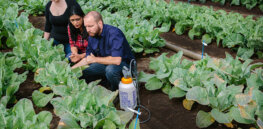
Video: RNA technology used to develop COVID vaccines can protect crops from viruses, fungi and insect pests
It’s one of the biggest challenges facing the environment and farmers across the globe – pest control. But now, University ...

Viewpoint: ‘A very curious form of self-sabotage’ — Organic industry rejects crop biotechnology solutions for environmental damage caused by widespread copper sulfate use
Last February, the National Agency for Food, Environmental and Occupational Health and Safety (Anses) published a “mapping” on the uses ...

Obesity, stress and chemicals: Do these factors explain why girls are reaching puberty at increasingly younger ages?
Although it is difficult to tease apart cause and effect, earlier puberty may have harmful impacts, especially for girls. Girls ...

GLP Podcast: Once-a-month shot controls opioid addiction; Food waste as energy; Obesity drugs are here
A drug given once monthly as an injection could drastically reduce opioid use in the US. Why is it so ...

Are 9000 ‘forever chemicals’ used in stain-resistant fabrics, cosmetics and cookware harmful — as activists claim? Evidence is ambiguous
One of the questions I’ve been asked recently with increasing frequency is how to avoid exposure to those “forever chemicals” ...
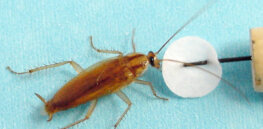
CRISPR roaches: Gene editing shown to work in insects, opening doors for advanced pest control
Researchers have developed a CRISPR-Cas9 approach to enable gene editing in cockroaches, according to a study published by Cell Press ...
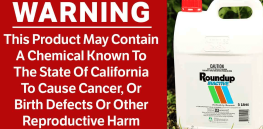
Farm groups claim US Solicitor General’s Supreme Court brief on glyphosate labeling puts it on the wrong side of science — and invites regulatory chaos
In a letter to President Biden, 54 agricultural groups expressed grave concern with a recent amicus brief submitted by the ...

‘No association between glyphosate and non-Hodgkin’s lymphoma’: Independent scientific panel review challenges activist cancer claims
In an independent critical scientific review of the existing meta-analyses of studies on the potential health hazards of exposure to ...
GLP Podcast: ‘Toxic 10’ chemicals in food; Gene editing treats heart disease? Dog-breed myths debunked
There's a "toxic 10" group of chemicals lurking in every single food you consume. Listen in to find out what ...

Fate of glyphosate approval in Europe? Contentious stakeholder feedback delays recommendations till mid 2023
Due to an unprecedented flood of stakeholder input, relevant EU agencies announced their risk assessment on glyphosate will only come ...

With the US honeybee population stable, what are the challenges going forward?
There is a common phrase that appears in the popular press, in grant proposals and as a fund raising theme ...

What’s next for glyphosate cases? Bayer’s hopes US Supreme Court would overturn Roundup liability verdicts dims as US Department of Justice asks SCOTUS to reject company’s cancer claims appeal
Bayer’s latest legal setback in its Roundup saga looks equally toxic to American justice. Shares in the German drugs-to-agrochemicals group ...

GMO cowpeas cut chemical spraying by 3/4 in Nigerian trials, but ‘environmentalist’ opponents lobby for ban
Research conducted by the Cornell University Alliance for Science, an independent nonprofit research institute, observed that Nigeria imports an estimated ...

Kenyan cows produce 1/10th as much milk as those in Britain — If adopted, gene editing could dramatically improve quality and safety of African livestock
East Coast Fever (ECF) is rampant [in African countries]. ECF, which is caused by protozoan parasites spread by ticks, kills ...

‘From 12 chemical applications to 2’: Ghanian scientists urge final approval of breakthrough pesticide-reducing GMO cowpea
More than 100 science activists have in a letter to the National Biosafety Authority, urged it to approve Ghana’s first ...
