


Chemical Controversies

Global glyphosate herbicide ban would cause substantial damage to economy and environment, study shows
A new study finds that a ban on glyphosate would cause billions of dollars in economic losses and increase the ...
Canada proposes new limits—but no ban—on neonicotinoid insecticides to protect bees
The [Canadian] federal government has proposed tighter restrictions around two insecticides that are harmful to bees, but stopped short of ...

EPA reaffirms global scientific consensus that glyphosate herbicide does not cause cancer
The federal Environmental Protection Agency on Monday [Dec. 19] said glyphosate, the primary ingredient in the weed killer Roundup and ...

US funding for cancer agency threatened over handling of controversial glyphosate report
US congressional committee members want to hear testimony from representatives of the International Agency for Research on Cancer regarding its ...
EPA reverses course, says neonicotinoid insecticides benefit soybeans, other crops
EPA has reversed an Obama-era determination that seeds treated with commonly-used neonicotinoid insecticides bring little benefit to soybean production, a ...
Can Burkina Faso’s problems with Monsanto’s GMO cotton seeds be fixed?
In the early 2000s, the US agricultural firm Monsanto began tests to introduce genetically engineered cotton seeds with the potential ...

Senator Elizabeth Warren sounds off on Monsanto-Bayer merger
Back in September 2016, US agribusiness titan Monsanto and German chemical conglomerate Bayer agreed to a $66 billion merger, making way ...
New herbicide-resistant GMO crops renew worries about Monsanto’s seed market dominance
The rapid growth of Monsanto's new GMO seeds resistant to the controversial herbicide dicamba has revived worries about the company's ...

To protect vineyards from pests and reduce pesticide use, CRISPR could be the answer
The powdery mildew fungus decimates vineyards around the globe. As pesticides become less effective, some scientists are turning to gene ...

GMO rebound: Record 457 million acres of genetically modified crops grown worldwide
Genetically modified crops were planted on a record 457.4 million acres globally in 2016, up 3 percent from the 444 ...

EU delays vote on complete ban of neonicotinoid insecticides until next year
The European Commission has delayed a vote on the banning of three neonicotinoids to include all outdoor crops. Member states ...

Canola oil causes Alzheimer’s? How the media mis-covers science, feeds NGO misinformation and scares the public
Sensationalist press coverage fueled by a poorly written university press release misled the public about a recent study on mice—a ...

Ecomodernist agriculture: Farmers need science and technology to limit environmental footprint
It takes roughly 6 square miles to support one hunting-gathering human. Modern intensive farming, by contrast, can support up to ...

Missouri adds restrictions on Monsanto, DuPont dicamba herbicide products
The Missouri Department of Agriculture has extended its restrictions on dicamba herbicides to products manufactured by Monsanto and DuPont. The new ...

Viewpoint: If your interest is sustainability, organic and GMO labels won’t inform you
Focusing on tools and technologies—such as genetic engineering—can reduce agriculture's environmental footprint and promote sustainability, writes geneticist Maria Trainer ...
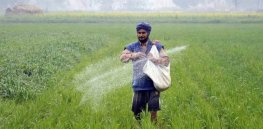
Restoring soil health: Synthetic fertilizer use could be cut, nutrients restored with GMO bacteria
[A recent study] shows how genetically modified soil micro-organisms can help restore nutrients in the soil to increase crop yield ...

Combating climate change: Glyphosate herbicide ban would hurt no-till farming, conservation agriculture
[Editor's note: Pedro Vigneau is president of the Argentine Association of Producers in Direct Sowing (Aapresid), a farmers organization in Argentina.] ...

EU may vote on complete ban of neonicotinoid insecticides this week
EU countries are poised to vote on a proposal to introduce tougher restrictions on three neonicotinoids in the coming days ...
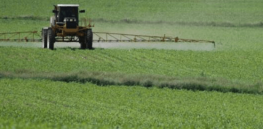
Monsanto rolls out cash incentive for farmers who use controversial dicamba herbicide
Monsanto Co will give cash back to U.S. farmers who buy a weed killer that has been linked to widespread ...

Talking Biotech: How will dicamba herbicide-resistant GMO crops fare after contamination fiasco?
Agronomist Karen Corrigan: Companies, farmers, and weed scientists should focus more on solutions to dicamba drift issues and less on ...

Organic food helps you get pregnant? Media outlets fall for ‘activist science’
[Editor's note: Terence Bradshaw is a research associate at the University of Vermont. He has a PhD in plant & soil science.] ...

Fighting Zika with drones and genetically engineered mosquitoes
At Rutgers University ... engineers are developing “skeetercopters” that can detect and map mosquito-infested sites from the air — and douse ...

Viewpoint: ‘Radical change’ needed to make global food system sustainable
The Green Revolution of the post-World War II era has rightly been hailed as a huge achievement for humankind. Transformation ...

Would switching to organic farming cut greenhouse gas emissions?
A new study, led by the Research Institute of Organic Agriculture, gives the impression that a large-scale shift to organic farming ...

Quantity vs quality: Burkina Faso’s problems with Monsanto’s insect-resistant GMO Bt cotton
In 2000, farmers in Burkina Faso, Africa’s top cotton grower, were desperate. Their cotton fetched top prices because its high-quality ...

US House science committee warns IARC it ‘may reconsider taxpayer funding’
U.S. congressional committee members warned on Friday [Dec. 8] that Washington’s funding of the World Health Organization’s cancer research agency ...
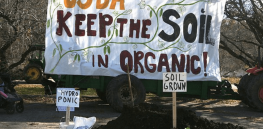
Organic movement schism? Fight over hydroponics puts $50 billion industry in limbo
The USDA's ruling that crops grown using hydroponics and aquaculture can be labeled organic set off a heated debate over ...
