


Agriculture & Food
Managed well, cattle feedlots can be the environmental and ethical smart choice
Although grass-fed is touted as the environmentally and ethically best choice for beef eaters, feedlots often outperform on both fronts ...

Plant ‘vaccines’, CRISPR gene editing could increase crop yields and reduce pesticide use
When European researchers recently announced a new technique that could potentially replace chemical pesticides with a natural “vaccine” for crops, ...

Video: How GMO bananas could help Ugandan farmers overcome bacterial wilt disease
Uganda's political system holds the key to helping farmers who are struggling with the devastating banana bacterial wilt disease. Read ...

Viewpoint: Anti-GMO groups’ crusade against Golden Rice not backed by science
Golden Rice was declared safe for consumption by Canada recently. This has huge implications for the rest of the world, ...

Regenerative agriculture: Can ‘carbon farming’ help battle climate change by improving soil health?
[Regenerative agriculture's] guiding principle is not just to farm sustainably — that implies mere maintenance of what might, after all, ...

How ‘regulatory lag’ in approving GMO crops hurts international trade
Time is money. This time-worn axiom of business school courses and the corporate world is also particularly applicable to the ...
Public health breakthrough: US and Indian scientists work together on genetic solutions to food toxins
Genetically engineered peanuts that are immune to aflatoxin contamination, which is associated with an increased risk of liver cancer, would ...
First gene drive developed for crop pest targets invasive fruit fly that damages berries
Biologists at the University of California San Diego have developed a method of manipulating the genes of an agricultural pest ...

Germany planning ‘massive restrictions’ on glyphosate herbicide use in agriculture
German Agriculture Minister Julia Kloeckner on [April 17] said she was finalizing a draft regulation to end use of the ...

Viewpoint: Challenging the belief that GMOs are key to feeding the world’s hungry
Industrial agriculture and biotech interests have built entire campaigns saying that we “need” genetically engineered organisms to “feed the world” ...

Mystery source of orange GMO petunias identified
A recall campaign for commercial, orange flowering petunia varieties in spring 2017 caused economic losses worldwide. The orange varieties were ...

Viewpoint: Organic Consumers Association promotes conspiracy theory blaming farm pesticides for school shootings
A crackpot named E. G. Vallianatos has written a blog post that links pesticides to school shootings. He says, "[Pesticides] may have ...

How the European Court of Justice could open the door to gene editing and revive crop biotechnology in EU
A “landmark opinion” from the European Court of Justice on the definition of genetically modified organisms could pave the way ...

Nobel laureate Sir Richard Roberts: Uganda will remain trapped by food poverty if its leaders bow to anti-biotech activists
One of the main sources of nutrition for poor Ugandans, bananas, is on the verge of being wiped out by ...

Video: Genetic Literacy Project founder Jon Entine on GMOs and ‘chemophobia’
In this episode of The Dissenter, Ricardo Lopes interviews Genetic Literacy Project founder Jon Entine about bioengineering, GMOs and "chemophobia." Ricardo ...

‘Will people eat it?’: The public opinion battle over CRISPR gene-edited food is just beginning
Zachary Lippman, a plant biologist at Cold Spring Harbor Laboratory, stood among 2 acres of his experimental crops, including some ...
Agricultural tech startup Indigo uses microbes to improve crops
In humans, a healthy microbiome—the universe of bacteria, fungi, and viruses that lives inside all of us—is increasingly recognized as critical ...

Geneticist Alison Van Eenennaam: ‘First World’ anti-GMO activists perpetuate starvation in developing countries
Needed GMO technology to help citizens in Third World countries is being thwarted by activist groups in First World countries ...
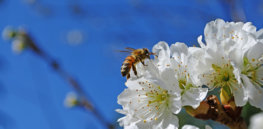
Not just pesticides: Honeybee health impacted by habitat loss, nutrition, pathogens and more
Around 2006, beekeepers and scientists started talking about something called colony collapse disorder. CCD at that time was a new phenomenon; suddenly whole hives of ...

Some in Germany’s Green Party reconsidering long-held opposition to GMOs and genetic engineering
Genetic engineering is the devil's tool of the agricultural industry, dangerous to health and the environment. Or so you could summarize the ...

Genetically engineered AquaBounty salmon ready for US market, but caught in Congressional ‘sausage grinder’
“Laws, like sausages, cease to inspire respect in proportion as we know how they are made.” The true version of ...

Viewpoint: Why ‘organic’ should be redefined to include GMOs
The challenges of sustainable food production without damaging the environment for a growing human population have increased considerably. The current ...
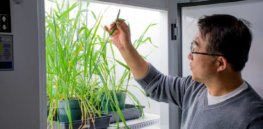
Will public embrace CRISPR crops if they can help feed our growing population and protect the environment?
Experts estimate we’ll be eating the first CRISPR produce — likely strawberries or another type of fruit — within five ...

Aftershock of Monsanto being stripped of its patent control over Indian Bt GMO cotton: It may doom domestic crop research, too
Sections of the government, egged on by powerful Andhra seed companies, are probably cheering the judgment of the Delhi high court’s ...

Podcast: How anti-GMO activists used ‘fake news’ to attack University of Florida plant scientist Kevin Folta
In this episode, [Liz Haswell and Ivan Baxter] talk to Kevin Folta, Professor and Chairman of the Horticultural Sciences Department ...

All yeast strains likely descended from common ancestor in China
When scientists in France set out to sequence 1,000 yeast genomes, they looked at strains from all the places you ...
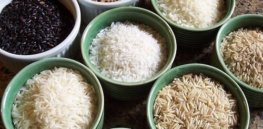
Talking Biotech: How rice became one of the world’s most important food crops
Rice geneticist Susan McCouch: How and where rice was domesticated, and how many varieties are there? ...
