


Agriculture & Food

Why are seedless watermelons ‘genetically modified’ but not considered GMOs?
Before, there were two types of people: those who spit out the seeds of the watermelon and those who removed ...

Study: $261 billion — That’s how much GMO crops have boosted farmers’ incomes
This paper updates previous estimates for the global value of using genetically modified (GM) crop technology in agriculture at the ...

Zambia’s traditional pig farmers poised to embrace reproductive biotechnology in break from European-inspired anti-biotech sentiments
Zambia’s traditional pig farmers are poised to further embrace reproductive biotechnology, including advanced forms of artificial insemination as an alternative ...

65,000 Bangladeshi farmers now grow GMO insect-resistant eggplant as production soars among local farms
In 2020/21, more than 65,000 farmers in Bangladesh used genetically modified Bt aubergines. A rapid increase since the GM crop was ...

After deliberating less than an hour, Missouri county jury concludes glyphosate weedkiller did not cause plaintiff’s cancer, delivering Bayer/Monsanto 5th court victory in a row
A St. Louis County jury has determined Bayer and the former Monsanto should not be held liable in a lawsuit ...

Indonesia looks to GMOs to address inflation, though some farmers are skeptical
The government is set on boosting the development of genetically modified organisms (GMOs), despite skepticism from experts and farmers that ...

Ghana plans for education, stewardship in GMO cowpea rollout
As Ghana readies genetically modified cowpea for commercialization, proper stewardship is paramount to safeguard the responsible management of the technology, ...

Disease-resistant GM cassava promises to be game-changer for Kenya
At the Kenya Agricultural and Livestock Research Organization (KALRO) center in Mtwapa, Kenya, scientist Paul Kuria uproots two sets of ...

‘Smart plants’: The next generation of crops will have genetic on-off switches
Climate change is going to put a severe strain on the ability of the world’s plants to survive. Entire ecosystems ...

Nutrition, productivity, climate adaptability: Surge in African crop biotechnology research poised to address malnutrition and food security
Scientists are using genomics to tackle malnutrition in Africa and more. The African Orphan Crops Consortium (AOCC), founded in 2011, ...

A UK Farmer’s Perspective: What are the Consequences for Sustainability and the Public When Biotechnology Innovations are Withheld?
Jake Freestone, Farm Manager at Overbury Farms, West Midlands, United Kingdom | July 10, 2018Highlights:European politicians bows to activist pressure, ...
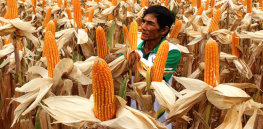
Facing low corn and soybean yields, Vietnam looks to genetic engineering to increase food security
Vietnam is dependent on imported feed materials because our corn and soybean yield is low, production costs are high, and ...
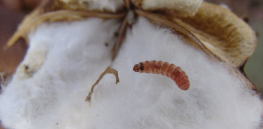
Researchers ask Indian farmers to halt use of government-developed genetically modified Bt cotton use after bollworm pest scare
It is the end of the road for the country’s first genetically-modified Bt cotton seed variety developed by a public ...

40% yield increase: How tweaking one gene could create a super rice that adapts to climate change
Many people are hesitant to eat plants or animals that have been enhanced with foreign genes, citing health and environmental concerns, the ...

Part II: Web of Disinformers: The network of anti-crop biotechnology activists, and the funders behind their campaigns
Carey Gillam, once a reporter at Reuters covering food and farming, left her job under a cloud, challenged by her ...

Part I: Carey Gillam — Reporter turned organic propagandist who twists science in campaign to discredit biotechnology and conventional agriculture
With links to the Church of Scientology, anti-vaccine glyphosate litigator Robert F. Kennedy, Jr., Organic Consumers Association, US Right to ...
In the Battle to Regulate GMOS, Gene Editing and other New Breeding Techniques, Who Has ‘Hazard Blood’ on their Hands?
This third segment in the mini-series will look at the networks of highly-motivated campaigners manipulating policy and pushing the hazard-based ...

Making sunshine for crops obsolete? Food of the future will be grown 18 times more efficiently with the help of artificial photosynthesis
Scientists are creating food which will become independent of sunlight by using artificial photosynthesis technology, with only about 1% of ...

Podcast: Agricultural scientist Jayson Lusk on the intersection of biotechnology and sustainability
Agricultural economist Jayson Lusk puts forward a vision of how science, technology and innovation are what we need for a sustainable food ...

Video: Erratic weather from climate change is biggest threat facing Kenyan crops. Gene-editing technology could help, farmer says
How do farmers define sustainability on their farms? Find out how Kenyan farmer Felix Kili views the issue, and how ...

Viewpoint: Anti-technology activists claim coronavirus outbreaks could be exacerbated by intensive farming. Here’s why they are dead wrong
It is often asserted that intensive livestock systems increase the risk of zoonotic diseases, and this argument is used to ...

Climate Action Farming: What farmers need to do to adapt as our planet heats up—and why organic and ‘regenerative agriculture’ cannot meet the challenge
There are a number of practices that farmers could use to manage their land in ways that would optimally remove ...

Wine story: From Stone Age seed domestication to new age fermentation, here is the evolutionary history of wine
Over the millennia, humans have radically transformed viticulture from a happy accident to a scientifically precise art form and global ...

A single kilo of saffron is worth up to $10,000. Here’s the genetic history of the world’s most expensive spice
When and where was saffron first domesticated by our ancestors? In a review in Frontiers in Plant Science, researchers conclude that ...

Viewpoint: Food shortage crisis — There are two ways to address the food shortage crisis: Farm more land or increase yield. Let’s compare their sustainability impacts
As the planet’s population continues its relentless march towards 10 billion, more food is going to need to be produced ...

Do agri-businesses ‘control’ agriculture? The emerging gene-editing revolution in Latin America is challenging that belief
Small actions can create such huge differences. We see that ‘butterfly effect’ playing out in Latin America. where the development ...

Viewpoint: DNA diets—Can knowing your genes help you nutritionally optimize your meal choices?
Recently several companies have been offering to examine your genome and figure out what you should eat based on your ...
