


Agriculture & Food

Pesticide evolution: Can natural chemicals help battle insects, weeds and disease without harming the planet?
A new collaboration between the two R&D pioneers aims to accelerate the discovery of breakthrough crop protection technologies. If you ...

CRISPR-edited poplar trees could cut carbon emissions during paper production
Researchers led by prof. Wout Boerjan (VIB-UGent Center for Plant Systems Biology) have discovered a way to stably finetune the ...

Goodbye gin and tonics? Invasive plant disease threatens juniper berries used to make gin
The gin industry, which is worth £3.2bn to the UK economy, has the potential to be devastated by an invasive ...

Gene-edited plants and animals: Our secret weapons in the battle to slow climate change?
Nearly 200 nations signed on to the Paris Agreement in 2016, pledging to reduce their countries’ greenhouse gas emissions. By ...

Podcast: GM crops don’t change your DNA; Monsanto ‘owns’ global food supply? South American anti-biotech invasion
Are GM crops unnatural? Can they change your DNA? And does 'Big Ag' own the global food supply? The answer ...

Cuban president says GM crops and agroecology can help sustainably boost food production
One of the Cuban government’s priorities is to achieve the highest possible agricultural production with the decisive contribution of science ...
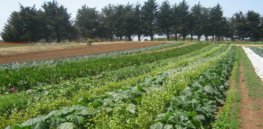
Agroecology must be based in reality, not romanticism, panelists agree
Agroecology has a role to play in transforming agriculture — so long as the movement doesn’t trump the science or ...

Viewpoint: Animals vs plants? Stop fighting about where your protein comes from and eat a balanced diet
With a feeling of uncertainty infiltrating our lives lately, many of us are looking for concrete information to help us ...
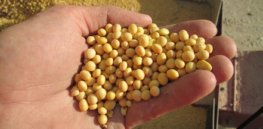
Europe approves imports of new GM herbicide-resistant soy, despite objections from Green Party, organic advocates
The genetically modified (GM) soybean, the XtendFlex, was approved after a comprehensive authorization procedure, including a scientific assessment by the ...

Trust in scientists high globally, Pew survey finds, but public still skeptical of GM crops
The good news is that there’s widespread trust in scientists and a strong desire to act on their findings on ...

‘Regenerative’ agriculture: Organic farming buzz word, or the path to sustainable food production?
The goal should be sustainability, not trying to advance an ideology ...

Estimated 140,000 plants facing extinction, report finds, threatening progress in medicine, farming
Plants and fungi hold promise as future medicines, fuels and foods, according to the Royal Botanic Gardens, Kew. But opportunities ...

‘More harm than good’: How well-meaning urban beekeepers can jeopardize wild colonies
Urban beekeeping has grown so trendy that it may be doing more harm than good — with the practice becoming ...

Medicine for plants: Stomach infection drug protects vital food crops from deadly pathogens
Scientists from Martin Luther University Halle-Wittenberg (MLU) and the University of the State of Paraná in Brazil have discovered that ...

FDA releases free ‘Feed your mind’ curriculum to teach students about GMOs
[September 29], the U.S. Food and Drug Administration (FDA) has posted additional “Feed Your Mind” consumer education materials. Developed in ...
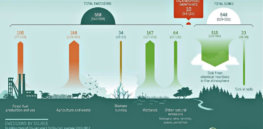
Infographic: Cows cause climate change? Agriculture scientist says ‘belching bovines’ get too much blame
A recent interview by Caroline Stocks, a UK journalist who writes about food, agriculture and the environment, of air quality ...
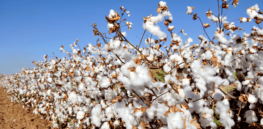
GMO insect-resistant Bt cotton ‘as safe as’ conventional counterpart, study finds
Genetically engineered crops expressing insecticidal and herbicide-tolerant traits offer a new strategy for crop protection and enhanced production; however, at ...

Viewpoint: International anti-GMO groups wage PR war to get gene-edited crops out of Latin America
Imagine for a moment that you're a farmer. Genetically modified crops that could help you protect your yields from voracious ...

Bolivian court dismisses legal challenge to GMO rules, a victory over ‘ridiculous’ arguments, farm group says
After almost 10 hours of hearings, arguments, and counterarguments, the First Constitutional Chamber denied the appeal of Popular Action brought ...

Viewpoint: There’s no such thing as a ‘GMO,’ and the history of potatoes illustrates why the term is ‘nonsensical’
The expression “genetically modified organisms” (“GMOs”) is not only void of scientific value, but has negative effects on agricultural progress ...
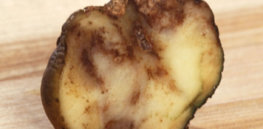
Novel resistant genes for late blight, disease behind 1840s Irish Potato Famine, discovered
Late blight, the most important and most destructive pathogen of potato, was caused by the microorganism Phytophthora infestans. Late blight is ...

GMO and gene-edited biofortified crops weaken case for organic agriculture
A new lineup of GMO and gene-edited crops with nutrient content organic growers simply can't replicate ...
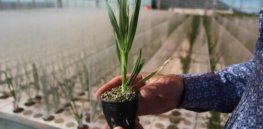
GMO barley could help produce key lab-grown meat ingredient
Using abundant geothermal waters for heating and volcanic ash instead of soil, biotech company ORF Genetics is growing barley [in ...

Disease-resistant banana genes could accelerate effort to save Cavendish from extinction
Significant progress has been made in accelerating the development of banana varieties with resistance to the Fusarium fungus. Fusarium causes ...

‘Air-derived protein’? Biotech startups aim to challenge traditional farming with precision fermentation
Feeding the world with protein made from air or industrial exhaust with minimal use of water and land, and without ...

Could lab-grown sushi save rapidly declining fish populations?
[A]according to the Global Aquaculture Alliance, 3.1 billion people around the world now rely on fish and seafood for a ...

Could food of the future come from ‘microbial protein factories’ instead of plants and animals?
Could a suite of microscopic microbial protein factories (yeast, bacteria, fungi, algae) give plants and animals a run for their ...
