


Daily Food & Ag Digest
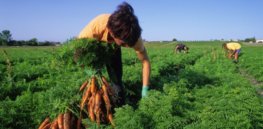
Viewpoint: ‘A big mistake’: How Europe’s pro-organic Farm to Fork initiative will harm consumers and farmers
The targets set as part of the “Farm to Fork” strategy could have disastrous consequences for the [EU’s] economy as ...

Lab-grown meat is here: Restaurant in Singapore begins serving chicken made in a bioreactor
By the time you read this, a group of friends at a restaurant in Singapore will have shared a three-course ...

Gene editing immunizes canola against nasty fungal disease, and may cut farmer dependence on fungicides
Field trials confirmed greenhouse trial results of a new canola trait that’s sclerotinia resistant. Cibus is an independent trait developer ...

China makes progress on biotech crop development in race to achieve food self-sufficiency
Cultivating secure, stable and advanced seed varieties is key to China's ongoing efforts to beef up food security, especially in ...
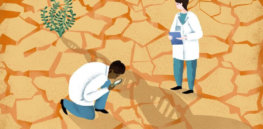
Technology vs. global warming: How genomics, remote sensing and big data can safeguard our food supply
In a bid to help one of the world’s most important cereal crops survive hotter, drier conditions, the Foundation for ...

Roundup on trial: Law firms spent $91 million in one year to recruit plaintiffs for glyphosate-cancer suits
In 2019, an estimated $91 million was spent on ads seeking clients to pursue Roundup-related claims, making it the No ...

Once battling starvation, some developing countries now face rising obesity rates. What’s causing it?
In 1975, four percent of school-age kids were overweight and the NCD Risk Factor Collaboration says that was up to ...

Bugs for dinner? EU officials find edible mealworms pose ‘no safety concerns’
Edible insects got one step closer to Europeans’ kitchens this month. The European Food Safety Authority released a scientific opinion on ...

‘Landscapes of the future’: How solar-powered LEDs could improve crop growth and cut pesticide use
GROW, which was developed with partners Wageningen University and Rabobank, is trialling its vertical ‘light recipe’ across an enormous field ...

Why do we need gene-edited crops? To make farming more sustainable
Crop improvement has been one of the main targets in research due to the rapid increase of world population. Crop ...
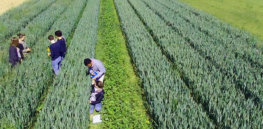
Viewpoint: Agroecology advocates threaten California agriculture with ‘primitive’ farming practices
To respond to crises, agriculture must be as efficient, innovative and resilient as possible. Even in California, whose agriculture is ...

Viewpoint: ‘Wellness influencers’ rely on shopper science ignorance to sell ‘clean’ products
The purpose of [“wellness influencer”] accounts is typically to sell “cleaner” or more “natural” products, but they don’t achieve that ...

Nuclear technology yields cotton ready to withstand withering heat waves brought on by global warming
[C]limate extremes such as heat waves and increasing temperatures have been impacting the cotton industry, which has seen an unprecedented ...
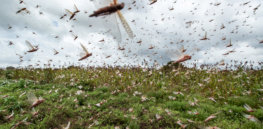
With neighboring countries battling crop-ravaging locusts, Zimbabwe readies itself for potential outbreak
Shingirai Nyamutukwa, head of the [Zimbabwe] Plant Quarantine and Plant Protection Research Services Institute [January 17] said there was an ...

Organic vs conventional: Which farming method is more sustainable? A case study from California
California's Central Valley produces more than 250 different crops comprising one-fourth of the nation's food, including 40% of our fruits, ...

New crop-destroying locust swarms hitting East Africa ‘nearly every day,’ UN warns in renewed call to fight major food security threat
Dominique Burgeon, FAO’s [the UN's Food and Agriculture Organization] Director of Emergencies and Resilience, said the huge [African] desert locust ...

Success of CRISPR tomato may determine if gene-edited foods take root in Japan
[A gene-edited tomato recently approved in Japan] contains a large amount of "gamma-aminobutyric acid" (a type of amino acid, commonly ...

With bioengineered food labels showing up in stores, here’s what you should know about GMOs
While “genetic engineering” is the term typically used by scientists, you will start seeing the “bioengineered” label on some of ...

Genetic engineering could immunize bananas against deadly Fusarium wilt without cutting crop yields
Bananas are one of the most important crops in developing countries and their industry is constantly under threat due to ...
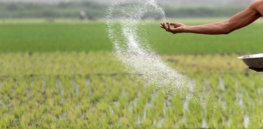
Nitrogen-efficient rice could preserve crop yields while cutting environmental impact of fertilizer
Nitrogen fertilizer has an indispensable role in increasing crop yields, but on the other hand, it creates a severe threat ...

Organic food, often linked with progressive politics, is also popular among white supremacists
While most people associate organic food and farmers markets with progressive politics and cosmopolitan values, they’re also a draw for ...

Viewpoint: Organic, non-GMO marketing claims drive poor people away from healthier food choices
Many food organizations, celebrity chefs, food bloggers, and talk show hosts like to push the idea that eating right means ...

Saltwater algae genes could help engineer plants that survive in regions with high water salinity
Researchers from New York University Abu Dhabi (NYUAD), in partnership with the National Center for Biotechnology Information (NCBI), have uncovered ...
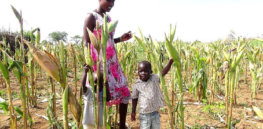
Africa biotech setback: Tanzania suspends GM crop research, ending trials of insect-resistant corn and virus-resistant cassava
Agriculture minister Prof Adolf Mkenda made the announcement on [January 12] at the Tanzania Agricultural Research Institute (TARI) Mikocheni centre ...

GM, insect-resistant Bt rice unlikely to pose a health risk, study shows
Rice is considered one of the most important staple food crops. Genetically modified (GM) Bt rice [harboring the] cry1Ab gene ...
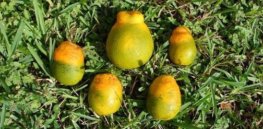
Gene editing offers potential solution to orange growers struggling against citrus greening disease
Brazil is the world's largest orange producer, the state of São Paulo is a world leader in the production and ...

CRISPR gene editing could boost protein in plants and help produce more vegetable oil
Plants synthesize fatty acids in their leaves by using light. Prof. [Jay] Thelen and his team used the gene-editing tool CRISPR-Cas-9 to ...
