



Daily Food & Ag Digest

Re-purposing the cellular waste from wheat and oats to sustainably make clothing
Making clothing from water-intensive cotton has a major impact on the climate. That’s why cellulose from other raw materials has ...

Germany experiments with blending organic agriculture with agroecology principles
Germany has a long-standing tradition of organic farming, supported by an established certification system and widely known by producers and ...

Viewpoint: From farm to famine? Kenya risks a Sri Lanka-style collapse over pesticide politics
In 2025, Kenya, its farmers, and its consumers will deliver a world demonstration of why scientists have been pleading for ...

Planting roots of resilience: How agroforestry helps farmers weather the climate crisis
Although climate change is making it harder to achieve sustainable agriculture, there is hope. “Fortunately, many of the practices that ...
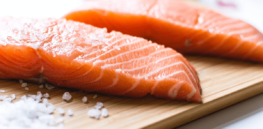
From cells to sashimi: Lab-grown salmon and the future of sustainable seafood
The world has become increasingly more concerned about environmental sustainability, food security, and ethical sourcing, making lab-grown or cultivated meat ...
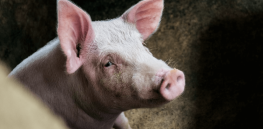
Kennedy vs. Kennedy: The FDA remains silent on Ractopamine, America’s most controversial pork additive
For over a decade, a group of food safety, environmental, and animal welfare nonprofits has petitioned the US Food and ...

Rise of the robot farmer: How AI could reprogram global agriculture
Global agriculture is undergoing a technological renewal as the world continues to face problems, such as climate change, rising food ...
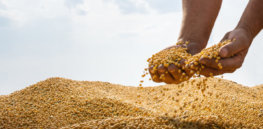
Feeding 10 billion in 2070: Deloitte’s vision for a food system transformation
By 2070, the global population is expected to reach nearly 10 billion, requiring a 40% increase in calorie production to ...

Viewpoint: Glyphosate’s often overlooked role in sustainable farming
What IF glyphosate didn’t exist? The best answer to that question comes from Aimpoint Research. The food / ag wargame ...

Viewpoint: From tools to systems, the future of farming requires an AGI-driven design
For a long time, agriculture was about scale. More acres. More calories. More inputs. That worked, until it didn’t. The ...

Kraft, Pepsico and Tyson move to remove synthetic food dyes
Major food company Kraft Heinz said it will remove all chemical, artificial dyes from its food products following Health Secretary ...

As clouds form over migrant farm workers, industry looks towards AI and robotics
As domestic interest in farm work has declined, specialty growers are increasingly reliant on migrants who enter the country legally ...
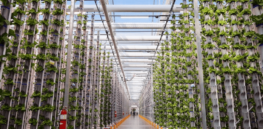
Smart cities, smart farms: The rise of vertical farming in global urban agriculture
Climate-smart innovations combined with efforts to achieve food self-sufficiency are fueling the swift expansion of the global vertical farming market ...
Viewpoint: Misplaced MAHA health strategy: Remove products that science says are not necessarily harmful while slashing federal programs that work
While the decision to remove artificial food dyes is typically something people across the political spectrum can get on board ...
MAHA proposed state-level restrictions on food additives gaining traction on the granola left and MAHA right
In a first-of-its-kind effort, the Texas legislature has passed a bill to require warning labels on foods such as Mountain ...
Viewpoint: Challenging food myths: What would it be like if we continue to demonize modern, high tech agriculture?
The current wave of food anxiety stems, in large part, from a misunderstanding of hazard versus risk. A substance can ...
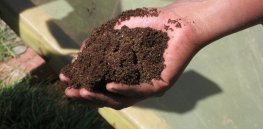
Processed human sewage waste is sometimes used as cheap fertilizers. It’s potentially dangerous
About 3.5 million tonnes of sludge – the solid waste produced from human sewage at treatment plants - is put ...

Viewpoint: With lower yields, the future of organic farming is endangered. It needs biotechnology
The EU should allow gene editing to make organic farming more sustainable, researchers say. To achieve the European Green Deal’s ...
The never-ending GMO debate: Pros and cons
According to the Genetic Literacy Project, “The most recent data from the International Service for the Acquisition of Agri-biotech Applications (ISAAA) ...

Food-borne illnesses are a growing problem. CRISPR-based biosensing may be key to food safety
The availability of safe food is crucial for maintaining both nutritional well-being and overall health security. Estimates indicate that 1 in 10 people ...

Organic farming acreage in the U.S. is in steep decline
[A]merica’s certified organic acreage fell almost 11% between 2019 and 2021. Numerous farmers who implement sustainable practices told The Associated ...
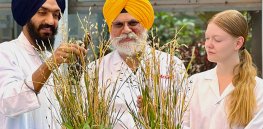
The latest gene edited crop: Oats with higher yields, more fiber and climate change resilient
For the first time, scientists have successfully edited oat DNA, a breakthrough that could accelerate the development of oats with ...
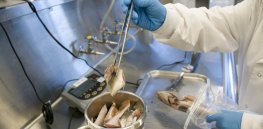
Chemicals in food packaging is an increasing health threat
A research study, published in the Nature Medicine journal, explores the health impacts of exposure to synthetic chemicals in food. The scientists identify ...
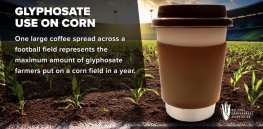
Viewpoint: Here’s why farmers use pesticides like atrazine and glyphosate—and why they are safe
Corn growers need access to all types of pesticides. [Glyphosate was] developed more than 50 years ago to control a ...
Why the right is rushing to ban lab grown meat that could save tens of billions of animals every year
Unlike plant-based meat substitutes like the Impossible Burger, lab-grown meat consists of actual animal tissue, but made without slaughtering animals ...

Viewpoint: ‘Kenya must balance GMO adoption against concerns about environmental impact and preserving traditional farming
Officials are urging Kenyans to trust science and embrace GMO benefits, but Kenya must proceed with caution. GMO foods are ...

MAHA is anti-corporate and chemophobic; Farming in the U.S. is the opposite. What will give?
Efforts to secure statutory immunity from liability for personal injuries caused by pesticides have converged with massive increases in federal ...
