


Human Features

Evolution, the human diet and the meat vs. plant conundrum
Evidence suggests our hominin ancestors turned to meat when climate change reduced resource-rich vegetation. The signatures of these changes may ...

If pain is subjective, how do we measure it in a meaningful way?
You can’t exactly ask a rat to point to where it hurts ...

Tackling Stone Age stereotypes and misconceptions including this: They made tools out of more than just stone
Although most depictions of Stone Age hunters are male, women and children played a huge part in the creation and ...

Did a ‘flawed’ bioterror plot doom Netflix’s ‘Designated Survivor’?
The bioterror plot succeeded, in tone if not in detail, by illuminating the idiocy of white supremacy ...

Length matters? DNA testing companies claim to assess stress, health and aging by measuring your telomeres
By determining length of your chromosome tips - also known as telomeres - testing companies claim to offer an insight ...

Artificial intelligence could revolutionize health care, but there’s no guarantee that will be a good thing
AI-driven medical tools could democratize health care, but some worry they could also worsen inequalities ...

Podcast: GMO rice could yield affordable treatment to stem HIV in developing world
A research team developed an ingenious solution to a logistical public health problem—adding anti-HIV proteins to rice ...

New weapon in the fight against antibiotic resistance: Tricking bacteria ‘into killing themselves’
Sneaky molecular biology tricks bacteria into killing themselves, in place of antibiotics ...

Using young blood to battle Alzheimer’s could be ‘an exciting new start in a frustrating field’
The idea of therapeutic benefits from 'young blood' has been around a long time ...
iPS■年、見えた課題㊤-data-x--263x129.jpg)
Regenerative Japanese stem cell treatment raises hopes for spinal cord injuries—but sparks ethical debate
The country fast-tracked the controversial therapy, opening an international rift over who should make health care decisions ...

Sensory overload: Some people genetically wired to detest bright lights, big sounds
'This world is not built for sensitive people. In fact, our world is designed perfectly for those who are detached.' ...

Viewpoint: Consumer genetic testing plagued by inaccuracies that can be misleading, or even harmful
Polygenic risk scores currently account for only a small proportion of your total genetic risk ...

How animal memories can be harnessed in the quest to treat Alzheimer’s
Alzheimer's trials are notoriously disappointing. The discovery that rats have episodic memory means researchers can test drugs before they move ...

No ‘gay gene’: Massive study finds no specific genetic predictors for sexual behavior, preferences
The once-prevailing concept of a “gay gene” dictating sexual orientation has been put to rest in a powerhouse study ...
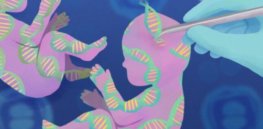
We can identify ‘bad’ genes. Why can’t we use CRISPR gene editing to get rid of them?
Gene therapy 2.0 using CRISPR to knock out harmful genes sounds is a great idea--if and when it works. But ...

Podcast: Overlooked women in science, Huntington’s disease and witch trials. The best of Genetics Unzipped
Kat Arney selects her favourite stories from the first 20 episodes of the Genetics Unzipped podcast ...

Viewpoint: False equivalency: When journalism’s quest for balance goes awry—science says climate change, vaccines have only one side
On matters of science, a well‐meaning desire to present all views equally can be a Trojan horse for damaging falsehoods ...

How ‘alien genetics’ would change our understanding of life, biology and evolution
While we await our first contact with alien life, scientists investigate possible scenarios for extraterrestrial biology ...

How our bodies protect cancer and why this could be key to better chemotherapy treatments
Tumors resist chemotherapy with help from a surprising source: nearby normal cells. Researchers are developing workarounds ...

Game of chance: What role does pure ‘bad luck’ play in developing cancer?
Two-thirds of the gene mutations that cause cancer are due to random chance, according to a new study. But environmental ...

Are we reaching the limits of human life expectancy?
With life expectancies steadily rising in most countries, high quality care is essential for aging populations ...

Viewpoint: Plants could give us new treatments for cancer, HIV and other diseases if we had better ‘pharming’ regulations
Study suggests that proteins could be obtained from genetically engineered tobacco plants at 1/1,000th the cost of current methods ...
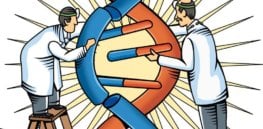
‘We simply don’t yet know enough’: International commission urges caution with human germline editing
Using CRISPR in a heritable way raises the stakes exponentially ...
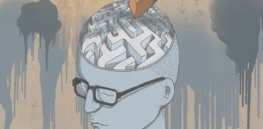
We’re unlikely to cure Alzheimer’s with CRISPR. But the gene-editing tool could play a crucial role.
Nearly 6 million Americans live with Alzheimer’s disease without solid treatment options ...

Podcast: Francis Galton: Brilliant scientist—and eugenics pioneer. How do we address his racist legacy?
Geneticist Dr Kat Arney explores how Francis Galton's eugenic ideas led directly to some of the 20th century's worst atrocities ...

Podcast: Has sickle cell disease met its match in CRISPR gene editing?
Dr. Brenda Eustace, director of discovery research at Vertex, joins plant geneticist Kevin Folta to discuss this promising treatment ...

Viewpoint: Why science hasn’t given us a cure for cancer: We’re still ‘trying to understand it’
Each permutation of cancer requires a different approach, therapy, or method of management ...
