


Food & Ag Features

Viewpoint: Why leftist GMO rejectionists should take notice of Cuba’s emergence as biomedicine and ag-biotech innovator
This past Christmas was not the best of times for Cubans. It was difficult to find food such as chicken, ...
Viewpoint: Controversial EU ruling banning neonicotinoid pesticides that will devastate beet industry is not based on evidence-based science
Last week the CJEU (Court of Justice of the European Union) issued a ruling that is now threatening the beet ...
A ‘New Green Revolution’ is brewing — just in time, as the world population breaks past the 8 billion mark
You can mark the date on your calendar: On November 15, 2022, a mother will give birth to a baby ...

Soaring seed prices: What role do patents and regulation play?
Agricultural seed prices have soared over the last 20 years. Conventional seed prices have risen 200%, while genetically modified ones ...
Carbon tax on farming to reduce carbon emissions? New Zealand is pioneering this new policy. Here’s why its touted benefits may not be a sure thing
Agriculture contributes an estimated one-quarter of global greenhouse gas emissions. The economy in New Zealand, a tiny country at the ...
‘Like turning a golf ball into string’: Making meat substitutes is not easy
If you’re an environmentally aware meat-eater, you probably carry at least a little guilt to the dinner table. The meat ...
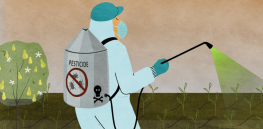
Viewpoint: ‘Pesticide treadmill’? — Latest research challenges activist meme, shows pairing GM crops with pesticides yields environmental benefits
Almost three decades ago, activist groups began making all sorts of troubling predictions about the dangers of growing genetically engineered ...

Precision animal breeding: How gene editing could revolutionize animal agriculture and disease control
Given my interests as a veterinarian, indeed the only vet in the House of Lords, my contribution to the Second ...

67 tons: Harvest of first commercial-quality GMO beta carotene-enriched Golden Rice nears completion in Philippines
More than 67 tons of fresh paddy of beta carotene-enriched rice have been harvested in 17 Golden Rice production sites ...
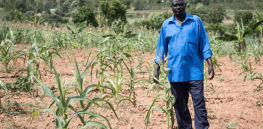
Viewpoint: Could crop biotechnology mitigate dislocations from climate change? Anti-GMO activists say ‘no’. Here’s why they are wrong
We’ve heard a lot about climate change, and its impact on crops, especially in tropical and sub-tropical regions of the ...

Viewpoint: Precautionary near zero-risk standard is an impossible policy stifling European innovation and productivity. Here’s a safe alternative
After 30 years of squandering the peace dividend, deindustrialising economies and ignoring facts and evidence in their ideology-driven policies, Western ...

Viewpoint: Can large-scale agriculture overcome stigma it is not sustainable? Here’s a 10-step regulatory guide to make that happen
Regulators seem blissfully unaware, especially in Brussels, how much their pandering to the idealistic aspirations of small environmental activist groups ...

Viewpoint: Inside two decades of anti-industry attacks by green activists in media, film and politics
Humanity is (hopefully) coming out of a global pandemic thanks, in a large part, to the massive, rapid development and ...

Viewpoint: Tobacconization of corporations — How green activist groups delegitimize industries regardless of the benefits of their products
I am often bemused by how industry actors think of themselves. Often they are content with being the second slowest ...
‘Mania of zero risk’: How environmentalists inflame concerns about farm chemicals, increasing anti-GM food rejectionism and the degradation of waterways
Food Watch warns, wrongly, that trace amounts of mineral oil can get into our food and seriously endanger consumers, calling ...

Viewpoint: Glyphosate and other ‘toxic herbicides’ in school lunches? Food Chain Radio hosts disinformation specialist Zen Honeycutt
School lunches might not be the perfect sustenance, I don't know. When I was in school, the institutionalized food was ...

Analysis: Climate mitigation funding imbalance? US government slow to fund climate-smart agricultural innovation — 1/35th of what’s spent on clean energy
Agriculture is a substantial source of greenhouse gas (GHG) emissions, accounting for about 10% of the U.S. total. Farmers, ranchers, ...
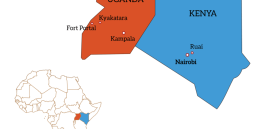
Part II: Can Uganda and Kenya become Africa’s hub for crop biotechnology innovation?
Erostus Nsubuga, who sits on the Presidential Roundtable for Investments in Agriculture, and serves on several well-placed boards of state-enterprises ...

Part I: With Kenya poised to embrace growing and importing genetically modified crops, Ugandan farmers and scientists bemoan their country’s inaction
The decision last fall by newly-elected Kenyan President, Dr. William Samoei arap Ruto to lift his country’s 10-year ban on ...

Biotech chestnut tree poised to restore lost ecosystems and biodiversity — But it needs your help
Chestnuts roasting on an open fire kindle iconic imagery of the season. However, the American chestnut (Castenea dentata) that once ...

Podcast: Time to eat bugs? Fighting high cholesterol with CRISPR; mRNA flu vaccines coming soon?
Are you ready to eat insects? Some scientists say it's time we get more protein from bugs and less from ...
GLP’s Jon Entine on Seed World: How the Ukrainian war and African famine are changing public perceptions about genetic modification of crops and agricultural gene editing
There are many questions and misunderstandings that surround gene editing, especially as the world still works to understand the technology. In ...

Part II: Viewpoint — Kenyan protestors aggressively promote disinformation in campaign to scuttle GM crop imports and cultivation
Are anti-biotechnology advocacy groups honestly engaging in science in their attacks on genetically modified crops? ...

Part I: Analysis — Secret alliance: How Kenyan anti-GMO activists are scrambling to block President’s decision authorizing GM corn imports and local cultivation
The East African-wide famine and supply chain issues exacerbated by Russia’s invasion of Ukraine have reenergized the anti-GMO movement in ...

Insect food? Public skepticism remains a major hurdle but here is the sustainability case for including them in our diet
The consumption of insects has slowly increased as the benefits become widely discussed. More than 2,000 edible species have been identified ...

Analysis: Vegetables are good. Meat is bad. Here’s how meta-studies can be ‘interpreted’ to provide simplistic results
A new meta-analysis upends the belief that red meat is bad and vegetables are good. How can that be? It ...

Viewpoint: Reject GM crops because they’re ‘not natural’? Here’s a primer on 9,000 years of human tampering with our food supply
One of the most frequently cited concerns about ‘genetically modified’ food is that it is ‘unnatural’ or as the then ...
