



Food & Ag Features

Baby food panic, brought to you by trial lawyers hoping to prosecute by press release
Last week, I received an email from a law firm asking ACSH to promote its groundless allegations about the dangers ...

Viewpoint: Video — Big Solar is gobbling up productive agricultural land and hurting farmers yet providing little energy or sustainabilty gains
I made this 10-minute documentary, SUNBLOCK, because I love farmers and ranchers and want to tell their stories. This film ...

Four ways to strip carbon out of agriculture and limit farming’s climate impacts
Carbon is a “hot topic” in an age of Climate Change (pun intended). That is playing out in unique ways ...

Organic farming will never be truly sustainable until it embraces gene editing
The organic process is neither viable nor sustainable but a new paper would like to change that. By allowing modern ...
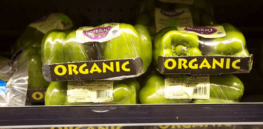
Viewpoint: Should the public foot the pricey bill for organic farming and food?
A group of European researchers argued in a recent journal article that permitting the use of gene edited crops in ...

More than 12,500 pesticides need assessment or re-evaluation. Here is how EPA does its work
Environmental Protection Agency head Lee Zeldin has said he wants the federal agency to accelerate scientific safety evaluations of various chemicals, ...

Viewpoint: What the media and policymakers miss about containing agricultural pests—Exaggerating risk and underestimating benefits
The debate on the extent and necessity of regulating the use of plant protection products essentially concerns an objective assessment ...
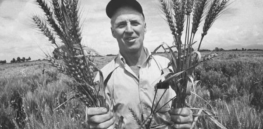
Viewpoint: The Green Revolution saved 1-2 billion lives globally. Activists say it was a failure. They’re lying
In the past few years, many environmental and academic activists have been undermining the work of Norman Borlaug and the ...
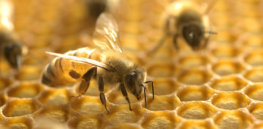
Disease is the greatest threat to bee health. Can genetically engineered probiotics help protect them?
If you cannot engineer the organism, engineer its microbiome. Since scientists began exploring how to solve problems using synthetic biology, ...
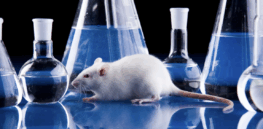
Viewpoint: Activist hyped study ‘proving’ that glyphosate can cause leukemia is junk science
The discussion around glyphosate, a widely used herbicide, is becoming increasingly charged, especially with new studies surfacing that suggest a ...

The ‘Mind Diet’: How our diet shapes cognitive health and dementia
There’s long been evidence that what we eat can affect our risk of dementia, Alzheimer’s disease and cognitive decline as we age ...

Viewpoint: ‘Travesty of science’: Latest ‘global glyphosate study’ is a scientific mess issued by the ethically-compromised Ramazzini Institute
In June, the Ramazzini Institute published the results of its long-heralded Global Glyphosate Study via an article in a Ramazzini-managed ...

GLP spaces on X: Climate change and meat. Separating fact from hype
Red meat is often scapegoated as a major villain in the popular story about our global efforts to prevent a ...
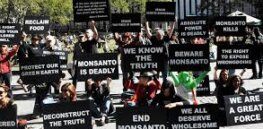
Viewpoint: Environmental activists’ doomsday pessimism undermines agricultural biotechnology
We live in a precautionary era in which technological breakthroughs poised to dominate the coming decades—from artificial intelligence and nanotechnology ...

10 years ago, the hazard agency IARC called glyphosate a ‘likely carcinogen’. It weaponized chemophobia, corrupted environmental groups and ignited a tort bonanza
Ten years ago this week, the International Agency for Research on Cancer (IARC) released the full Monograph 112, that included a ...
Africa’s quiet biotech revolution: Gene editing emerges from Europe’s anti-GMO shadow
For decades, European regulations have dominated the global conversation on agricultural biotechnology in many regions of the globe. From field ...

Viewpoint: California’s science-challenged Proposition 65 toxic chemical regulation are at center of ‘tort shakedown’ racket
Not to0 many years ago, my wife and I once elebrated our anniversary in South Lake Tahoe, situated on the ...

Why cutting out synthetic pesticides will reduce food production and won’t help the environment
Following the launch earlier this year of the UK Pesticides National Action Plan, with a strong focus on reducing the ...

Viewpoint: MAHA and RFK, Jr. have it backward: Celebrating elimination of safe chemicals while gutting healthcare and food assistance programs
The White House and HHS are congratulating themselves for “major victories for American health.” Their actions are doing the opposite ...

With hopes fading about finding signs of life on the exoplanet K2-18b, scientists refocus on exploring the Moon and Mars, with providing food the largest challenge
If we are serious about settling on other planets, we must grow food efficiently outside the safe environment of Earth ...

Viewpoint: The Chemical Panic Industry — to the delight of tort lawyers, activist researchers invent the myth of the ‘exposome’
There is a chemical in my soup. There’s a microplastic that might be harmful. There are particles in the air ...
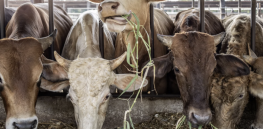
6% of global carbon emissions are linked to beef. Here’s how American exports can sharply reduce that
Trump’s global trade shake-up has prompted nearly every nation around the globe to reexamine their own trade policies, asking what ...

How farming spread globally in prehistoric times to supplant hunting and gathering
If you’ve ever wondered how farming spread far and wide, our research on past human societies offers one explanation: contact ...

Viewpoint: England’s head start in pioneering crop gene editing in Europe in danger
News that global agribusiness Syngenta is to cut its UK-based wheat breeding activities after 35 years, focusing activity on the ...
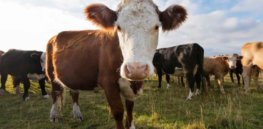
Fighting climate change with gene editing: Can we slash cows’ methane production?
Preventing ruminant methane from being produced in the first place seems a sensible way to limit its damaging effects ...

Viewpoint: RFK.Jr’s embrace of fear-mongering about food dyes mimics Europe’s precautionary regulations
Red 40, Yellow 5, and Blue 1 may soon be history. Not because science says they're dangerous, but because the ...
Viewpoint: Activist hypocrisy — It makes no sense to use genetic engineering to treat disease but limit it to grow food sustainably
As a biomedical scientist working in cancer and infectious disease immunology, I’ve spent decades working with genetic tools and genetic ...
