


Sustainability & Climate Change
Europe missed out on GMO biotech revolution. What’s going to happen with gene editing?
As a plant geneticist in Europe, I must carefully pick my way through some of the most onerous constraints to ...

40 years of data show Bt corn significantly reduces pests, spraying and crop damage, including in nearby non-GMO fields
University of Maryland researchers have pulled together forty years of data to quantify the effects of Bt field corn, a ...
Bad weather, habitat destruction and pesticides are main threats to monarch butterflies
The number of monarch butterflies that overwintered in forests in Mexico fell for a second straight year, experts say. Monday's ...
China’s 30-year agricultural miracle: How 21 million Chinese boosted yields and cut fertilizer use
A landmark project to make agriculture more sustainable in China has significantly cut fertilizer use while boosting crop yields on ...

Viewpoint: CRISPR crops poised to help global food insecurity and limit farming’s environmental impact
Increased crop productivity, including the use of genetically modified and other forms of biotechnology crops, leads to more affordable food ...
Uganda’s researchers ready to taste test their GMO vitamin A-enriched banana
The East African cooking banana is one of the major food crops eaten by the people living in central Uganda ...
How injecting genes into pea plants could introduce disease resistance and improve nutrition
Scientists are injecting genes into pea plants to speed up introducing better disease resistance and improving the nutrition of this ...

‘Major breakthrough’: Genetic modification of single gene could reduce crops’ water use by 25 percent
Researchers on Tuesday [March 6] unveiled a genetic modification that enables plants to use a quarter less water with scant ...
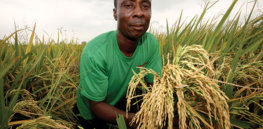
Ghanaian scientist: GMO food safer, more sustainable than conventional crops
Crops produced using Genetically Modified Organisms (GMO) technology are safer than conventionally produced ones, a Research Scientist at [Ghana's] Crop ...
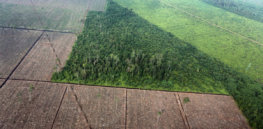
Viewpoint: While wildlife habitat loss is a real problem, organic farming is not the solution
A recent article in the Independent is, in my opinion, a good example of how ideology can overwhelm evidence and ...

Ecological vanishing act: African rainforests disappeared, then bounced back
Three thousand years ago, dense old-growth rainforests covered most of central Africa. But around 2,600 years ago, an event that ...
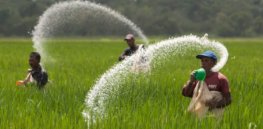
Nitrogen-fixing GMO crops could reduce synthetic fertilizer use, benefit environment
Nitrogen is the main nutrient that limits crop yield. Biologically reactive nitrogen is therefore routinely supplied to crops as synthetic ...

‘Living paints’: GMO bacteria could be used to make biodegradable paints
Now here's a bright idea. Researchers in Europe have developed a technique for growing genetically modified bacteria that can be used as ...

GMO switchgrass—potential biofuel crop—does not hurt soil health, study finds
Overcoming the natural resistance of plant cell walls to deconstruction, known as recalcitrance, is a major bottleneck to cost-effective biofuel ...

Viewpoint: Why environmentalists should support GMO crops
[G]enetic modification increases corn yields, by a lot. This is not surprising: pests account for a loss of almost one-third ...
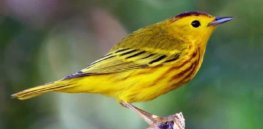
How will climate change and genetics affect migratory songbirds?
An article published in January 2018 connected genetic variations in migratory songbirds with population changes due to climate change. UC Davis evolution ...

Employing gene drives to protect rare species comes with risks
There is an ambitious poison baiting campaign currently being planned for Gough [island] in an attempt to control rodent numbers ...
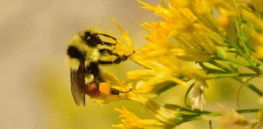
Neonicotinoid insecticides pose risks to wild bees and honeybees, European Food Safety Authority says
The world’s most widely used insecticides pose a serious danger to both honeybees and wild bees, according to a major ...
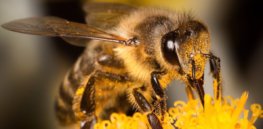
Viewpoint: Bans on neonicotinoid insecticides may not actually help bees
Public pressure is growing in Australia to ban the sale of pesticides called neonicotinoids because of their harmful effects on bees. The ...
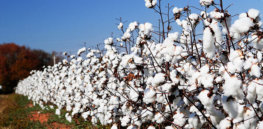
Video: How GMO cotton helps farmers save fuel and water—and reduces pesticide use
When I think of cotton, I think of the southern United States. Australia may not come to mind, but they ...
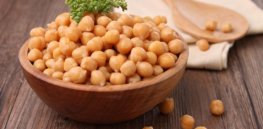
Wild relatives could help staple crops like chickpeas adapt to climate change
They are nutritious, versatile and a dietary staple for millions of people from South Asia to Ethiopia, but scientists have ...
Engineering more digestible grass could reduce livestock pastures and give us cheaper biofuels
The problem with grass is that it has tough cellular walls that make it difficult to digest. But researchers say ...
Gene drives and eliminating invasive pests without bloodshed
[Researcher Karl Campbell is] using a fiercely potent poison for the complete obliteration of rats on a 70-square-mile Galapagos island ...
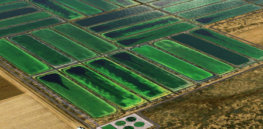
Future of food: Huge algae farms could feed humans, animals more sustainably
Scientists hoping to meet the Paris climate accord goal of limiting global temperature rise to less than two degrees Celsius ...

Genetically engineered poplar trees, switchgrass could lead to more efficient biofuels
A research team led by the University of Georgia has discovered that manipulation of the same gene in poplar trees ...
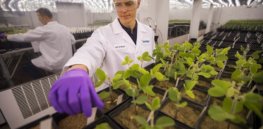
Biotech startup Indigo Ag aims to upend agriculture with microbiology
[David Perry, CEO of Indigo Ag, an agricultural-technology startup headquartered in Boston] sees an opportunity for Indigo Ag to lead ...
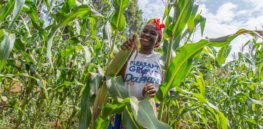
Can insect-resistant GMO Bt corn help Kenya fight crop pests and climate change?
Elizabeth Nduku, a smallholder maize farmer in [Kenya], is dejected. Her crop is worse off than the previous seasons. This ...
