


Sustainability & Climate Change
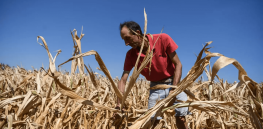
Viewpoint: Facing unprecedented drought, Europe debates embracing sustainable, climate-flexible, insecticide-reducing genetically modified crops
Europe’s summer of drought has been impossible to ignore. Rivers dried up, exposing the skeletons of warships and ancient buildings. Images captured by ...
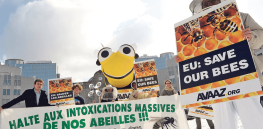
EU bans food imports with neonic pesticide residues starting in 2026
The European Commission announced [September 27] that imports of products containing residues of harmful insecticides known as neonicotinoids will be ...
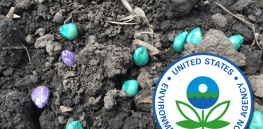
Environmental Protection Agency denies Center for Food Safety petition to ban neonicotinoid pesticides
The Environmental Protection Agency denied a petition September 28 that asked the federal agency to more closely regulate a group ...
China’s Syngenta pushes the edge: Can technology-driven agriculture promote a new view of sustainable farming to a world still wary of biotechnology?
China has very small farms; there hasn’t been a lot of infrastructure put in place in terms of knowledge or ...

Viewpoint: Media hypocrisy — ‘What makes oil companies’ climate change disinformation different from ‘backward progressives’ GMO rejectionist campaigns?’
The media often has difficulty deciding what counts as obvious disinformation or falsehoods. But supposed disinformation about climate change is ...

Case study: What happens if Europe bans glyphosate? Increased tillage, higher greenhouse gas emissions, less biodiversity — and billions in losses for farmers
Following the introduction of glyphosate in 1974, its efficacy against a vast range of weeds and its low price has ...

Viewpoint: Will King Charles abandon his kooky ideas about agriculture and help accelerate Britain’s embrace of sustainable biotechnology tools?
England is in crisis. They lost a beloved figurehead this month but for decades prior were losing scientific ground. If ...

As climate dislocations accelerate, here’s how genetically modified mosquitoes could offer lifeline to controlling dengue, Zika and other mosquito-vectored diseases
With insecticide resistance increasing and climate change priming the environment for longer breeding seasons and a wider geographic range, the ...

Viewpoint: Europe’s energy crisis and Farm-to-fork organic-promoting policy is fueling food insecurity — a ‘glaring oversight’ in EU State of the Union address
EU solidarity with Ukraine was the overwhelming focus of European Commission head Ursula von der Leyen’s State of the Union ...
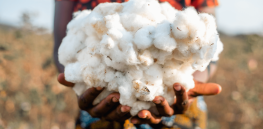
Suffering from devastating pest infestations, Ethiopian cotton farmers resort to using illegally smuggled GMO seeds that have controlled the same problem in Brazil
Cotton growers in Ethiopia resort to unauthorized GMO cotton illegally smuggled from Sudan. Bt-RR cotton seed is currently being cultivated ...
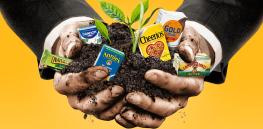
Nestle, General Mills, PepsiCo and other food companies have pledged support for regenerative agriculture. Is this a greenwashing campaign?
According to a new report by the non-profit Forum for the Future, the regenerative agriculture movement in the U.S. has ...

Viewpoint: ‘He overlooks complexity’ — Will King Charles promote his cult organic farming views and reject agricultural biotechnology?
King Charles didn’t discover his penchant for sustainability all by himself. After Charles met the Indian anti-globalization activist and environmental ...

Viewpoint: Ideologically-based beliefs are preventing New Zealand consumers from experiencing the benefits that gene editing in agriculture can bring
It is over two decades since the Royal Commission on genetic modification (GM) responded to the task of evaluating the ...

Climate panel predicts massive dislocations in agriculture and billions of dollars wasted unless drastic mitigation measures taken
According to a landmark report issued by the Intergovernmental Panel on Climate Change (IIPC), approximately nine years remain to limit ...
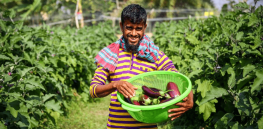
Bangladesh looks to agricultural technologies to address climate change impacts and food insecurity
There has been a revolution in agriculture in Bangladesh in the last three decades with the application of various modern ...

Podcast: Biden’s pro-biotech executive order; Vaccine mandates backfire; Courts v junk science
President Biden just signed an executive order promising substantial investment in the "bioeconomy." What impact will the proposal have on ...

Spraying wheat with bacteria? This seed coating helps plants pull nutrients from the soil and increases yields
Lavie Bio, a subsidiary of Evogene, is a biological agriculture company that strives to bring innovation to the global food industry. The ...

Viewpoint: ‘Underrated and underfunded’: It’s time for Congress to increase support for biotechnology tools in next farm bill
Biotechnology and breeding are important ways to improve agriculture: they make the plants we grow and animals we raise for ...
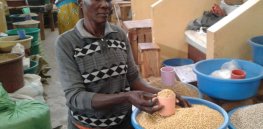
Soybean yields in Africa are 50 per cent less than global average. A new GMO version could make up the difference — if approved
According to a study published in Science [August 18], the researchers genetically modified three genes of soybeans by effectively upgrading photosynthesis – a ...
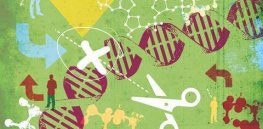
Viewpoint: CRISPR could bring about a sustainability and productivity revolution in food and farming
Technological advances can reach far beyond robotics, automation, sensors, or the predictive and analytical capabilities of artificial intelligence. In a way, ...

‘Power-hungry meglomaniac’ promoting ‘philanthrocapitalism’: In fundraising pitches, anti-GMO activist groups blast Bill Gates’ renewed commitment to promoting biotechnology to address food shortages and climate change
By spending billions on agriculture projects in African countries, Gates is attempting to launch another Green Revolution — one that prioritizes industrial methods like ...

Energy costs might be only real barrier to replacing farm animals and producing nutritious meals in a lab
The industrial biotech startup is working on bringing a novel protein to market — one it says will offer a ...
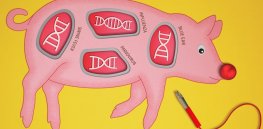
Analysis: ‘We can sequence an animal’s entire genome’ — How advanced biotechnology could dramatically improve meat production
The production of meat, the main protein consumed in the world, needs to grow as consumption increases. To this end, genetic ...

What could go wrong? Analyzing the merits and consequences of gene drives
ISAAA Inc., in partnership with the Outreach Network for Gene Drive Research, launched a policy brief that tackles the importance ...
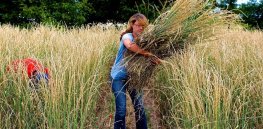
What are the barriers to engineering perennial, high-yield grain crops?
Perennial grain crops –those you only plant once before harvesting multiple times – would potentially deliver many favourable on-farm attributes ...

CRISPR tackles deadly cassava mosaic virus disease
Work has begun to possibly develop CRISPR cassava varieties that are resistant to the deadly cassava mosaic disease (CMD), after an international team ...
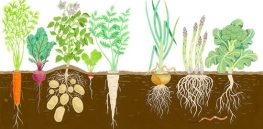
Global food consumption is rising, along with the need for carbon-emitting nitrogen fertilizer. Here’s what scientists are doing to address this fast-approaching crisis
Growing and producing food, fiber, and biofuels generates about one-quarter of all human-caused greenhouse-gas emissions. At the same time, yields ...
