


Sustainability & Climate Change
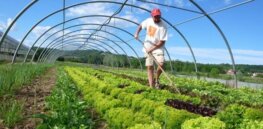
Viewpoint: A science-backed case in support of organic farming
Conventional or intensive farming and gardening is dominated by monocultures – fields of crop plants and nothing else. These are ...
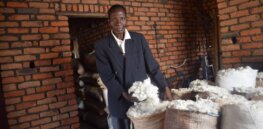
Malawi farmers claim 100% yield boost using insect-resistant Bt cotton
The National Commission for Science and Technology (NCST) says Bt cotton – a genetically modified variety – has improved farmers’ ...

Academic study: EU’s Farm-to-Fork would lead to higher prices and lower production
The [Farm to Fork, or] F2F strategy, as part of the [European Green Deal, or] EGD, reduces the production of ...
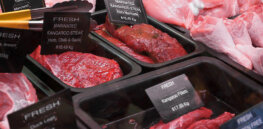
Giraffe meat? Bengal tiger burgers? Start-up using cell cultures to create exotic new tastes without harming animals
Cultivated meat companies most frequently focus on the largest meat categories- beef, chicken and pork. However, Primeval Foods has stepped ...

With Ukraine’s corn crop endangered by war, European farmers turn to GMO feed
European farmers are set to buy more genetically modified animal feed from the U.S. and South America after Russia’s invasion ...

Mushroom handbags? Synthetic biology is expanding into the fashion industry
The fashion industry’s expectations are particularly high. “Nobody is willing to sacrifice quality and performance for sustainability,” says Matt Scullin, ...
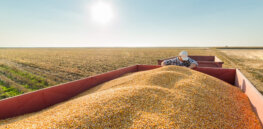
How sustainable is North American soybean production?
In the past 50 years or so, the cultivation of soybeans has grown tenfold, with the UN’s Food and Agriculture ...

GMO soil fungi: One way genetically modified barley might help reduce the need for fertilizers
A field trial of genetically modified and gene-edited barley is due to be planted this April. The research is evaluating ...

Viewpoint: Reversing the Green Revolution — Why Europe’s ‘Farm to Fork’ policy will increase hunger
After destroying European energy independence, environmentalists are now focusing on their next goal: the destruction of your supermarket. This is ...
Viewpoint: ‘Organic’? ‘Regenerative’? On labels they are little more than buzzwords. Here’s why
Natural, sustainable, organic: yesterday’s news. When it comes to virtuous eating, “regenerative” is the buzzword du jour. But what, exactly, ...
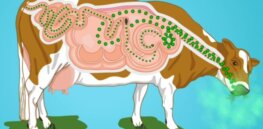
Will plant based meat alternatives curb the greenhouse gas impact of animal agriculture? This independent study concludes consumers are key
New plant-based meat (PBM) alternatives that aim to mimic the taste and texture of beef could have significant economic, environmental, ...

How gene editing could create carbon-sucking trees to help address the climate crisis
Of all the potential fixes for the climate crisis, none has captured hearts and minds quite like tree planting. It’s ...
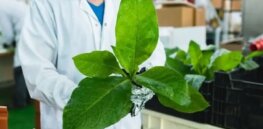
Is there a better way to make cell-based meat? Maybe the tobacco plant can help
FoodTech start-up, BioBetter, has assigned a new role for the much-maligned Nicotiana tabacum plant upon discovering it can overcome the greatest hurdle ...

‘Now they’re here’: Genetically engineered mosquitoes could help control dangerous spread of disease-carrying Aedes aegypti
Anthony James, who researches disease-spreading insects, never encountered the aggressive mosquito species, Aedes aegypti, when he grew up in Southern California ...

Viewpoint: Here are cutting edge ways technology can help us increase farm outputs without using more land
The world has plenty of nutrients. They circulate between air, soil, sea, living plants and animals. Neither population growth nor meat meals ...

Modified: Destigmatizing GMOs one bite at a time
“GMOs have been unfairly stigmatized, haven’t they?” Thus spoke a man in his 30s, a sympathetic expression on his face, ...

Edible kelp: The next big thing in high-end cuisine?
The global population is growing, with an associated increase in the need for food, while arable land is in short ...
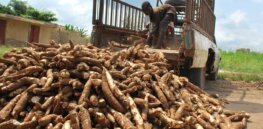
Following in Kenya’s footsteps: Behind Ghana’s quest to get GMO cassava approved–the country’s first genetically engineered crop
The most recently approved GM crop on the continent is the GM cassava, which Kenya has successfully greenlighted. This becomes the ...

Why Africa needs access to both traditional agricultural tools and cutting-edge biotechnology innovations
As an agricultural and environmental scientist, I’ve worked for decades exploring the practical challenges that smallholder farmers encounter in East Africa ...

Despite controversy and rising prices, farmers in Pennsylvania Amish country recommit to using glyphosate for no-till, reduced carbon-release farming
Sharp price increases for glyphosate and other chemicals, not to mention fears over shortages, will likely mean drastically higher input costs this ...

Viewpoint: Gene editing crops is the very definition of ‘green technology’
One thing we have learnt from the GMO debate is that if you simply add layers of regulatory checks and ...

Viewpoint: Why we need to replace the current pesticide assessment system
The more we spray, the fewer insects are allowed to thrive. There is also that bird populations are affected by ...

Biotechnology key driver of sustainable agriculture innovation in Canada
Anyone who has driven through or flown over, the Canadian prairies during the summer in the past decades, will likely ...
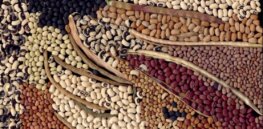
Viewpoint: GMO cowpea can support biodiversity
Nigeria’s biodiversity is rich and unique, including semi-arid savanna, mountain forests, seasonal floodplains, rainforests, vast freshwater swamp forests and diverse ...
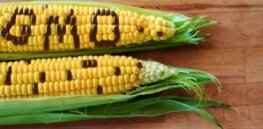
Viewpoint: To persuade the public that GM foods are safe, advocates need to focus on scientifically confirmed health benefits
Ever since the first GM food was introduced, the debate about the risks of releasing GM crops has been substantial ...
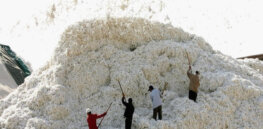
Bt cotton gives Kenyan farmers a reason to smile again
“Wow, wow.” I couldn’t stop saying wow as we caught a first glimpse of a field covered with what appeared ...
Podcast: Tuskegee plant scientist on how outdated environmentalist ideology blocks biotech-led new Green Revolution
In the third episode on power in the food system, we speak with Channa Prakash, professor of crop genetics, biotechnology and ...
