


Sustainability & Climate Change
Podcast: Tuskegee plant scientist on how outdated environmentalist ideology blocks biotech-led new Green Revolution
In the third episode on power in the food system, we speak with Channa Prakash, professor of crop genetics, biotechnology and ...
Ugandan field trials demonstrate significant economic benefits for farmers growing insect-resistant Bt maize
African scientists have demonstrated that genetically modified Bt maize offers much higher yields and better pest resistance than conventional varieties ...

Russian invasion of Ukraine portends a global food crisis—and the European Union’s Green Deal Farm to Fork Policy will only exacerbate it
Well before the Russian invasion began, I shared a shocking FAO statistic. Overall global food prices increased by almost 20% ...

With war raging in the Ukraine, UK farmers reconsider GM crops to meet growing yield and sustainability demands
[A]s the world grapples with the impacts of Russia’s invasion of Ukraine, “it has actually become pretty frightening times for ...

GLP Podcast: Ukraine war spikes food prices; Journalist sheds anti-GMO views; Creationism in schools
The war in Ukraine could have long-term impacts on global food prices. Can we prevent this dangerous outcome? A Japanese ...
Viewpoint: How transparent are global meat and dairy companies in disclosing their impacts on climate change?
Last fall, the National Cattlemen’s Beef Association (NCBA) took out a full-page ad in The New York Times declaring that the U.S ...

Viewpoint: Organic farming best addresses climate change? Why the popular consensus is wrong—and why GE crops should be agriculture’s future
Popular wisdom is often wrong. Consider, for example, how it views organic agriculture, which has grown to a $48 billion a ...

Oxitec successfully concludes Brazilian field trial of self-limiting fall armyworm developed to protect insect-resistant Bt corn
Oxitec has completed the first farm-scale pilots of Friendly™ fall armyworm on thousands of hectares of commercial corn in Brazil’s ...

Video: What would a world without herbicides look like? Purdue’s Jayson Lusk addresses how biotechnology can address climate change and reduce food insecurity
Pesticide shortages, increased labor costs, and transportation bottlenecks are raising the cost of food across the EU. With war roiling ...
Genetics research boosts response to disease plaguing Hawaii’s coffee crop
As the only state that produces coffee, including the iconic Kona variety, Hawaii growers and agricultural officials were alarmed when ...
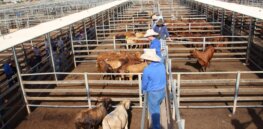
Viewpoint: Beef farmers, under fire from sustainability critics, make their case
Around the world, the beef industry is the subject of a growing ethical debate. Many people seem to think that ...
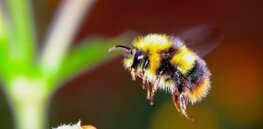
Bumblebees are under threat. Here’s why we need to protect them
In a time of unprecedented species extinction, when seemingly every day brings news of yet another animal or plant on ...
Ukraine conflict spurs food concerns in China, renews push to embrace crop genetic engineering and other yield boosting tools
Food security and self-sufficiency have long been high on the agenda of Chinese policy makers. Russia’s invasion of Ukraine gives Beijing ...
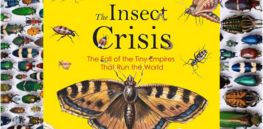
‘The Insect Crisis’ book review: From climate change to habitat loss to chemicals, what’s behind the die off of insect populations?
When was the last time you had to clean bug splatter from your windshield? This ritual was once an inevitable ...
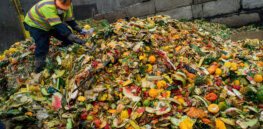
Regenerative agriculture: How a Canadian farm repurposes food waste to combat climate change
Jocelyn Molyneux has an army of around a million red wiggler worms at her Caledon, Ont.-based Wastenot farms, diverting the organic ...

Sustainable seafood? This company believes it can make tasty vegan fish from plants and cultivated cells
One-third of the world’s tuna stocks are now fished at unsustainable levels, according to the most recent State of the ...

Japanese journalist explains why he flipped from anti-GMO campaigner to embracing agricultural biotechnology revolution
Masami Kojima, a reporter for the Mainichi Shimbun... initially took a negative position on GM crops, but now he is ...
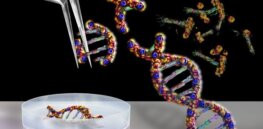
Viewpoint: How can we deliver on agricultural gene editing’s sustainability promise?
The pace of research in the field of genome editing — understanding, modifying and altering gene function — has quickly ...
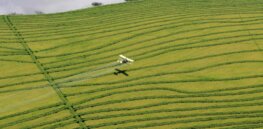
How ‘agricultural intensification’ could cut global farm land use by almost 50%, increase biodiversity and help address climate change
In the context of trade-offs between land use and biodiversity, LMU geographers have simulated land saving potentials for agriculture. With ...
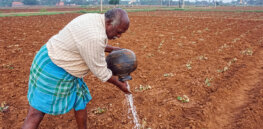
Viewpoint: Food activists lobbied for an organic-only, no synthetic pesticide model in Sri Lanka. Here’s why it went so catastrophically wrong
Sri Lankan President Gotabaya Rajapaksa promised in his 2019 election campaign to transition the country’s farmers to organic agriculture over a period of years. The ...
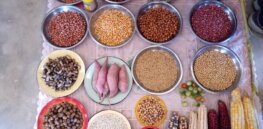
Viewpoint: What are the barriers limiting Africa from adopting genetically engineered and hybrid-improved seeds?
Over the last 15 years, development organizations including USAID, the UK’s DFID, and most prominently the Gates Foundation, have invested millions ...

Viewpoint: Human activity and modern agriculture are threatening pollinators
The arrival of the Anthropocene has brought with it considerable challenges for wild bees. In particular, the spread of industrial ...
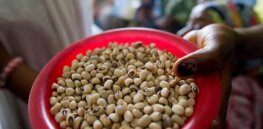
Ghana closer to commercializing disease-resistant GMO cowpeas
The Council for Scientific and Industrial Research (CSIR) has submitted an application to the National Biosafety Authority (NBA) requesting for ...

Brazilian researcher exposes ‘magical thinking’ of agroecology advocates and GMO opponents
When I did field research to understand the reasons why rural workers preferred to plant GM soy (year 2003), the ...

Will climate change threats force crop biotechnology skeptics to rethink opposition to food innovation?
Some might argue that [CRISPR] could help alleviate some of the carbon emissions from agriculture and reduce some types of ...

‘Window to act is closing’: Climate change is already devastating our global food system, UN report co-author says
In a cautionary tale to the world, the Intergovernmental Panel on Climate Change (IPCC) – a group organized by the ...

Viewpoint: Food advocate makes plea for increased commitment to agroecology
To truly understand the dynamism of food systems and catalyze meaningful change, diverse forms of evidence, knowledge and expertise, including ...
