


Health & Medicine

Will we learn anything from the brain of Las Vegas shooter Stephen Paddock?
The brain that sat in the skull of the Las Vegas shooter [Stephen Paddock] as he planned out his attack, ...

Viewpoint: Taxpayer-funded Canadian news agency promotes ‘fake news’ about glyphosate herbicide’s health risks
The Canadian Broadcasting Corporation interviewed anti-GMO activist scientist Theirry Vrain and published an article featuring several false and misleading claims ...
Epigenetics and addiction: Enzyme could help treat cocaine, alcohol and opioid dependence
Previously, it had been studied that an epigenetic drug could alter DNA methylation in the brain during drug withdrawal with hopes in ...

France rejects 5-year renewal for glyphosate herbicide; wants 3-year license instead
France will oppose a European Commission proposal to renew authorisation for controversial weedkiller glyphosate for five years instead of 10, ...

Video: Combating aging in our lifetime
[A] new video from Kurzgesagt presents several technologies close to completion that could make a big impact on how we ...

CRISPR at home: Is it really that easy to hack DNA?
I am not a DIY scientist, much less a professional scientist. You won’t find me swabbing my cheek cells for ...

Large long-term farm study finds no statistically significant cancer link to glyphosate herbicide
A large long-term study on the use of the big-selling weedkiller glyphosate by agricultural workers in the United States has ...

NASA Twins Study finds thousands of epigenetic changes in astronaut Scott Kelly
When astronaut Scott Kelly returned to Earth after a year floating about the International Space Station, he was noticeably different from his ...

‘Science Moms’ documentary counters anti-GMO, anti-vaccine misinformation
In an era of fear-based marketing targeted to parents, one group of moms hopes to launch a movement of science-minded ...
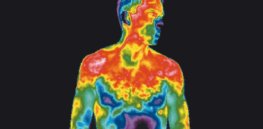
Warm thoughts? Treating depression with whole body hyperthermia
[Editor's note: David Haggerty is a neuroscience graduate student at the Indiana University School of Medicine.] A collaborative effort, led ...

EU farmers union: Glyphosate herbicide renewal dispute ‘undermines’ Europe’s scientific credibility
EU farmers’ union Copa-Cogeca has rejected the Commission’s revised proposal for a five year re-authorisation of glyphosate, claiming that such ...

How the ‘Dunning-Kruger’ effect explains public’s anti-GMO views
[A] new study from Carnegie Mellon University has provided key information on what factors influence public acceptance of GMOs and ...

Video: Dissecting claim that Canadian professor is a ‘Monsanto sock puppet’
The Canadian Broadcasting Corporation recently brought forth allegations that professor Peter Phillips of the University of Saskatchewan is a Monsanto ...
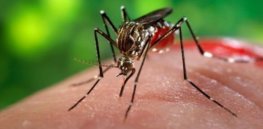
Bacteria-armed mosquitos approved for US release in fight against Zika, dengue and yellow fever
The US Environmental Protection Agency (EPA) has approved the use of a common bacterium to kill wild mosquitoes that transmit ...

Viewpoint: After Christopher Wild departure, next IARC chief must fix ‘beleaguered’ agency
With the sudden departure of IARC head Christopher Wild, here's a wish list put together by David Zaruk, who offers ...

Targeting RNA with CRISPR could reverse half of known pathogenic point mutations
The scope of CRISPR-based research has […] expanded because of the introduction of two new concepts. First, researchers began to ...

Immortal dictators: Is there a downside to life-extending technologies?
Suppose there was a country ruled by an evil dictator. Further, suppose the entire world was plagued by a terrible ...
Could Alzheimer’s originate outside the brain?
We associate Alzheimer’s with physical deterioration in the brain, but new research shows the nerve damage responsible for Alzheimer’s onset ...
Gene therapy creates boy’s replacement skin from his stem cells
Doctors treated a 7-year-old boy’s devastating genetic skin disease—junctional epidermolysis bullosa—by genetically modifying his stem cells to create a new ...

Artificial intelligence fears could lead to over-regulation
[A]s we begin to realise [artificial intelligence] opportunities, the potential risks increase: that AI will proliferate, uncontrolled and unregulated, in ...

Food fears: How anti-science myths—like ‘clean eating’ and GMO health risks—make eaters anxious
We talk about food in the negative: What we shouldn’t eat, what we’ll regret later, what’s evil, dangerously tempting, unhealthy ...

Mars missions: What would long-term space travel do to the brain?
In a NASA-funded study published on [November 1], Dr. Donna Roberts of the Medical University of South Carolina and her ...
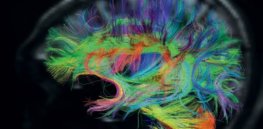
Brain studies weakened by lack of diversity in participants
[S]ocial sciences [tend] to focus on people from WEIRD societies—that is, Western, educated, industrialized, rich, and democratic. The results of such studies ...

USDA scraps overhaul of GMO and gene edited crop regulations that biotech advocates viewed as ‘unscientific’
The Trump administration withdrew a proposed USDA rule change made by the Obama administration that would have been the first ...
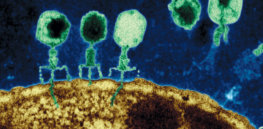
Ancient viruses have become a permanent part of our genes
Transposons, also called transposable elements, are ancient viruses that have become a permanent part of our genes. Around half of ...
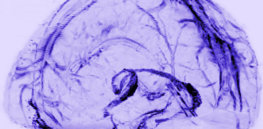
Neurologic disorders may be linked to brain’s immune system
New research suggests there could be a link between certain disorders, including Alzheimer's disease, and the brain's inability to clear ...

Combatants prepping for next skirmish in battle over CRISPR patents
The long-running battle over US patents for CRISPR–Cas9 gene editing continues. On 25 October, the Broad Institute of Cambridge, Massachusetts, filed ...
